Road safety capacity in Africa: benchmarking professional education through a Safe System lense
Abstract
Africa faces a growing road safety crisis, with the highest global traffic fatality rates and a 17% increase in deaths between 2010 and 2021, in contrast to declining trends globally. Structural and institutional challenges, including weak crash data systems, limited use of evidence-based measures, and insufficient implementation capacity, continue to hinder progress. While the Safe System approach has become the foundation of road safety policy in high-income countries, its implementation across African contexts remains limited. Professional road safety education and training are central to embedding Safe System principles, yet systematic knowledge about the scale and structure of such capacity in Africa is lacking. This study provides a Safe System cross-pillar comparison of professional road safety education and training in three African countries (Ghana, Tanzania, and Zambia), benchmarked against three European countries with established Safe System practices (Norway, Sweden, and the Netherlands). Drawing on stakeholder interviews and national data, we assess training capacity and qualification requirements across the five pillars of the Safe System: road-safety management, safe roads, safe vehicles, safe road user behaviour, and post-crash care. The findings reveal substantial disparities in both the availability and institutionalisation of training. For example, the number of certified road safety auditors ranges from 0.2 per million inhabitants in Ghana to over 40 in Norway, while ambulance personnel availability differs by an order of magnitude between the African and European countries. Across pillars, common challenges include limited access to specialised and interdisciplinary education, weak formal qualification frameworks, and insufficient capacity in key domains such as infrastructure safety and post-crash care. Based on the empirical analysis, the study proposes a conceptual framework linking education and training to road safety outcomes through professional and institutional capacity. The findings suggest that strengthening road safety in African countries requires a coordinated policy approach that integrates education, regulation, and institutional development. This includes establishing formal qualification requirements for key roles, investing in interdisciplinary and locally anchored training programmes, and embedding Safe System principles across sectors. Such efforts are essential for translating the Safe System approach into effective and sustained reductions in road traffic deaths and serious injuries.
1. Introduction
1.1 Road safety in Africa
According to the World Health Organization estimates, 1.19 million deaths occur in road traffic each year (WHO, 2023b). Africa accounts for 19% of the global burden of deaths, despite representing only 15% of the global population and 3% of the global vehicle fleet (WHO, 2023b). The African region holds the highest fatality rate in the world, with 19.4 deaths per 100 000 population (with substantial variations among countries). In contrast to the global decrease in traffic deaths, Africa, has recorded a 17% increase in road fatalities between 2010 and 2021 (WHO, 2023b). If we consider the high degree of under-reporting often found in African countries, it is likely that the fatality number is even greater (Neki et al., 2022).
Despite its importance, road safety research in low- and middle-income countries (LMICs), including Africa, is very limited. Only 9.5% of road safety research literature focuses on LMICs (Haghani et al., 2022), and intervention trials, including educational programs, constitute a mere 2.5% (Perel et al., 2007). Furthermore, in many LMICs the old road safety paradigm, in which crashes are mostly blamed on human errors, still dominates. The adoption and implementation of the Safe System approach and its multidimensional perspective on road users, vehicles, infrastructure, and post-crash care as integrated components of a complex system is very limited (Nævestad et al., 2025).
The Safe System approach involves a cultural change (a paradigm shift) in the sense the ‘responsibility for safe road use should not be placed solely on the shoulders of road users, but also on those who are responsible for the design and operation of the various components of road traffic (infrastructure, vehicles, legislation/regulation)’ (Wegman et al., 2023, p. 316). Transition to the Safe System, however, is not done overnight, it involves a maturity process with different areas and actions to be prioritised depending on the current country's position on the ‘maturity ladder’ (Belin, 2021; ITF, 2022). To utilize and maximize the benefits of the transition to the Safe System, capacity building, educating and training of professionals for road safety is a vital and crucial catalyser for reducing traffic-related injuries and fatalities and for eventually achieving zero fatalities.
1.2 Road safety capacity building in LMICs
Since the publication of the first WHO's status report on road traffic safety in 2004, it has become evident that the major traffic safety problems are found to be significantly higher in the LMICs compared to high income countries (WHO, 2004), and poor road safety management due to the shortage of professionals with relevant traffic safety knowledge in LMICs has been identified as one of the main reasons. Twenty years later, PIARC (2023) highlighted the huge mismatch between resources and efforts spent on knowledge transfer. Building on the PIARC's report, Godthelp et al., 2024 argue that it is the lack of knowledge infrastructure and research capacity within LMICs that prevents the knowledge propagation and assimilation.
Several international initiatives aim to strengthen road safety capacity in LMICs through technical assistance and short training programmes for practitioners. Examples include the Bloomberg Philanthropies Initiative for Global Road Safety, which provides technical support and professional training for governments and cities, and the Sub-Saharan Africa Transport Policy Program, which runs training programmes in road safety management for African transport authorities. Regional initiatives such as SaferAfrica and organisations such as the Dutch Cycling Embassy also contribute through workshops and targeted training, for example on Safe System policy development and cycling infrastructure design.
Even with these initiatives in place, institutional and human capacity in many LMICs remains limited to absorb state-of-the-art road safety knowledge, adapt it to local contexts, and embed it in policy and practice. When capacity building relies on fragmented, short-term courses delivered by external organisations, it is not scalable nor sustainable for educating the large number of professionals involved in road safety. A shift is therefore needed towards capacity building embedded in local education systems and led by local teachers and researchers. Godthelp et al., 2024 conclude with a call to global funders to assess their strategies, placing greater emphasis on strengthening research and knowledge infrastructures in LMICs. Such an approach will not only advance and promote evidence-based road safety policies in these countries but also ensure the sustainable development and renewal of the road safety knowledge within the local context.
While education related to road safety often focuses on individual road users, such as school children or novice drivers, an equally important dimension concerns the education of professionals responsible for planning, designing, regulating, and managing the transport system. Strengthening the competencies of road safety engineers, planners, and policymakers is particularly important within the Safe System approach, as the decisions and practices of these professionals shape the safety of the entire system and can therefore have broad and lasting effects on road safety outcomes.
The AfroSAFE project (2022–2026) funded by the Horizon Europe program provides a concrete example of efforts to strengthen research and knowledge capacity in selected African countries. More specifically, the project seeks to embed the safe System approach by revising curricula, developing academic programmes, training local educators, and creating centres of excellence in collaboration with local institutions. The consortium brings together partners from four European countries (Sweden, Norway, Denmark, the Netherlands) and three African countries (Ghana, Tanzania, Zambia). The primary objective of the project is to propagate the Safe System modus operandi within the road safety context in Africa.
The project deals with the five pillars of traffic safety (road-safety management, safe roads, safe vehicles, safe road user behaviour, and post-crash care), following the original Decade of Action for Road Safety 2010–2020 programme (WHO, 2010). Notably, other schools define the Safe System using six pillars, including safe speeds as the sixth pillar (International Transport Forum, 2022). In the AfroSAFE project the pillar of safe speeds is treated as part of the pillar safe roads and safe road user behaviour.
Although several studies have highlighted the lack of education and capacity building as a critical barrier to improving road safety in LMICs, insights about the actual and current state of road safety professional capacity and the qualification requirements remain poorly understood. It is unclear which pillars of the Safe System face the most acute shortages in professional training and institutional capacity. This lack of systematic evidence limits the ability of policymakers, educators, and development partners to design targeted interventions and to allocate resources effectively. Addressing this gap requires a first overview and assessment of road safety professional capacity in each of the pillars, and the nature of education and training availability for professionals across multiple sectors, as well as a benchmark to the Safe System approach by conducting a comparative analysis with high-performing countries. Such evidence is important not only to quantify disparities but also to inform the development of harmonised training policies, strengthen local knowledge infrastructures, and ultimately accelerate Africa’s and LMICs' transition toward a Safe System approach.
1.3 The Safe System approach
The first pillar of the Safe System approach is road safety management. Elvik and Nævestad (2023) defines a road safety management system (RSMS) as a system that facilitates continuous improvement, enabling sustained reductions in fatalities and serious injuries over time and the achievement of quantified safety targets. Operationalising the Safe System within an RSMS requires specification of its key components.
Several frameworks describe the structure of a Safe System-oriented RSMS, for example that of the International Transport Forum (International Transport Forum, 2022). Elvik and Nævestad (2023) notes that such frameworks require further specification to be applied in empirical assessments.
Varhelyi (2016) developed a twelve-point checklist for road safety management. Drawing in part on this work, Elvik and Nævestad (2023) identifies key characteristics of a mature Safe System–based management system (see Figure 1).
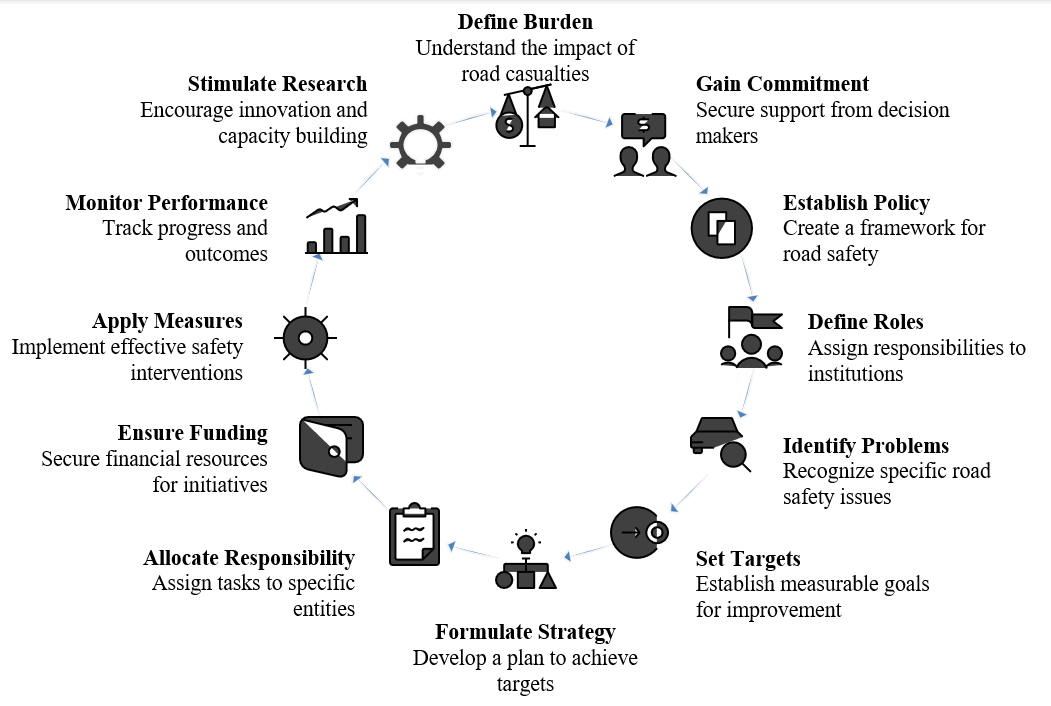
The elements of a mature system include establishing clear institutional responsibilities, setting road safety targets, developing action plans, allocating resources, and ensuring coordination across relevant actors. A central component of the framework is the systematic collection and analysis of crash data and safety performance indicators to support evidence-based decision-making. Continuous monitoring and evaluation of safety interventions are also emphasised in order to assess effectiveness and guide further improvements in road safety policy and practice.
Safe roads focus on ensuring that roads are planned, designed, built, operated, and maintained to support safe mobility for all users, including motorists, pedestrians, cyclists, public transport users, and persons with disabilities. Safe road infrastructure should accommodate human error and reduce the likelihood and severity of crashes. Key elements include clear road function classification, infrastructure design that supports appropriate speeds, and design standards that reflect the needs and capabilities of different road users, particularly vulnerable road users.
Safe vehicles concern vehicle design and regulation to prevent crashes and reduce injury severity. It includes both active safety systems that help avoid crashes and passive safety systems that protect occupants and other road users in the event of a collision. Achieving high vehicle safety requires robust technical standards for new and used vehicles, effective inspection and maintenance systems, and regulations governing vehicle import and export. The pillar also relies on institutional capacity and professional competence within regulatory bodies, inspection agencies, and vehicle repair services.
Safe road users addresses behaviours that contribute to road crashes and injuries. It emphasises legislation, enforcement, and education aimed at reducing high-risk behaviours such as speeding, drink-driving, and distraction. Key measures include speed management, mandatory use of protective equipment, driver training and graduated licensing systems, and public information campaigns. The pillar also promotes a traffic culture in which road users understand risks and interact responsibly within the transport system.
Post-crash care is about reducing the severity of injuries after a crash has occurred. It involves the capacity of emergency response systems, healthcare services, and institutional frameworks to provide rapid and effective care. Important components include efficient systems for crash reporting and emergency response activation, trained first responders, and access to professional trauma care, rehabilitation, and long-term recovery services.
1.4 Objectives and scope
The objective of this study is to develop a framework for understanding the role of professional education in road safety capacity building, based on an assessment of current capacity and education requirements in Ghana, Tanzania, and Zambia, and a comparison with the Safe System approach as it its practiced in Europe.
To reach this goal we pose the following research questions:
-
What is the current state of professional road safety capacity and educational qualification requirements in Ghana, Tanzania, and Zambia following the five pillars of the Safe System approach?
-
How does this compare to the state of professional road safety capacity and educational qualification requirements in selected European countries recognised for their leadership in Safe System implementation?
-
What are the main gaps in capacity building and educational qualification requirements in the studied African countries, and how can these gaps be addressed to strengthen the safe system implementation in those African countries?
It should be noted that the paper aims to provide insights of the African context through examples from the three African countries involved in the AfroSAFE project. We acknowledge the significant diversity among African countries and recognize that this outline cannot capture all such nuances.
The remainder of the paper is organised as follows: the study method is first outlined, then the results are presented in accordance with the five pillars of the Safe System. Finally, the paper concludes with a discussion of the key training gaps, an outline of a framework and implications for road safety education, along with recommendations for policy and future research.
2. Method
We first explain the approach used to collect and structure the data, followed by more details on the data collection itself.
2.1 Target groups identification
Key target groups were identified within each pillar. These target groups can be defined as ‘key actors for implementing a Safe Systems approach in that pillar’.
A critical step in this process was to narrow down the list of target groups to ensure focus and maximize impact in the analysis that follows. Using desk review, workshops conducted during the AfroSAFE project meetings in the African countries, and interviews with local stakeholders in Ghana, Tanzania, and Zambia, an initial set of possible target groups was first identified. This list was then reduced to one common target group per pillar based on the following criteria:
-
The group should be a relevant actor for applying the Safe System approach within the respective pillar.
-
The group should be available in all countries involved in the AfroSAFE project.
-
Sufficient information about the group should be accessible.
The resulting common target groups are presented in Table 1 as pre-selected target groups. It should be noted that the names used are generic and represent the ‘functions’, while the actual names of the corresponding authorities vary across countries.
| Target groups | Road-safety management | Safe infrastructure | Safe vehicles | Safe road-user behaviour | Post-crash care |
|---|---|---|---|---|---|
| Pre-selected | National Road Safety Agency | National Public Road Administration | National Vehicle Inspection Agency | Driving schools | Ambulance services |
| Suggested | NGOs, Road administration, etc. | Local road administration, etc. | Authorized car workshops Police, etc. | Police, NGOs, etc. | Fire brigades, Police, etc. |
In addition, the local partners from Ghana, Tanzania, and Zambia identified one further target group in each country, considered relevant within their national context (see Table 1, suggested target groups). While generic names were applied the actual institutional designations vary. For example, in one country the most relevant actor can be a ‘ministry’, whereas in another it maybe a subordinate ‘directorate’.
2.2 Data collection and analysis
For the Road Safety Management pillar, we relied on targeted data collection undertaken within the AfroSAFE project (Nævestad et al., 2025). This work assessed the status of key safety elements and Road Safety Management Systems (RSMS) in Ghana, Tanzania, Zambia, Norway, Sweden, and the Netherlands. The assessment was based on focus groups and individual interviews with 73 road safety professionals, including representatives from government authorities, non-governmental organisations, and research institutions across the six countries. These interviews were conducted either in-person or digitally via Microsoft Teams between April 2023 and April 2024, with durations ranging from 40 minutes to 2.5 hours (for group sessions).
For the remaining pillars, data was collected from desk research and interviews that the AfroSAFE partners conducted within their respective countries with the target groups identified above and based on a pre-defined template including the following items:
-
Legislation: Which regulations, directives or laws need to be followed by the target group?
-
Responsible administrative unit: Who is the responsible administrative unit within the target group?
-
Formal requirements: What formal requirements are needed in order to carry on the job? i.e. the certificates and requirements needed in order to be qualified to work with safety issues in the particular pillar.
-
Educational institutions: Who are the relevant educational institutions/training courses whereby the necessary qualifications can be achieved? Can it also be educational institutes from abroad?
-
Number of qualified professionals: How many professionals are there with the required qualification exist? i.e. the current state of professional capacity.
This information was collected in each of the participating countries in the AfroSAFE project during the months from February to June 2023.
The figures presented were primarily obtained from the official websites of the relevant institutions. Where published statistics were not available, local representatives provided estimates based on information gathered through the mentioned stakeholder interviews. In some cases, such estimates could not be provided, and the corresponding entries are therefore left blank.
To ensure comparability across countries of different sizes, all indicators were normalised. For most domains, figures are presented on a per capita basis, using national population data as the denominator. A population-based metric was chosen because many of the road safety challenges examined in this study, particularly in the African countries, are closely linked to vulnerable road users and overall population exposure. This was therefore considered the most appropriate and comparable basis for cross-country comparison.
An exception was made for the safe vehicles pillar. Here, indicators were normalised by the number of registered vehicles, as this more directly reflects regulatory and inspection capacity relative to the size of the vehicle fleet. Data on the number of registered vehicles were obtained from the Global Status Report on Road Safety (WHO, 2023a).
The collected data were compiled into a comparative database covering the six participating countries. Information from interviews and desk research was organised according to the five Safe System pillars and the predefined data collection template. Descriptive comparisons were then undertaken across countries, using the normalised indicators described above to facilitate comparison between countries of different sizes. Missing information was reported as unavailable rather than estimated where no reliable data could be obtained.
3. Results
The following subsections summarise the current state of road safety professional capacity and education requirements across the different areas. For Road Safety Management, the analysis is based on a qualitative comparison between the selected African and European countries, while the remaining areas are examined using the data collected on education qualifications and training activities.
3.1 Road safety management
When it comes to legislation, all countries have some kind of national road safety regulations, policies, and strategies. Some countries (Ghana, Sweden) have a specific road safety act or road infrastructure safety regulation (Netherlands), while for the other countries regulation of traffic safety seems to be embedded in the overarching transport policies and in a road traffic act.
The responsible administrative unit for road safety management varies across the countries: It is a road safety authority within a Ministry of transport (in Ghana, Zambia and Denmark); within the Ministry of Home Affairs (in Tanzania), within the Directorate of Public Roads, under the Ministry of transport (in Norway) and in the larger Ministry of water and infrastructure (in Netherlands). In Sweden the responsible administrative units are the Swedish Road Administration (infrastructure) and the Swedish Transport Agency (mainly rules and regulations), both directorates under the Ministry of Rural Affairs and Infrastructure.
Table 2 presents the main results from the interviews conducted in European and African countries, showing the extent to which the 12 elements of road safety management based on Varhelyi (2016) are currently in place (see Figure 1). The three level ratings are essentially expert judgment presented as systematic assessment. However detailed text-based analysis can be found under Appendix A.
| Category | Europe | Africa |
|---|---|---|
| Overview of crashes | ● | ◑ |
| Road safety strategies | ● | ◑ |
| National-level responsibility | ● | ◑ |
| Description of road safety problems | ● | ○ |
| Road safety targets | ● | ◑ |
| Action plans | ● | ◑ |
| Responsibility for measures | ● | ○ |
| Funding for measures | ◑ | ○ |
| Implementation of effective measures | ◑ | ○ |
| Monitoring of targets | ● | ○ |
| Research & capacity building | ● | ○ |
| Commitment from decision makers | ● | ○ |
Representatives of all the African countries stated that there are formal requirements for a degree in Transport Planning/Management, Engineering, Business/Public Administration, Statistics, Economics, or other related programmes, with engineering being the most common educational background. Our results indicate, however, that these programs lack a systematic education and training in the Safe System approach. Thus, the education systems in these countries may not sufficiently produce road authority personnel with relevant Safe System knowledge and training.
This can partially explain the findings from the comparison of the Varhelyi (2016) twelve elements of road safety management between European and African countries, in which the African countries lag behind. In Europe, the principles of Vision Zero and Sustainable Safety are not only embedded in national strategies but are also reinforced through structured training programs, institutionalized knowledge transfer, clear roles and responsibilities, and continuous professional development supported by universities, research institutions, and government agencies. For example, in Sweden, agencies such as the Swedish Transport Administration (Trafikverket) systematically integrate research into guidelines, training, and certification schemes (e.g. road safety audits). In the Netherlands, CROW serves as a national knowledge platform, translating research into widely used design manuals and training programmes.
These mechanisms ensure that professionals are equipped to collect and analyse crash data, set measurable targets, design and fund effective action plans, and monitor progress, which are all key elements that function as a cohesive system. By contrast, in the participating African countries, the lack of formal training structures means that capacity building is fragmented, often dependent on short-term donor projects or individual expertise, rather than being sustained within national institutions. This systemic weakness undermines the development of clear responsibilities, evidence-based measures, and consistent monitoring, thereby limiting the implementation of the Safe System approach in practice, and contributing to persistent road safety challenges across the continent.
Furthermore, in both the African and European contexts, road safety management involves a broad chain of decision-making and implementation across multiple stakeholders, including ministries, government agencies, law enforcement bodies, and organisations responsible for road infrastructure, health services, and maintenance. In the African countries studied, interviewees described several challenges related to coordination and integration between these actors. In Tanzania, for example, it was unclear at the time of the interviews which institution held the primary responsibility for road safety. In the European countries, by contrast, interviewees emphasised that cooperation between actors was organised through well-established coordination structures. These were formalised in road safety action plans, in which actors agreed on problem definitions and relevant countermeasures, and responsibilities for implementing measures were clearly assigned. The actors involved also participated regularly in joint follow-up meetings to monitor developments in road safety, assess the implementation and effectiveness of measures, and discuss further actions.
In the European context, such cross-institutional cooperation appears to be facilitated by a shared understanding, professional culture, and knowledge base across organisations, including government agencies, regional and municipal authorities, private-sector actors, and NGOs. Common professional education may contribute to the development of this shared knowledge base and thereby support coordination across organisational boundaries. Education can therefore be regarded as one of several preconditions for effective inter-agency collaboration, which in turn is an important feature of how road safety policies and interventions are organised and implemented.
Comparing professional capacity in road safety governance across countries proved challenging. All six countries have institutional arrangements responsible for coordinating and managing road safety, typically organised as a national authority, council, or committee, sometimes complemented by regional or district-level structures. Although these bodies are publicly mandated, their composition and scope differ substantially.
In Ghana and Zambia, the governance landscape includes a broader set of actors. Non-governmental organisations play an active role in road safety coordination. In Zambia, the accident investigation team is considered part of the road safety management structure.
These structural differences, combined with limited and inconsistent data on staffing levels, made it difficult to produce a reliable quantitative comparison of professional capacity across countries. To ensure comparability, we therefore chose to focus on employees within the public road authorities as a common institutional denominator across all six countries. Figure 2 shows number of employees in the road authorities per million inhabitants.
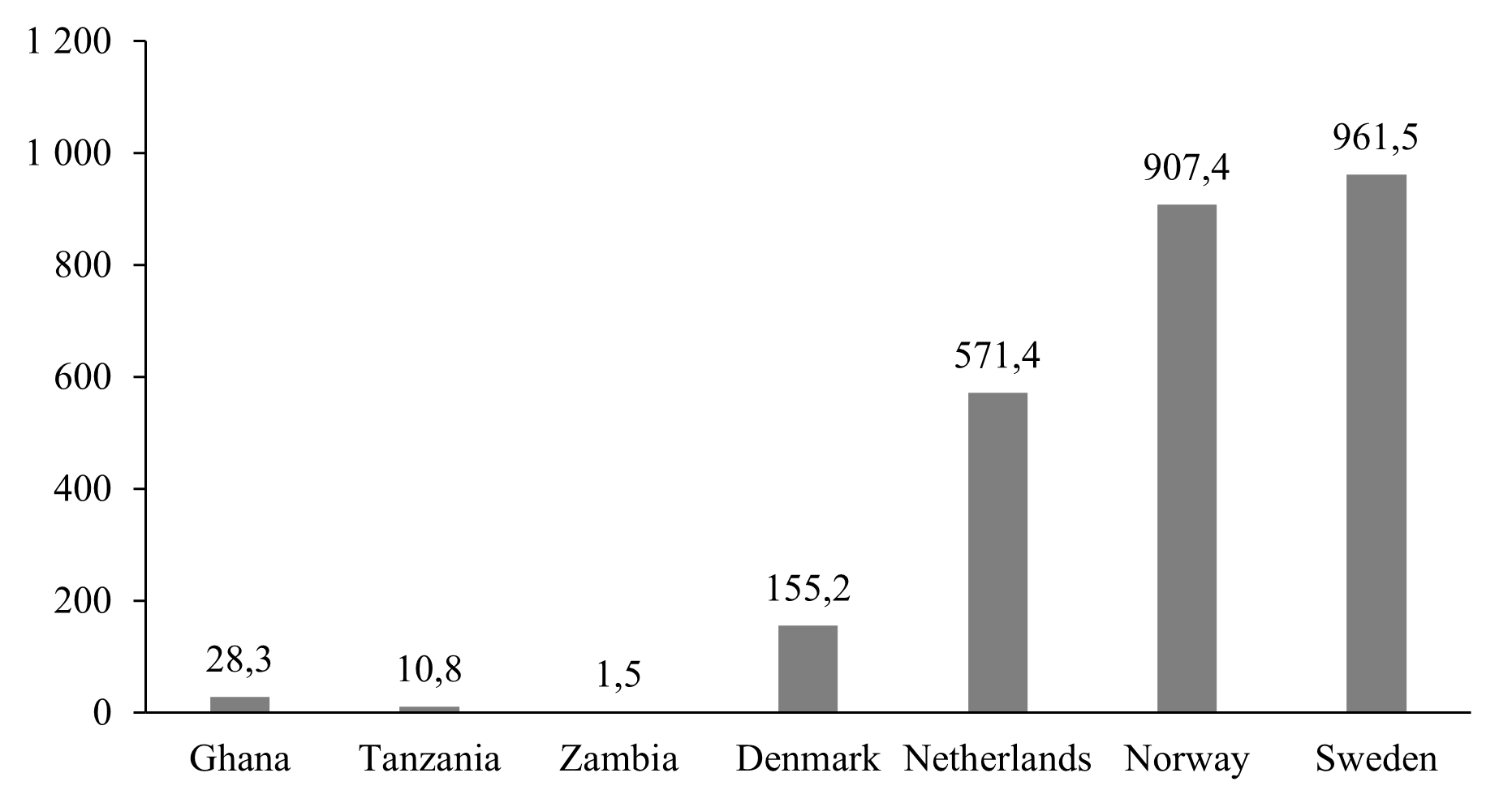
There is a marked difference in scale between the African and the European countries in the size of their national road authorities. Whereas Norway and Sweden have close to 1 000 employees per million inhabitants, the corresponding figure in the African countries ranges from 2 to 28 per million.
Part of this disparity may reflect differences in organisational design. In several of the African countries, responsibilities are more extensively delegated to regional and local authorities. However, delegation does not in itself ensure that local bodies possess sufficient competence or capacity to implement road safety measures in line with Safe System principles. In practice, this gap is often addressed through reliance on external consultants. At the same time, local authorities may lack the capacity to supervise and critically assess consultants' work, which can weaken institutional learning and long-term competence building within the public administration.
3.2 Safe infrastructure
The key target groups for this pillar include public authorities (national, regional, and urban levels), NGOs, and private road contractors, as seen in Ghana, Zambia, and Denmark. Most countries focus solely on road infrastructure, except the Netherlands, where this responsibility is integrated into the Ministry for Infrastructure and Water Management. Legislation varies, ranging from general roads acts to specific highway codes or geometric design guidelines (e.g. as in Ghana).
In the EU, road infrastructure safety is supported by a common regulatory framework through the Road Infrastructure Safety Management (RISM) Directives (2008/96/EC and 2019/1936), which are implemented through national legislation and detailed guidelines. The revised Directive broadened the scope of road infrastructure safety management by introducing measures such as Network-wide Road Safety Assessment (NWRSA) and updated requirements for periodic and targeted road safety inspections. In countries such as Sweden and the Netherlands, this has resulted in well-defined and operationalised requirements for procedures such as road safety audits, inspections and network safety assessments.
In Zambia and Tanzania, legal frameworks for road management and traffic safety are also in place. However, these tend to be broader and less prescriptive about specific safety procedures, and their implementation is less consistently institutionalised.
The administrative units responsible for (safe) road infrastructure are public road authorities, transport ministries, or directorates. Zambia differs, with responsibilities split between the Ministries of Infrastructure, Housing and Urban Development, Local Government and Rural Development, and Transport and Logistics.
Formal education qualifications are required for professionals working with safe road infrastructure, such as degrees in civil engineering, transport engineering, urban planning, building construction, road design, or related fields, often certified by technical universities or professional institutes and bodies. In Tanzania, the formal qualifications require mostly civil engineering background with in-programme road safety courses or on-job training and/or continuous professional development trainings. Some countries, like the Netherlands, require additional proper certification from designated bodies for road safety auditors, by outsourcing auditor training to an independent body (Kwaliteitsorgaan Verkeersveiligheidsaudits – KoVa). In Norway certified road safety auditors are provided with fundamental knowledge in traffic safety (the main objective and methods in audits and inspections) and particular work practice/experience from road planning, traffic safety and traffic regulation are required. Denmark lists specific objectives alongside the educational institutions. Other countries, like Tanzania, rely on job experience or on-the-job training. In Ghana contractor qualifications are tied to classification and licensing guidelines.
Cross-border education varies; Ghana does not accept foreign qualifications, while Tanzania and Zambia do. In the Netherlands, EU auditors can apply for certification, and Norway accepts Danish-trained auditors.
In EU countries, systematic activities are carried out in Road Infrastructure Safety Management (RISM), such as:
-
Black Spot Management: identification and treatment of hazardous road locations in the road infrastructure
-
Network Safety Management: identification and treatment of road sections with high crash concentration
-
Road Safety Impact Assessment: assessment of the safety effects of building new roads
-
Road Assessment Programme: assessing the safety level of existing roads
-
Road Safety Audit: a formal safety performance examination of planned roads by an audit team
-
Road Safety Inspection: a formal, systematic review of existing roads with the intention of identifying potential hazards
For comparison, Road Safety Audit and Road Safety Inspection are practiced nationwide in all three African countries. In Ghana, Black Spot Management and Network Safety Management are practiced occasionally, and Road Assessment Programme is practiced locally. In Tanzania, Road Assessment Programme is practiced to some degree. In Zambia, Black Spot Management is practised occasionally. It is worth indicating that formal RISM trainings are mostly organized and delivered by international bodies working with African governments (e.g. International Road Federation (IRF), International Road Assessment Programme (iRAP)).
Figure 3 shows the number of professionals with road safety auditor certificates per million inhabitants in each country.
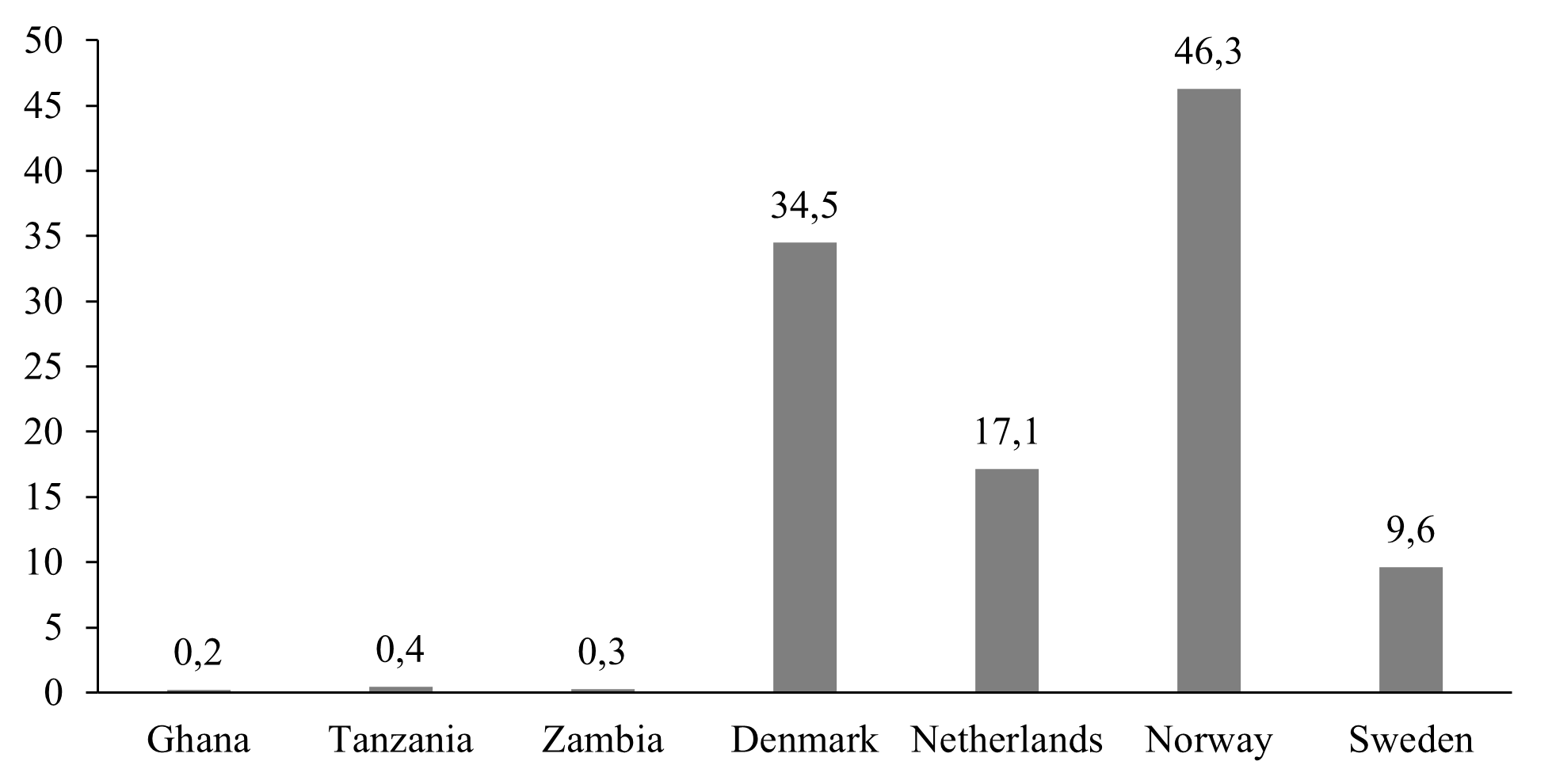
Substantial differences are also evident in the density of professionals with formal education in road safety auditing. The Netherlands has approximately 17.1 trained auditors per million inhabitants, compared with 0.4 per million in Tanzania — a difference of around fortyfold. The contrast between Norway and Ghana is even more pronounced: 46.3 per million in Norway versus 0.2 per million in Ghana, corresponding to a difference of more than two hundredfold.
Variation is also observed within Europe. Sweden's lower number compared with Norway and the Netherlands likely reflects organisational choices, such as greater reliance on private consultants to carry out audit functions. This may reduce the number of auditors formally recorded within public authorities without necessarily implying lower overall system capacity.
In several of the African countries, road safety audits are not systematically embedded or institutionalised within road planning, construction and maintenance processes. As a result, staffing and financial resources for auditing are typically not formally allocated, contributing to the very low numbers observed.
3.3 Safe vehicles
The pillar safe vehicles cover the technical standards and maintenance of both private and publicly owned vehicles in each of the participating countries. The identified target groups for the ‘safe vehicles’ pillar include private workshops/garages, vehicle inspection authorities (e.g. Zambia and European countries), and private car dealers/importers (Ghana and Tanzania). Denmark assigns responsibility for vehicle inspections to the Danish Automotive Federation, while in the other involved European countries, public authorities hold this role. Zambia and Sweden involve the police, and in Tanzania, responsibilities relevant to the safe vehicles are shared across institutions, including the Bureau of Standards for standards and conformity functions, and the Police Force for motor vehicle inspection and enforcement functions.
The responsible administrative units are public transport authorities, such as Ghana’s Driver and Vehicle Licensing Authority, Zambia's Road Transport and Safety Agency, and the Bureau of Standards in Tanzania. Denmark's Danish Automotive Federation collaborates with authorities and the industry, as does the public bodies in the other European countries that are responsible for vehicle safety. In the Netherlands, the Dutch vehicle authority (RDW) is responsible for vehicle type approvals and vehicle inspection legislation. In Sweden, the Swedish Transport Agency (Transportstyrelsen) has similar responsibilities, and in Norway the Norwegian Public Roads Administration (NPRA).
Formal qualification requirements for vehicle safety professionals typically include technical or engineering credentials, proper equipment, and business registration. In the African countries, technical universities and colleges serve as the main education providers. In Ghana, for example, private garages and workshops must meet specified equipment and facility standards and obtain an inspection license from the Driver and Vehicle Licensing Authority (DVLA). In Tanzania, the formal qualifications require mostly a civil engineering background, supplemented by in-programme road safety courses or on-the-job training. By comparison, European countries tend to impose more structured certification requirements, such as mandatory accreditation of vehicle inspector firms (Sweden), bachelor-level qualifications in automotive or mechanical engineering (the Netherlands) and approved technical manager credentials (Norway). European countries also follow EU standardisation, enabling mutual recognition of vehicle safety qualifications across borders, an arrangement that has no equivalent among the African countries studied.
Annex B summarises statistics for the common target group under the Safe Vehicles pillar, including the number of mechanics and accredited garages per million inhabitants and per 100 000 registered vehicles. There is no substantial difference between the selected African and European countries in the reported number of trained mechanics. There is, however, a large difference in the number of accredited garages. In the European countries, these typically number in the more than 60 per 100 000 vehicles, whereas in the African countries the figures are limited to less one or less. Figure 4 presents the corresponding figures for vehicle inspectors in the countries included in the analysis.
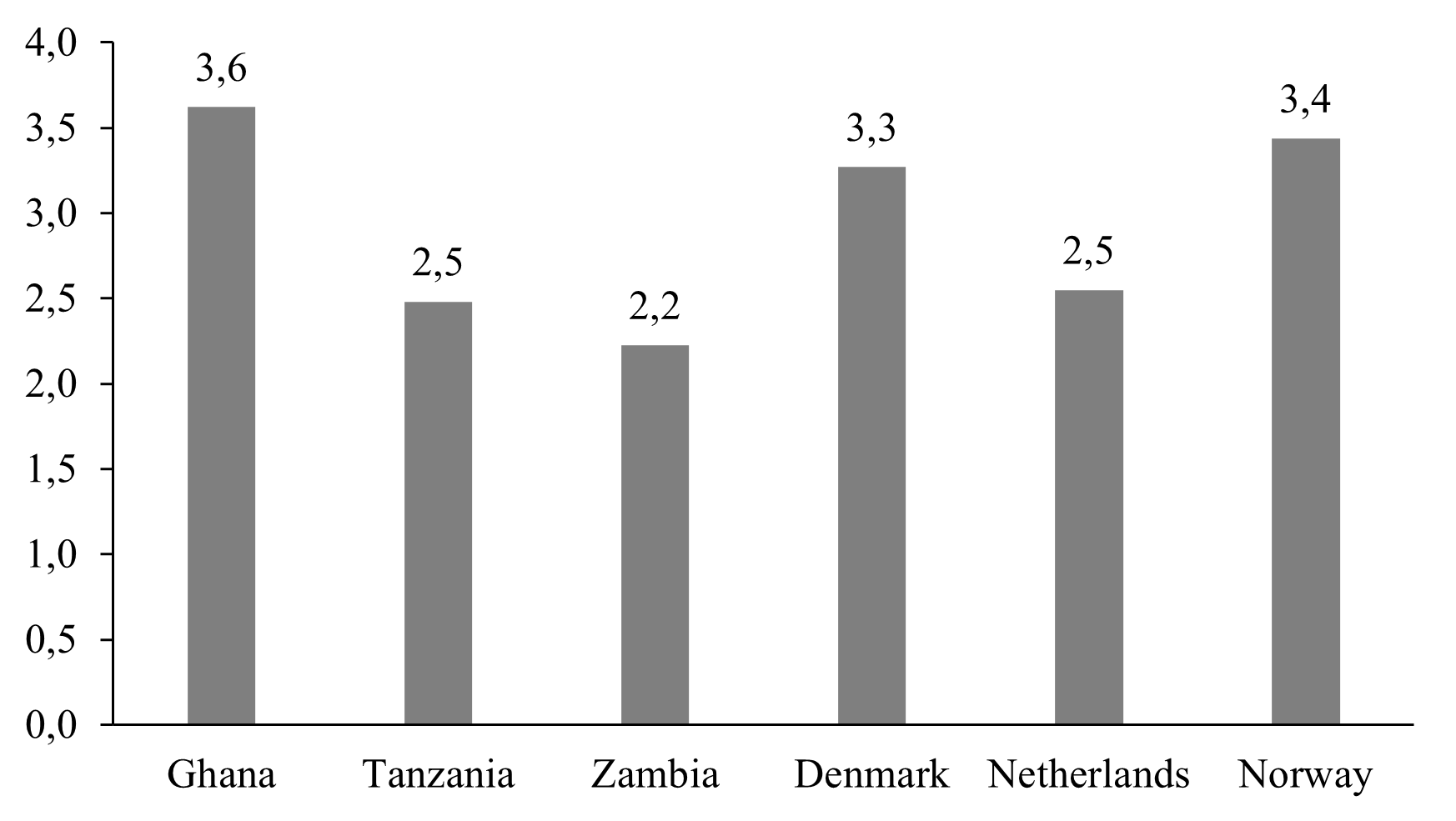
Looking at vehicle inspectors, i.e. those responsible for roadside inspections of heavy vehicles, there are no substantial differences between the countries. Ghana in fact has the highest figure, with 3.6 inspectors per 100 000 vehicles. It should be noted, however, that there is a slight mismatch between the numerator and denominator: the numerator includes inspectors responsible for heavy vehicles, whereas the denominator includes all registered vehicles, including light vehicles. Differences in fleet composition may therefore affect the comparison. Available WHO data suggest that heavy trucks constitute a larger share of the registered vehicle fleet in many African countries than in the European comparison countries (WHO, 2023a). The indicator may consequently somewhat overstate the relative inspection capacity in the African countries.
3.4 Safe road users
The target groups for this pillar in the study are public authorities, driving schools and the police. Ghana informants also include NGOs (i.e. associations for traffic safety) such as Amend, as a target group within this pillar. In some countries (Zambia and Sweden) the public road administration is seen to have a role as a target group also for this safe road user behaviour pillar. Considering the available data on the different target groups in the participating countries, in this pillar we focus on the target group of driving schools. Limited information was found regarding enforcement capacity and education qualification, and not for all countries. Therefore, it was not possible to conduct a comparison among the countries.
Considering legislation, general road traffic laws or specific acts, like the Motor Vehicle Driver Instructions Act in the Netherlands (CBR) or the traffic education and driving test regulations in Norway and Sweden, contain legislations for promoting safe road user behaviour. Denmark emphasizes specific legislation, such as the Pedestrian and Cyclist Act and the Alcohol and Traffic Act. In Zambia, legislations regarding safe road user behaviour are laid down in the Highway Code and the Zambia Road Traffic Act 2002. In Tanzania, legislations for driving schools is described in the Road Traffic Act from 1973.
National road transport authorities usually have administrative responsibility for ensuring safe road user behaviour. The Central Bureau of Drivers' Licenses (CBR) in the Netherlands, oversees driver licensing and associated duties. In Denmark it is the Danish Road Safety Agency, while in Sweden, the function of supervision of driving schools and the licensing procedure, is shared by the Swedish Transport Administration and the Swedish Transport Agency. In Norway, the Norwegian Council for Road Safety (Trygg Trafikk) which is an umbrella organization (NGO) for the voluntary road safety work serves as a link between voluntary associations and the road safety authorities. The police, in Tanzania, is responsible for the traffic law enforcement and compliance, hence they bear this obligation. In Zambia, it is the Road Transport and Safety Agency and in Ghana the National Road Safety Authority.
NGOs focus on influencing the public and policymakers through campaigns and short courses. For instance, The National Federation for Road Safety (NTF) in Sweden aims to improve road safety by encouraging politicians and organizations to implement more effective safety measures. They also encourage the road users to comply with traffic rules. Amend as NGO active in Ghana, invests efforts in making school areas and the routes to schools safe, by for example implementing traffic calming measures and building pedestrian sidewalks and pedestrian crossings that promote safe walking behaviour.
Driver training is provided through public or private institutions, typically based on an approved national curriculum. Differences emerge, however, in the emphasis of training and testing across countries. In several of the African cases, training appears to focus primarily on operational vehicle handling skills, such as manoeuvring and control. In contrast, in Sweden and Norway, greater attention is given to components related to risk perception, hazard anticipation, and self-assessment.
There is not much difference among the countries in terms of entry level requirements to become a driving instructor (see appendix B). Ghana has the longest training with 36 months, followed by Norway, where the education can take up to 24 months. If we disregard the results for Ghana, the African countries tend to have somewhat shorter training than the European
Table 3 shows the number of driving schools and teachers per million inhabitants in the different countries.
| Ghana | Tanzania | Zambia | Denmark | Netherlands | Norway | Sweden | |
|---|---|---|---|---|---|---|---|
| Driving instructors per million inhabitants | 27 | – | – | 345 | 925 | 537 | 307 |
| Driving schools per million inhabitants | 9 | 5–12 | 8 | 293 | 509 | 204 | 88 |
| Number of schools | 291 | 300–700 | 150 | 1 700 | 8 903 | 1 100 | 911 |
| Population, million | 32.8 | 63.6 | 19.5 | 5.8 | 17.5 | 5.4 | 10.4 |
The number of driving schools could only be estimated for Tanzania, as there was no official record at the time of publication. With this limitation in mind, there is still an apparent gap in available resources compared to European countries, with the African countries having less than 10 driving schools per million inhabitants, whereas there are from 88 to 509 per million in the European countries.
3.5 Post-crash care
In the pillar ‘post-crash care’ the target group of Emergency/Ambulance services and workers are listed in all countries, while fire brigades and rescue forces are included in Tanzania, Zambia (and Denmark and Norway). Informants from Ghana, Zambia and Denmark put forward medical services, hospitals and rehabilitation centres in general while Ghana informants point out physiotherapist support. The police are seen as a target group also within this pillar – in Denmark and Norway. Sweden has a somewhat different approach, and the Civil Contingency Agency (i.e. the civil defence) was seen as a target group for post-crash care.
The aggregated results from our data collection regarding ambulance workers is presented in Figure 5.
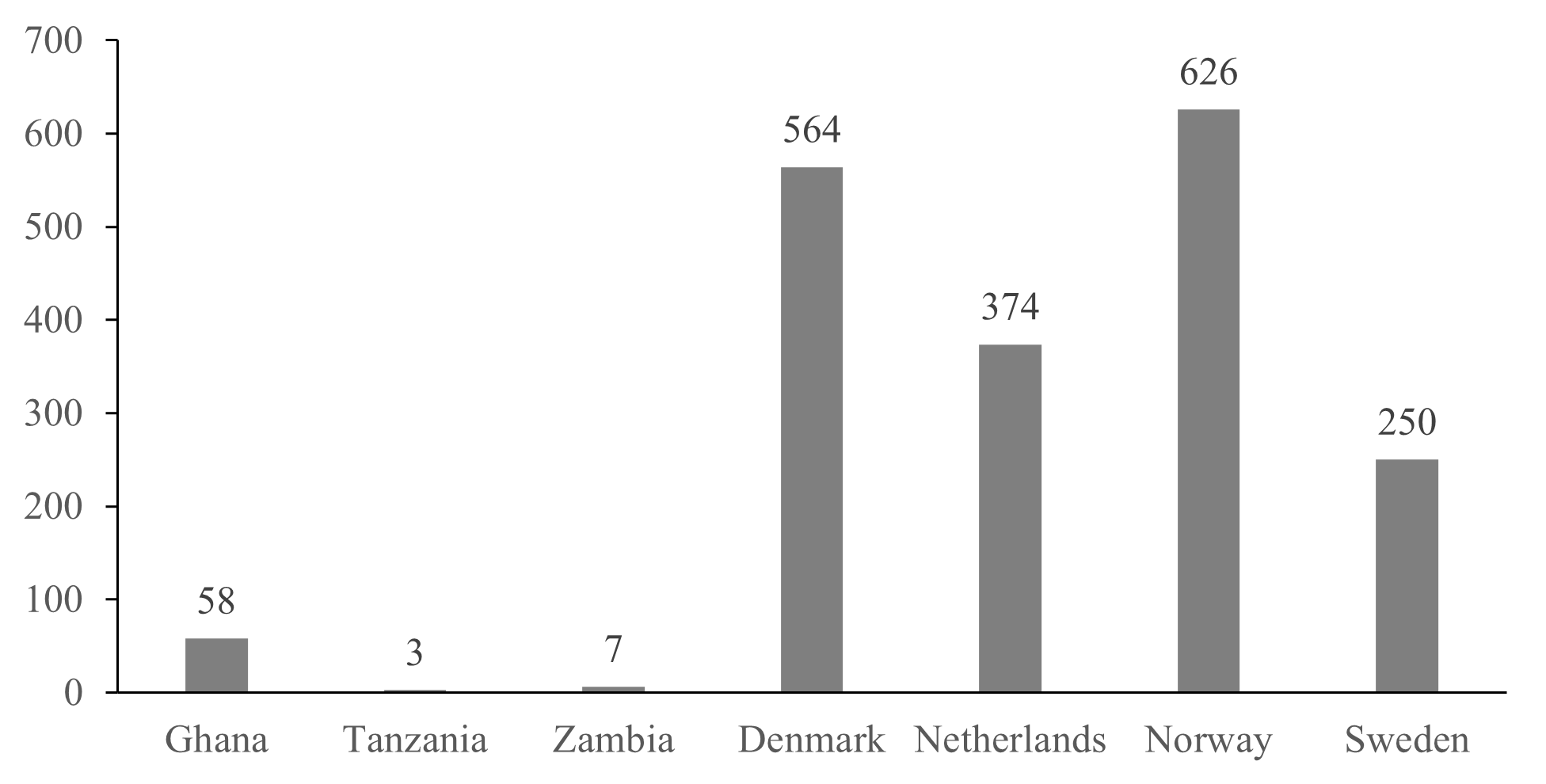
There are some gaps in the available data, which makes direct comparison difficult, but the evidence suggests no major differences between African and European countries in the type of training ambulance workers receive (see appendix B). The key discrepancy lies instead in workforce size: African countries typically have fewer than 100 ambulance (even less than 10) workers per million inhabitants, compared to 250-600 per million in Europe.
Although the present study focuses on professional training and education, respondents1 frequently highlighted needs related to the broader operational capacity of the post-crash response system. In particular, shortages of equipment and rescue tools were reported, including basic medical equipment and extrication devices. Limited availability of ambulances and fire engines was also identified as a major constraint, especially outside larger urban centres. In addition, respondents emphasised the need for stronger administrative coordination and technical support to establish a more efficient and better coordinated post-crash response system. Training needs were mentioned mainly in relation to emergency response personnel and community members who are often first at the scene of crashes, where the absence of basic first-aid knowledge may lead to inappropriate assistance. In addition to the shortage of staff in general, the Zambian informants mentioned shortage of the most advanced paramedics (with only 3 for the entire country).
4. Discussion
4.1 Road safety pillars
The main aim of this paper is to investigate the status of road safety capacity in Africa when benchmarked to the different pillars of the Safe System paradigm. This was operationalized by: (1) comparing the status of the road safety capacity in Africa to that in the Safe System approach leading European countries; and (2) investigating the professional education requirements in the participating African and European countries. Across the different pillars, no clear hierarchy in terms of capacity gaps emerges. The Safe Vehicles pillar may, if anything, be associated with somewhat smaller gaps, but the differences are not pronounced and depend on the indicators considered. The following paragraphs discuss and summarize the main capacity and professional education requirement gaps in the African countries, identified per pillar in a more qualitative way.
A key training gap identified for the pillar road safety management is the lack of a multidisciplinary approach in road safety management education. While engineering is a common educational requirement across different countries, there is a notable absence of integrated training that encompasses various relevant disciplines such as public health, law, and social sciences. This gap highlights the need for a more holistic and inclusive educational framework to address the complex and multifaceted nature of road safety management effectively. This will again lead to more proper collection, analysis and use of statistics about road crashes, including contributory factors, the use of safety performance indicators other than crashes, setting road safety targets, establishing road safety action plans, designating evidence-based road safety measures systematically.
For the pillar safe infrastructure, the most significant gap in training activities identified is the lack of systematic education and training in the elements of the Safe System approach in the African countries. European countries, having implemented Vision Zero or Sustainable Safety for over 20 years, have established systematic training in these areas. A clear gap identified in the African countries concerns the limited availability of structured training in Road Infrastructure Safety Management (RISM). None of the studied African countries currently offer short courses in RISM domestically, meaning that professionals seeking such training must attend courses abroad. This reliance on overseas training limits the number of practitioners who can obtain the necessary competence and constrains the development of a broader national pool of trained road safety auditors. Beyond the RISM tools, it is also important to integrate the Safe System principles in the road design guidelines, which are often referred to in designing safe roads. Across the participating African countries, the road design guidelines insufficiently address the needs of vulnerable groups (motorcyclists, elderly, children, and disabled people), such as ensuring adequate separation from high-speed traffic, and lack the integration of the Safe System principles.
For the pillar safe vehicles, we have identified several challenges. Most of these challenges mentioned above are mostly in the domain of policy adoption and implementation, and not likely to be influenced by training. However, two specific training gaps have been identified. The first is a lack of consumer awareness about safe vehicles. The second is that vehicle inspection training is of a very basic nature. At the fundamental level, an important gap to be addressed for vehicle safety is awareness and adoption of the seven key UN agreements for vehicle safety (ITF, 2022b; United Nations Economic Commission for Europe, 2021, 2022; World Health Organization, 2023). The analysis indicates that training alone is unlikely to address some of the structural barriers related to the adoption of vehicle safety policies. Several of the obstacles to implementing such policies appear to be located at the political and regulatory level rather than within the professional capacity of practitioners. At the same time, awareness of vehicle safety standards and assessment programmes, such as the New Car Assessment Programs (NCAP), appears to be limited in the studied contexts.
For the pillar of safe road users, one of the main issues concerns the limited emphasis on risk perception and self-assessment in driver training. Training in several cases predominantly focuses on operational vehicle handling skills, which may contribute to overestimation of driving abilities and increased risk-taking. This distinction between operational and higher-level competencies corresponds to the Goals for Driver Education (GDE) framework (Hatakka et al., 2002). Although not formally part of the Safe System model, the framework's emphasis on recognising human limitations and managing risk is broadly compatible with Safe System principles. The findings suggest a need to strengthen the cognitive and reflective dimensions of driver education, alongside practical skills.
Additional gaps include the possibility of obtaining a driving licence without completing the formally required procedures. Furthermore, practitioners responsible for road safety campaigns would benefit from more systematic and practical guidance for the design, implementation, and evaluation of communication measures.
For the pillar post-crash care, an obvious gap is the sheer lack of staff and ambulances. Also, the lack of specialized training and equipment for first responders, inadequate staffing and technical support, and a general shortage of resources, including ambulances and fire engines. These gaps underscore the need for comprehensive training programs and improved infrastructure to enhance the effectiveness of post-crash responses, which are crucial for reducing the consequences of road crashes.
An overall theme that was indicated in the different interviews and workshops is that safety relevant educations in African countries is in fact available, in the form of vocational training provided locally or by international organizations. However, there is a lack of academic education in traffic safety that would provide the holistic view of the subject for the transportation/safety professionals.
In many African contexts, public transport and active travel may be regarded primarily as modes of necessity rather than desirable transport options. If so, this may reduce the priority given to investments in these modes, contributing to a cycle in which vulnerable road users continue to face unsafe conditions. Breaking this cycle requires not only investment, but also institutional capacity to integrate road safety, public transport and active mobility within a Safe System approach.
4.2 A conceptual framework for understanding professional education as part of Safe System readiness
Nævestad et al., 2025 distinguish between Safe System maturity and Safe System readiness. Maturity refers to the extent to which the Safe System approach is implemented, whereas readiness concerns the institutional and societal conditions that influence the ability to implement it. Readiness is multidimensional and includes formal structures and responsibilities, regulation, resources, political commitment, organisational culture, coordination, infrastructure and technology, and professional knowledge and competence. This distinction provides a broader conceptual basis for our framework.
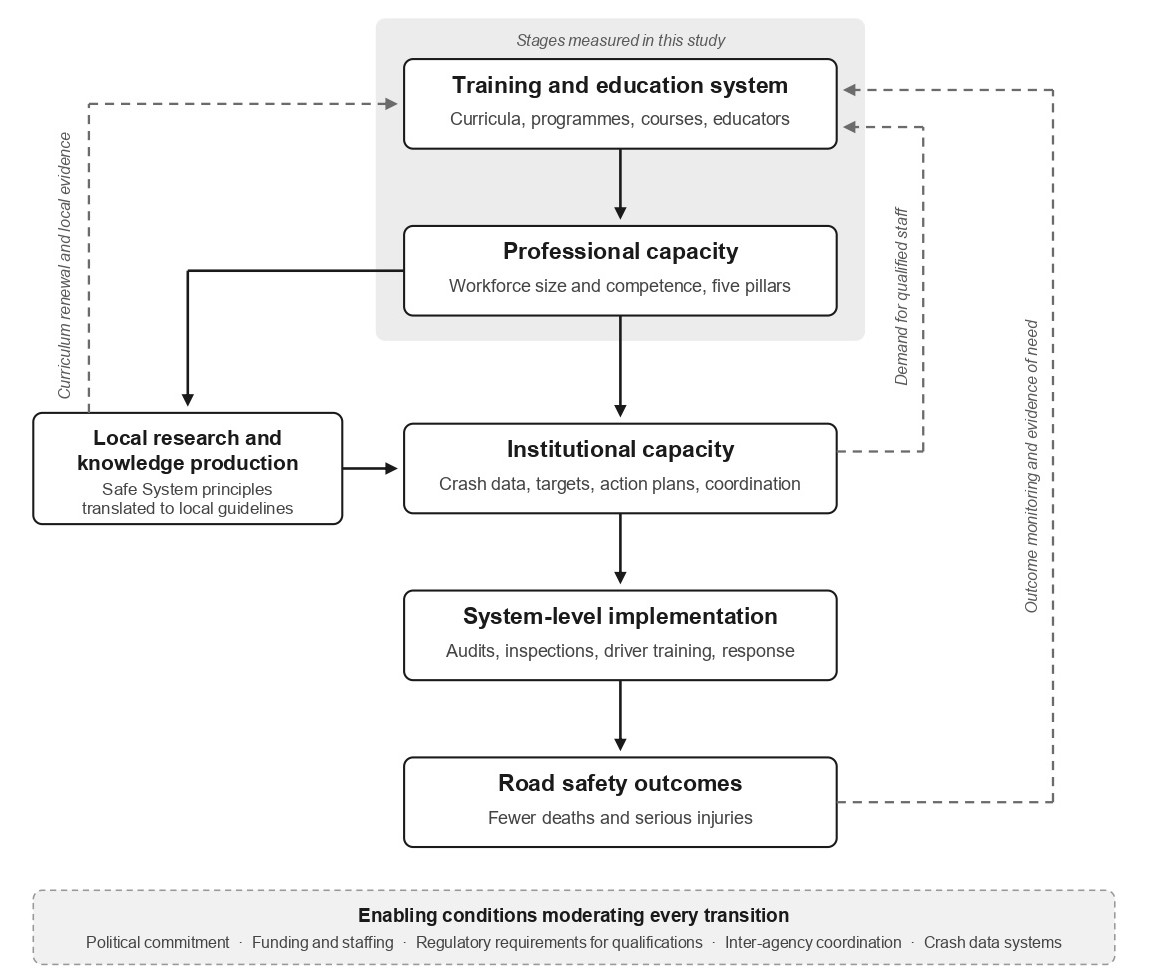
Figure 5 takes professional education and training as its point of departure and illustrates a proposed pathway through which education may contribute to Safe System readiness and implementation. Education and training can strengthen the knowledge, skills and competence of the professional workforce, which in turn can support key road safety management functions such as crash data analysis, target setting, action planning, identification of evidence-based measures, and inter-agency coordination. These relationships are shaped by wider readiness conditions, including institutional mandates, regulatory requirements, resources, political commitment, coordination structures and data systems. Professional competence alone is therefore insufficient to ensure effective road safety management or Safe System implementation.
The framework also highlights the role of local research and knowledge production. Evidence-based road safety management requires capacity to adapt general Safe System principles to national and local conditions, for example through the development of guidelines, standards and procedures, and to assess how measures work in those settings. Higher education is an important source of such capacity. Local research can also contribute to the development and renewal of professional education by informing curricula and strengthening the academic knowledge base on which training is built.
The framework includes feedback mechanisms to reflect that the development of professional capacity is not driven by the supply of education alone. Demand for qualified staff may stimulate the establishment and continuation of education and training programmes, particularly where specific competencies or qualifications are embedded in institutional mandates and professional requirements. Monitoring of crashes and safety performance may similarly identify new competence needs and inform the development of training. Figure 5 should therefore be understood as a programme logic model showing how professional education may contribute to Safe System readiness and implementation. The relationships shown are proposed mechanisms and are not estimated in the present study.
4.3 Study limitations and future research
The study, although novel in the presentation of these capacity gaps, has several limitations. It is restricted to three countries and therefore cannot fully represent the diversity of institutional arrangements and cultural contexts across the African continent. The findings should thus be interpreted with caution, and future research should include a broader selection of African countries to provide a more comprehensive picture.
In some cases, the data were incomplete, based on rough estimates, or inconsistent across sources, which limits the precision of cross-country benchmarking. While comparisons with European countries recognised as leaders in Safe System implementation provide a useful reference point, such benchmarking may oversimplify contextual differences and potentially understate promising practices already emerging within African settings. Future research should therefore strengthen intra-African comparisons, invest in more systematic and quantitative data collection, and examine the political and institutional conditions that influence the feasibility of implementing Safe System–aligned education and training.
A further limitation concerning the benchmarking against European countries is that while these countries are often regarded as leaders in Safe System implementation, their systems cannot be considered fully mature or without shortcomings. Safe System implementation is an ongoing process, and variations in consistency, institutional coordination, and educational integration are also present within the European cases. The comparison should therefore not be interpreted as a contrast between ‘complete’ and ‘incomplete’ systems, but rather as a relative assessment across different stages of development.
Although the study identified key target groups within each pillar, it did not encompass all relevant professional groups. As an example, primary school traffic education was not included in the present analysis. While the number of primary school teachers is not in itself a meaningful indicator, since traffic education represents only a small part of their overall responsibilities, the extent and content of traffic safety training within teacher education may be relevant. Future research could therefore examine how traffic education is integrated into teacher training and school curricula, and whether it reflects Safe System principles.
Future studies could also examine the educational capacity of relevant higher education institutions, for example through student intake and graduate output. Such analyses would complement the present assessment of programme content and provide a more complete picture of long-term capacity development.
While the paper examines both the status of professional capacity building and existing educational and training qualification requirements, it does not analyse the relationship between these two dimensions. Further research is needed to explore how educational structures and qualification requirements shape professional capacity, and vice versa.
Considering road safety management, we adopted Varhelyi's 12 elements in which allocation of responsibilities is a key element. However, it would also be important to set up a coordination framework to ensure alignment of different strategies and actions. Future research should investigate the decision-making process with respect to road safety and identify the opportunities and bottlenecks in developing and setting up such a framework. In addition, the evidence base should be expanded in three directions.
-
Intra-African comparisons. More countries should be included to identify regional variations, highlight scalable practices, and foster peer learning within Africa.
-
Quantitative data and indicators. Building reliable datasets on training provision, institutional capacity, and educational outcomes is critical to track progress.
-
Institutional and political analysis. Future studies should examine the governance and funding mechanisms that either facilitate or hinder Safe System education. Understanding these contextual factors is important for designing feasible reforms.
Further work could also explore pedagogical innovation, such as the effectiveness of problem-based learning, blended online-offline training, and South–South collaboration in professional education.
4.4 Policy recommendations
Achieving sustainable improvements in road safety in Africa requires strengthening professional capacity across the entire road safety system. The findings of this study show that important gaps remain in education and training across several pillars of the Safe System approach. Addressing these gaps will require coordinated policy efforts aimed at strengthening national competence, institutional structures, and professional standards in road safety.
First, within the pillar of road safety management, the findings point to the absence of integrated and multidisciplinary education programmes in road safety. Governments and regional organisations should therefore support the development of structured education programmes that combine engineering, public health, behavioural sciences, and governance perspectives. Establishing regional or national training centres for road safety professionals could provide a stable institutional platform for such programmes while also supporting continuous professional development.
Second, under the pillar of safe infrastructure, the study identified limited domestic training opportunities in Road Infrastructure Safety Management (RISM), including the training of road safety auditors. Developing locally delivered RISM training programmes would help expand the pool of qualified professionals. Such programmes should ideally be accompanied by regulatory frameworks that define certification requirements for road safety auditors and embed these competencies within the responsibilities of road authorities.
Third, in the pillar of safe road users, the analysis indicates that driver education often focuses predominantly on vehicle handling skills, with limited emphasis on higher-order competencies such as risk perception and self-assessment. Revising driver education curricula to incorporate these elements may contribute to a more comprehensive understanding of risk among road users and better alignment with Safe System principles.
Fourth, for safe vehicles, the results suggest that limited awareness of vehicle safety standards and consumer information systems, such as New Car Assessment Programs (NCAP), may constrain the uptake of safer vehicles. Educational initiatives aimed at journalists and media professionals could support broader public awareness of vehicle safety ratings and contribute to more informed consumer choices.
Finally, in relation to post-crash care, the findings highlight the need to strengthen both professional training and the availability of essential equipment for emergency response. Improving training for first responders and community members, particularly in areas with high crash incidence, could help improve the quality and timeliness of post-crash assistance.
An important prerequisite for strengthening Safe System implementation is improved monitoring of institutional and professional capacity. A lesson we have learned from this study is that African countries should establish better systems for documenting institutional road safety capacity. While information on road safety functions, qualifications, competencies, experience and professional certification is highly valuable, simply maintaining reliable data on staffing levels would represent an important first step.
5. Conclusions
Taken together, these findings underline that strengthening road safety capacity requires a systematic and long-term approach to education and professional development. Building on the analysis, this study proposes a conceptual framework linking professional education to road safety outcomes through a sequence of professional capacity, institutional capacity, and system-level implementation. The observed disparities in, for example, the number of certified auditors, the availability of post-crash care personnel, and the provision of specialised and interdisciplinary training illustrate how limitations in education translate into broader capacity constraints across the Safe System pillars. At the same time, the framework emphasises that these relationships are shaped by enabling conditions such as regulatory requirements, resources, and data systems.
Investing in locally anchored training systems, formalising professional competencies, and embedding Safe System principles across institutions are therefore necessary steps for building sustainable capacity. This framework can also be seen as a structured basis for interpreting the empirical findings of the current study, and highlights how professional education can be seen as an important first step, but only one of many steps, on the road toward implementation of the Safe System in an African context.
CRediT contribution
Aslak Fyhri: Conceptualization, Formal analysis, Investigation, Methodology, Project administration, Writing – original draft, Writing – review & editing. Anteneh A. Mekonnen: Data curation, Investigation, Writing – review & editing. Haneen Farah: Conceptualization, Formal analysis, Investigation, Methodology, Project administration, Writing – original draft, Writing – review & editing. Tor-Olav Nævestad: Data curation, Investigation, Writing – review & editing. Sonja E. Forward: Data curation, Investigation, Writing – review & editing. Enoch F. Sam: Data curation, Investigation, Writing – review & editing. Jaqueline E. Masaki: Data curation, Investigation, Writing – review & editing. Thomas Miyoba: Data curation, Investigation, Writing – review & editing. Aliaksei Laureshyn: Funding acquisition, Project administration, Supervision, Writing – review & editing.
Acknowledgements
This study was performed as a part of the AfroSAFE project (https://doi.org/10.3030/101069500). We would like to thank all AfroSAFE partners who contributed, and mention in particular Laxman Bisht, Tejas Chandras, Liga Gutmane, John Fredrik Grönevall, Torkel Bjørnskau, and Daniel Mwamba.
Declaration of competing interests
The authors report no competing interests.
Declaration of generative AI use
During the preparation of this work the authors used ChatGPT to improve the language. The output was reviewed and revised by the authors who take full responsibility for the content of the publication.
Prior dissemination declaration
An earlier version of this work was presented at the 3rd AfroSAFE conference, held in Lusaka, Zambia, on 8–12 June 2026.
This study was earlier published as a report (AfroSAFE project deliverable D7.1).
Ethics statement
This study did not require ethical approval, as it did not involve the collection of personal or sensitive data. All data gathered were either publicly available or related to institutional practices and policies, with no information traceable to individual persons. In line with applicable guidelines and regulations, informed consent was obtained from all participants involved in qualitative interviews, and participation was entirely voluntary.
Funding statement
AfroSAFE project was funded by the European Union's Horizon Europe research and innovation programme under Grant Agreement No. 101069500. The views expressed here are those of the authors and do not necessarily reflect the official position of the European Commission or Horizon Europe.
Data availability statement
The data are available on request to the authors.
Code availability statement
Code sharing is not applicable to this article, as no custom code was produced or used.
Editorial information
Handling editor: Attila Borsos, Széchenyi István University, Hungary.
Reviewers: Hans Godthelp, Road safety for all, the Netherlands; Emmerentian Mbabazi, World Resources Institute, Uganda.
Submitted: 15 April 2026; Accepted: 2 September 2026; Published: 18 September 2026.