An approach to improve safety performance for work related road traffic by applying an occupational health and safety (OHS) framework
Abstract
In 2023, about 1.19 million road users were killed according to the WHO, and the Academic Expert Group (AEG) estimates that approximately one-third of these deaths were work-related. This paper emphasizes that employers are bound to occupational health and safety (OHS) standards while using public roads and should ensure the same attention to traffic injury prevention as in other workplaces. Using analysis of current practices, this paper explores the interplay between road traffic rules and OHS regulations. Work-related driving requires compliance with both road rules and OHS obligations. Organizations often violate road rules, undermining OHS principles that demand that employers take every reasonable step to maximize safety through the use of effective and evidence-based safety measures. This means that work-related traffic should exceed the minimum safety requirements encoded in road rules, and maximize safety through the use of the best available methods. Research shows that several key road safety prevention strategies have demonstrated positive effects, allowing for effective implementation of OHS laws. This paper proposes a 5-point assessment of organizational safety compliance and rigorous safety management based on well-established key safety factors.
1. Introduction
Work-related crashes are estimated to contribute about one-third of all road fatalities globally, approximately 400,000 deaths per year (Trafikverket, 2025). A work-related road crash fatality is by far the most common cause of traumatic occupational death (Ibid., ETSC, 2025). This approximation includes all of those killed in crashes related to organizational functions, both those employed by the organization and other road users who are killed as a result of the crash. This figure does not include crashes occurring during employee commutes to and from work, unless the commute is performed by the employer, for example through an organized employee bus service. This paper uses this definition. Workers are driving or riding for many different reasons, they can be professional driver of cars, powered two wheelers, trucks or buses but they can also use the transport system for business trips, visiting customers etc. The use differs significantly between fleets, sectors, cultures and regions.
When vehicles are operated on public roads for work-related purposes, at least two sets of regulations apply. Road traffic legislation, or road rules, address the driver of any vehicle and clearly put full legal responsibility on the behaviour of the driver. In cases where the vehicle is being driven for work purposes, occupational health and safety legislation also applies, holding the employer (or organization for which the vehicle is being driven) responsible for implementing effective preventative actions to protect the driver and others who may be affected by the operation of the vehicle. One legal framework is directed towards the individual driver and the other addresses the organization.
Examples of both types of legal frameworks can be found in United Nations (UN) conventions. The UN Global Forum for Road Traffic Safety issues conventions directed to units of government that shape rules of traffic behaviour for all those who drive on public roads. The UN International Labour Organization (ILO) promulgates workplace safety regulations, standards and practices that apply to organizations or employers and include responsibility for preventing injuries and death from road traffic crashes. These ILO regulations address the crash risk of both the employed driver and third parties with whom the work vehicle shares the public road.
A report from the Academic Expert Group (AEG) (Trafikverket, 2025) commissioned by the Swedish Transport Administration in advance of the fourth Global Ministerial Conference on Road Safety in 2025 has a set of recommendations. The fourth is cited below:
In order to internalize road safety responsibility across their entire value chain, fulfil legal requirements, and ensure compliance with road rules as a minimum standard, public and private organizations should:
Apply a safety management system such as ISO 45001 or ISO 39001.
At a minimum, for all road use related to operations across their value chain, organizations should purchase vehicles with the highest safety performance, and take responsibility for speed, fitness to drive, use of appropriate protective gear, and route selection.
The organization should report on its safety footprint, targets, actions, and results
This paper is an elaboration and continuation of the AEG 4th recommendation. One aim of this paper is to compare the two legislative frameworks covering work-related road safety and assess similarities, differences, and potential conflicts. For example, the fundamentally preventative nature of occupational health and safety (OHS) law will be compared to the reactive basis of traffic law. The intent is to map and analyse the relationship between OHS law and traffic law so that strategies may be identified to optimize and fully utilize the combination of requirements and responsibilities and achieve the best overall safety for all road users. As part of this aim, an important goal for this paper is to explore how a broad and somewhat vague legal responsibility can be sufficiently focused to allow for effective compliance.
Another aim of this paper is to explore how organizations that are covered by OHS laws and/or contractual arrangements can verify compliance with the rules, regulations and/or standards that apply to their operations on public roads, including their responsibilities for the safety of their personnel using the roads and to the rest of society with whom they share the roads.
A related research question is whether the risk analysis that normally precedes implementation of occupational safety actions can be replaced by specific predefined traffic safety performance factors.
The purpose of this paper is in short to analyse how occupational health and safety (OHS) frameworks can be applied to improve safety outcomes in work-related road traffic, and to propose a structured approach for assessing whether organisations meet reasonable safety performance expectations. Actual safety performance is essential in trade and in business to business relations.
The aim is not to provide empirical estimation, but to identify structural relationships, regulatory gaps, and opportunities for integrating OHS frameworks into road safety management.
The analytical approach is interpretative and comparative, focusing on how different institutional domains define responsibility, risk management, and safety outcomes.
2. Research method and material
This paper applies a qualitative, theory-informed analysis of legal frameworks, international conventions, and institutional practices related to occupational health and safety (OHS) and road traffic safety. It analyses existing road safety regulations and practices with respect to the use of roads by employers and organizations for work purposes. The paper contrasts the purpose, requirements, application, and social expectations behind OHS regulations with those covering general road traffic. Relevant legal rules are interpreted and systematized in order to identify legal avenues for integrating road safety into the occupational health and safety responsibility framework.
Using a traditional legal methodology, this study examines the most important international conventions governing national legislation worldwide and influencing general principles of employer responsibility, including Articles 16 and 19 of the International Labour Organization (ILO) Occupational Safety and Health Convention, 1981 (No. 155). Standards of professional practice are also examined, including the International Organization for Standardization (ISO) 45001 Occupational Health and Safety Management Systems, (ISO, 2018) and ISO 39001 Road Traffic Safety Management Systems (ISO, 2012).
Specific texts of binding international conventions are considered, including Articles 16 and 19 of the International Labour Organization (ILO) Occupation Safety and Health Convention, 1981 (No. 155). Standards of professional practice are also examined, including the International Organization for Standardization (ISO) 45001 Occupational Health and Safety Management Systems, (ISO 2018) and ISO 39001 Road Traffic Safety Management Systems (ISO, 2012).
We have also analysed the UNECE Vienna convention, the basis for road rules in most countries.
In this paper we reference the Vision Zero framework with its ultimate goal of zero serious or fatal injuries in traffic. The Vision Zero framework stresses that long-term progress of road safety should be based on upstream actions, i.e. that both public and private organizations must integrate road safety as a core management, leadership, and operational quality in their use of the road transport system.
The potential to achieve ambitious goals has been greatly enhanced in recent years by the emergence of technologies that can monitor driver performance and control the vehicle when necessary to compensate for driver error or non-performance. The paper highlights the potential of these technologies in the field of occupational safety and describes how they enable employers to fulfil their safety responsibilities and ensure that their vehicles remain in compliance with road rules.
Based on the legal and institutional analysis we propose a set of five operational questions that should be answered by an organization that wishes to demonstrate its road safety performance.
3. Background
3.1 Burden of global road traffic crashes
Traffic crashes, injuries, and deaths are a burden to societies around the world. The World Health Organization (WHO) estimates the number of road user deaths to be 1.19 million in 2023 (WHO, 2023). More than 90% of road fatalities occur in low- and middle-income countries (Ibid.). Beyond the alarming burden to developing countries, road deaths remain a leading cause of premature death in higher income countries with about 20,000 road users killed in the European Union (European Commission, 2025) and nearly 40,000 road fatalities in the United States each year (NHTSA).
The report from the Academic Expert Group (AEG) in advance of the fourth Global Ministerial Conference on Road Safety in 2025, estimated that approximately one-third of all road deaths are work related (Trafikverket, 2025). Of the approximately 400,000 killed annually in work related crashes, employees account for about 100,000 deaths and the remainder are third party victims (Ibid.) where at least one involved driver was driving for work. Commuting is not included in the figures. The European Transport Safety Council (ETSC) has in a recent PIN-report elaborated around work related fatalities and severe injuries (ETSC, 2025). They conclude that in Europe around 40% of work related deaths happens in transport.
The AEG report examines the scale of the global road safety problem and identifies work-related road deaths as an opportunity for progress because of the additional control and responsibility that employers have on risks in the work environment, and the availability of effective tools, such as advanced vehicle technologies, that can be incorporated in a workplace setting. The AEG report builds on the concepts of Vision Zero, a road safety concept introduced in the 1990s that introduced a novel set of fundamental approaches to road safety (Johansson, 2009; Swedish Government, 1997; Tingvall, 1997). In Vision Zero, the ultimate goal is the elimination of severe and fatal injuries in the road transport system, a goal that is achievable when road deaths and severe injuries are considered unacceptable and preventable, and avoidance of road deaths is given higher priority.
There are significant reasons to improve the safety impact of drivers at work.
3.2 Traffic law, Vision Zero, the driver, and shared responsibility
Throughout the global evolution of the road transport system, much of the responsibility for safety has been concentrated on the drivers of motor vehicles (Norton, 2015; Tingvall, 2015; Tingvall and Lie, 2017). As a consequence, judicial systems have been well developed to define the legal responsibilities of the driver.
The 1968 Vienna Convention provides a framework that national or local governments can adopt to form a basic set of rules for driver behaviour (UNECE). The Vienna convention was developed by consensus, signed by 91 countries worldwide (United Nations), and reflects prevailing mid-20th century thought with regard to responsibility for road safety. At that time, most of society—even safety professionals—believed that primary responsibility for road safety should be borne by the road users, and that if drivers, pedestrians, cyclists, and other users would just follow rules, fewer people would be killed or injured. Indeed, a great deal of safety progress was made under this point of view, but by the end of the century it was clear that even well-intentioned users were incapable of error-free behaviour and, consequently, that continuing to blame the driver for traffic deaths was unlikely to further reduce the safety problem that had become the leading cause of death for young people around the world (Tingvall and Lie, 2017; Lie and Tingvall, 2024).
A new concept in road safety, Vision Zero or Safe System, was introduced in the 1990s, bringing a fresh point of view in which responsibility for road safety is shared between those who design and build the transport system (roads and vehicles) and those who use the system. Designers, builders, and system owners should be expected to provide roads and vehicles that accommodate known human limitations with regard to performance errors and in terms of injury tolerance. That is, the owners should be responsible for a system that humans—with their limitations—can navigate without serious injury or death. Road users, on the other hand, should be responsible for following certain basic rules, such as driving sober and obeying speed limits. Further, the Vision Zero concept, as illustrated in Table 1, states that if road users continue to disobey even these basic rules following a system upgrade, this behaviour should be considered part of human nature, and responsibility for safety revert back to the owners who should redesign the system to accommodate human behaviour (Swedish Government, 1997).
| 1 | The designers of the system are always ultimately responsible for the design, operations and use of the road transport system and are thereby responsible for the level of safety within the entire system |
| 2 | Road users are responsible for following the rules for using the road transport system set by the system designers |
| 3 | If road users fail to obey these rules due to a lack of knowledge, acceptance or ability, or if injuries do occur, the system designers are required to take the necessary further steps to counteract people being killed and seriously injured |
The Vision Zero concept describes a third group that is neither system owners nor individual road users, consisting of organizations that use the public roads to pursue their mission through their value chain. These organizations may be for-profit, not-for profit, or public but what they have in common is that they have employees or members who use the roads for work-related purposes. Vision Zero assigns a unique level of responsibility to these organizations, a level that is higher than individual road users, but different than system owners. Organizations typically do not have direct control of road or vehicle design but hold broad influence for road safety through prevention activities, employee expectations, and the power of procurement, purchasing the safest vehicles available for their own fleet and negotiating contractual relationships to require business partners to do the same. Since these organizations use public roads to achieve their mission, Vision Zero proposes that they reciprocate by using their full influence to improve the safety of their employees and all others with whom they share the roads.
The conventional practice of focusing blame for traffic crashes on road users has reduced incentive for the parts of the transport system that are capable of implementing the most effective prevention tools and has thereby seriously hindered safety progress. Case studies presented in the Vision Zero Handbook (Edvardsson Björnberg et al., 2023) indicate that legal implications resulting from the redistribution of responsibility in Vision Zero have proven largely unfounded as such cases have been rare.
Organizations have a significant role in improving road safety.
3.3 Occupational health and safety
There are international frameworks for occupational health and safety. According to Article 16 of the ILO Occupation Safety and Health Convention, 1981 (No. 155) (International Labour Organization, 1981), employers shall be required to ensure that, so far as reasonably practicable, the workplaces, machinery, equipment, and processes under their control are safe and without risk to health. Where necessary, employers shall be required to provide adequate protective equipment to prevent, so far as is reasonably practicable, risk of accidents or of adverse effects on health.
OHS law is rooted in the fundamental principle that the workplace must be designed and operated in a manner that protects the life, health, and dignity of all workers. OHS law is preventive rather than remedial: rather than waiting for accidents, illnesses, or fatalities to occur, these requirements establish a framework of duties and rights designed to anticipate risks, minimize hazards, and promote continuous improvement in workplace safety. This preventive orientation reflects the recognition that human well-being and economic productivity are inseparably linked, and that safeguarding workers is both a legal and moral imperative (Greenfield, 2020).
At its core, OHS law is guided by the principle of risk prevention. Employers carry the primary responsibility to identify hazards, assess risks, and implement measures that eliminate or reduce potential harm at the source. This includes designing safe work systems, providing appropriate equipment, ensuring proper training, and fostering an organizational culture of safety (Benjamin, 2008).
The prevention principle is hierarchical: priority must be given to eliminating risks entirely; where this is not possible, substitution, engineering controls, administrative policies, and the use of personal protective equipment are applied in descending order of effectiveness (International Labour Organization, 2013). By structuring obligations in this way, OHS law seeks to prevent harm proactively rather than relying on compensation after injury.
In the EU framework directive (EU Council Directive 89/391/EEC) on occupational safety and health, Article 6 Section 2, general principles of prevention are defined as the duty for employers to avoid risks, evaluate risks which cannot be avoided, combat the risks at source, adapt the work to the individual, adapt to technical progress, replace the dangerous by the non-dangerous or the less dangerous, develop a coherent overall prevention policy, give collective protective measures priority over individual protective measures, and give appropriate instructions to the workers.
A second fundamental principle in OHS law is participation and cooperation between employers and employees. Workers are not passive recipients of protection but rather active participants in shaping safe workplaces. OHS law typically guarantees rights to information, consultation, and representation, enabling employees to contribute to hazard identification, safety planning, and monitoring processes. This participatory dimension strengthens prevention by combining management expertise with workers' direct knowledge of job-specific risks. These principles are highlighted in Article 19 ILO Occupation Safety and Health Convention, 1981 (International Labour Organization, 1981).
This also means that—although the main safety responsibility falls on the employer—employees and other workers also have responsibilities. According to Article 16 of the ILO Occupational Safety and Health Recommendation, 1981 (No. 164) (International Labour Organization, 1981), which provides more detailed guidance and suggestions to supplement Article 19 of the ILO Occupation Safety and Health Convention, 1981 (Ibid.), arrangements shall be made to ensure that workers take reasonable care for their own safety and for the safety of other persons who may be affected by their acts or omissions at work. Further, workers should comply with instructions given for their own safety and health and for the protection of others, adhere to safety and health procedures, and use safety devices and protective equipment correctly and not render them inoperative. This means that according to basic principles of OHS law, employers must facilitate workers taking reasonable care and complying with prescribed safety and health measures. This includes complying with traffic laws and safe driving practices.
However, the balance of responsibility for workplace safety remains tilted toward the employer. ILO Convention 187 (International Labour Organization, 2006) and ILO Convention 155 (International Labour Organization, 1981) Article 16 points out that the main responsibility for continuous improvement of occupational safety and health lies with the employer. Employers are responsible for ensuring that workers follow safety rules and practices and must use their disciplinary authority when necessary to enforce compliance. Employers can never completely evade their occupational health and safety responsibilities by pointing to misconduct on the part of employees.
Additionally, OHS law emphasizes the principle of accountability. Employers are bound by legal obligations, and these are enforced by oversight agencies to ensure compliance. This accountability makes it clear that preventive measures are not optional but mandatory, grounded in enforceable standards rather than discretionary practices.
Beyond compliance, the principle of continuous improvement in OHS laws implies that employers must monitor, analyse, adjust, and if necessary, correct initiatives taken. An employer therefore must be aware of how well workers follow rules and regulations, and worker noncompliance does not absolve the employer's responsibility.
Coupled with the principle of continuous improvement, OHS law requires organizations to adapt safety systems as technology, knowledge, and work environments evolve, thereby maintaining a dynamic and forward-looking approach to prevention. This principle of adopting new technological developments is particularly emphasized in OHS laws in some countries, for example Sweden (see 2 Chapter 1 Section Swedish Work Environment Act, Swedish Government, 1977).
In sum, occupational health and safety law is fundamentally oriented to be preventive. By prioritizing risk elimination, fostering worker participation, and ensuring accountability, OHS law seeks to not merely respond to accidents but to build systems that foresee and forestall injury to workers and others who could be affected.
3.4 Systematic approaches and continual improvements
Public and private organizations typically have a range of legal obligations to other parties, for example to their customers, employees, funders, and the government. A private organization on the stock market or working with a partner that is on the stock market is likely to have an explicit and clear mandate requiring compliance with rules and regulations covering various risks, including occupational health and safety. These rules are often specified in ‘duty of care’ and associated ‘code of conduct’ agreements that are used both internally and in contractual situations.
Business or contractual agreements between organizations typically require monitoring and oversight of compliance with duty of care and code of conduct obligations. With regard to compliance with OHS rules, this oversight would ensure that an organization maintains a systematic approach to regulations and thereby practices continual improvement of workplace safety. Since it is impossible for a large organization to operate without contractual arrangements with other organizations, it follows that any major organization must have a means to monitor its duty of care policies and applications. If an organization were to be investigated, for example by an accreditation process or a legal inquiry, there must be evidence of its fulfilment of these obligations. Such evidence would also be needed in the case of an audit or inspection by relevant authorities. Thus, there must be a systematic and continuous monitoring process in any large organization to verify that it lives up to its obligations to society, partners, and customers. Lacking such a mechanism would place the organization in conflict with stock market rules, legislation, business partners, and customers, and result in a business risk and possible legal consequences.
A key indicator that an organization is fulfilling its duty of care obligations is evidence of a systematic approach to monitoring and addressing risks. The need to systematically approach risks underlies occupational safety conventions and regulations and is generally defined as a process consisting of a continuous series of steps including monitoring, measurement, analysis, planning, action, and continuous improvement.
3.5 Compliance with rules and regulations
The success of occupational safety and health over the past century is due in large part to investment in research and the development of evidence-based standards and best practices. These performance and practice benchmarks provide a framework of expectations that organizations use internally for continuous improvement and externally to demonstrate proficiency or compliance.
Governments have promulgated some practice and performance benchmarks into law or binding conventions while others have been developed by consensus among safety professionals for demonstrating achievement beyond minimum legal requirements. Examples of such best practice standards include the International Organization for Standardization (ISO) 45001 Occupational Health and Safety Management Systems (ISO, 2018) and ISO 39001 Road Traffic Safety Management Systems (ISO, 2012). Common elements of occupational safety standards, laws, and conventions are their explicit reliance on prevention, their focus on a systematic approach to continuous improvement, and their explicit inclusion of responsibility for the protection of both employees and third parties.
3.6 Organizations are challenged by many types of risk
Organizations are challenged by a range of risks and most have well-developed strategies for understanding, analysing, and managing vulnerabilities such as potential environmental impacts and business fluctuations, as well as factors that could affect the health or safety of their workforce. A modern approach to managing such risks is the plan-do-check-act (PDCA) approach. PDCA is a well-established method to organize and conduct continual improvements. Risks are identified and managed through effective interventions, then the effects of these actions are monitored and safety performance reported. The last part of the continual improvement loop is action to improve based on these results to prevent further risk.
Management standards such as the ISO 45001 and ISO 39001 are based on a results-focused, continuous PDCA cycle. The safety performance of organizations is measured by the outcomes of its systematic prevention processes rather than on the existence of individual interventions or pieces of the process. This is an effective means for assessing organizational safety performance since the PDCA cycle is a process that includes rigorous risk analysis, effective prevention actions, monitoring, and adjustment, all of which are necessary for continuous improvement. Many management system standards also require top-level leadership to be involved in defining safety system targets and held accountable for its performance.
3.7 PDCA in occupational health and safety
While the field of occupational safety extends back more than 100 years, the comprehensive systematic approach to the prevention of work-related risk is much more recent. The four-step PDCA approach emerged as a process for achieving quality in industrial processes in the mid-20th century and gained widespread use through the work of Deming in 1986. Adoption of the PDCA approach in OHS accelerated in the early 21st century, reaching a milestone in 2018 with the introduction of ISO 45001, Occupational Health and Safety Management Systems. ISO 45001 defines the PDCA sequence as:
-
Plan. Assess risks, opportunities and objectives to deliver results.
-
Do. Implement processes as planned.
-
Check. Monitor and measure activities and processes.
-
Act. Take action to improve performance to achieve intended outcomes.
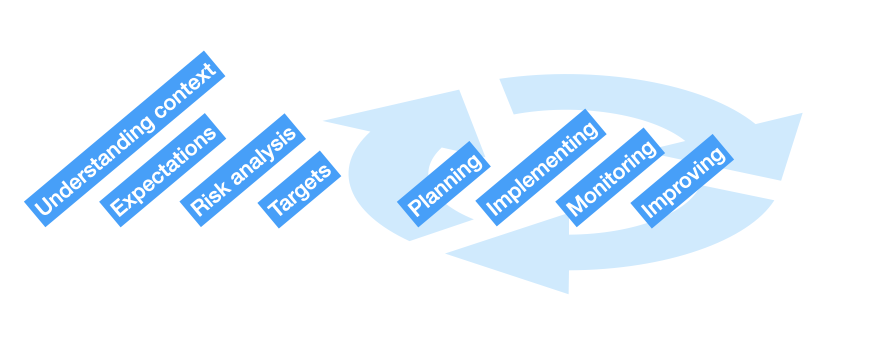
A key advantage of a safety management system utilizing the PDCA approach (Figure 1) is that it reaches beyond compliance with a simple performance threshold. Rigorous adoption of a safety management system as described in ISO 45001 ensures that an organization understands its health and safety risks, is acting to prevent exposure, and is monitoring, measuring and improving their effectiveness. Maintaining a comprehensive safety management system indicates that an organization is doing all they can to prevent risks to workers and others, rather than just doing well enough.
Because a safety management system is more conceptual than prescriptive in terms of risk identification and intervention, it can—and should—be applied according to specific situations and needs. Hazards tend to be specific to tasks, locations, substances and tools involved, whether work is performed in isolation or in groups, the proximity of others, and the type of management or supervision provided. The adaptability of a safety management system and the PDCA cycle is a strength of this approach, but it also complicates verification. To confirm compliance with a standard such as ISO 45001 that requires a safety management system, an outside review must look at all steps of the PDCA cycle. While there is some commonality among workplaces that pursue similar tasks or use comparable industrial processes, risk analyses must be specific to the situation and are therefore highly variable. This variability, together with the comprehensive coverage of a safety management system, makes review and verification a complex challenge.
3.8 Occupational health and safety in the road transport system
The Academic Expert Group (Trafikverket, 2025) report found that the most common cause of work related traumatic death is a road crash. This is supported by ETSC's PIN-report (ETSC, 2025).
Legal frameworks, rules, and standards related to OHS have to a significant degree been developed with focus on the traditional worksite. However, a large portion of employees drive or ride to fulfil work duties in which case the road is clearly an integral part of their workplace. Under OHS laws, the employer has the responsibility to do whatever possible to protect their employees and consequently others who may be affected by an incident involving their employee. In the case of an employee driving or riding for work purposes, this means that the employer is compelled to utilize the full range of available crash prevention tools, such as vehicles with the best crash ratings and the best technology for driver monitoring and assistance. They must also make efforts to utilize the safest routes and avoid situations that cause risk to others, such as operating heavy trucks in the vicinity of vulnerable road users. The employed driver is not absolved of responsibility, but the employer must recognize that even trained drivers make predictable errors (such as exceeding the speed limit or failing to see another road user in their blind spot) and must take precautions to prevent risk when these errors occur.
The Academic Expert Group (Trafikverket, 2025) suggested that when employers use public roads, workplace safety conventions, legislation, and standards apply and the same level of injury prevention precautions must be taken as when the employee is at the employer's facility. They found no legal basis for any other interpretation in relevant conventions, legislation and standards regarding work-related road use, and therefore the same OHS principles should be applied and enforced.
While workplace safety has been a remarkable public health success over the past century, The Academic Expert Group found little evidence to indicate that this transformation has reached employers' operations on the road. Neither has work-related road travel been treated with the same rigor as safety in other workplace settings by the administrative and judicial system. To the contrary, the Academic Expert Group found clear indication that work-related road crashes have largely been seen as the sole responsibility of the driver with limited reference to either the employers' responsibility or their failure to implement evidence-based prevention strategies. This was further shown in the study by Kullgren et al., (2023) which found significant underreporting of work-related fatal road crashes in Sweden. Kullgren et al., 2023 found that more than half of work-related fatalities were unreported, and that none of the third-party deaths (those killed in crashes where at least one involved driver was driving for duty) were reported.
Organizations, like most individuals, are highly dependent on road travel and most could not carry out their most fundamental operations without employees using the road system. Roads are used for bringing materials into the workplace, sending completed work out, for business relations, to bring contracted services in, and to deliver services to clients or customers. Road risks are high, and these risks differ from other occupational health and safety risks in several important ways. First, work-related road deaths generally occur outside the gates of the organization's facility or worksite, on public roads. Being outside the gates does not alter the organization's responsibility for duty of care, for both the employee and third parties that might be affected, but it does mean that the mechanisms of risk are unlike those within the facility. Second, while the risks of road travel are variable, they are also very well understood by safety professionals. Road risks are predictable and rigorously developed prevention actions are available that have proven effective across a wide range of roadway and vehicle types.
3.9 Risks in the road transport system, safety performance factors
With only limited exceptions, work-related road risks around the world follow well-studied patterns and can be addressed by improving well-known prevention factors. The relationships between these factors—or safety performance factors—and the risks of severe injury or death in a crash are sufficiently understood to allow the road safety performance of an organizations to be assessed by the degree of adoption of these factors (see ISO 39001, Road Traffic Safety (RTS) Management System, ISO 2012). If an organization is fully utilizing the key safety performance factors, their risk of injury or death from road crashes will be minimized (Tingvall et al., 2010).
An improvement of relatively few safety performance factors prevent the great majority of road traffic risks. These key factors include speed limit compliance, the use of personal protection gear (i.e. seat belts and motorcycle helmets), driver's fitness to drive (i.e. alcohol or drug use, fatigue, or distraction), and the choice of safe vehicles.
Speeding is among the most critical road safety risks. Compliance with speed limits is lacking worldwide, with as many as 50% of drivers in 48 countries admitting that they exceed speed limits (Meesmann et al., 2022). An increase in vehicle speed of 10% has been shown to result in a 50% increase in fatalities (Elvik et al., 2019). With an alternative method to estimate effects of travel speed (Elvik et al., 2019), a reduction of 8 km/h in mean speed equate to 47% reduction of fatalities.
Seat belt use in passenger cars and vans reduce fatalities by 40%–50% for front-seat occupants and 25% for rear-seat occupants (Elvik et al., 2009). High quality motorcycle helmets reduce the risk of death in a crash by over six times and reduce the risk of brain injury by up to 74% (WHO, 2023).
Driver fitness incorporates a range of factors including alcohol and both legal and illegal drug use. The most measurable of these factors, driver alcohol use, is known to be extremely hazardous, increasing crash probability even at low levels and multiplying risk by as much as 20 times at the median intoxication level seen in alcohol-related fatal crashes (Blincoe et al., 2023). Driver distraction and fatigue are also known to increase risk significantly.
For the fourth safety performance factor, vehicle choice, the gap between minimum requirements and best practice is immense. For every vehicle type, national mandatory standards for safety equipment and performance are set far lower than the best levels of performance available from vehicle manufacturers. OHS legislation addresses the safety of machinery and points to the obligation of the employer to choose safe technology and working tools. Vehicles used at work belong to this category, and the employer should therefore choose the safest vehicles within the types or variants of vehicles that suit the purpose. For example, the safest vehicles today prevent the risk of speeding through the use of intelligent speed assist (ISA). For alertness and fitness to drive, technologies are available to monitor fatigue, impairment, and distraction. Consumer information programs around the world such as the New Car Assessment Programs (NCAP) facilitate vehicle selection by monitoring the availability of safety equipment and the safety performance of new vehicles, setting targets, and publishing ratings of current models.
These road safety performance factors are universal and generally agreed and are used to manage road safety at the national level in some regions and countries.
4. Results: measuring and ensuring compliance
Our analysis of the Vienna Convention (UNECE) has not found any references to organizational behaviour. The focus on individual driver does not support a wider approach including preventive actions from organizations. We have not found any conflicts between the Vienna Convention and ILO conventions.
Further the analysis confirm that it is clear from the relevant ILO conventions, national OHS legislation and ISO 45001 that there is no distinction between occupational injuries occurring on the road or any other workplace. The principles of responsibility and prevention are therefore applicable to driving or riding for work as well as the risks to other road users from work related road traffic. It seems also clear that road crashes as cause of death at work is the most common cause of traumatic occupational death. Road traffic should therefore be treated as a high risk occupational activity.
Most road traffic rules are introduced as a way to control and improve safety. In this sense, they are equally important for the driver of any vehicle as for a driver at work. The difference between the road traffic rules and the OHS rules is that the employer has a role and responsibility for work related traffic. Our analysis suggest that this role is clearly expressed in ILO conventions, legislation and also in OHS standards like ISO 45001. The analysis shows that the principles and responsibility for prevention falls primarily on the employer, and planning of safety improvements should be systematic like the Plan, Do, Check, Act (PDCA) cycle. The cycle should include risk analysis, choice of effective preventative countermeasures, targets and monitoring of safety performance as well as a systematic way to improve safety. Further improvements of the safety performance should be introduced if they are necessary. We have not identified any conflicts between OHS practice and traffic law.
As fatal and severe injury outcome from road crashes are rare the traffic safety risk analysis demands high levels of knowledge. If organizations were to do their own science based road safety risk analyses, it would be unlikely that their findings would differ from research-based best practice. However for many organizations we suggest a more straight forward approach. There are four safety factors, or SPF, that are relevant for more or less all kinds of road traffic using vehicles. Speed, driver fitness, the use of protective gear as well as vehicle choice are the four main safety performance factors. Indeed, the strength of evidence regarding the universal validity of these key factors and their proven prevention strategies is so strong that the chance of compromising effectiveness by failing to accommodate an organization's variance from the norm with regard to road safety risks is probably less than that due to potential errors in analysing their own risks. We find it far more efficient and probably more effective for organizations to rely on the available evidence than to attempt to recreate the evidence themselves.
If the four proposed SPFs are focused the selection of prevention and action strategies is similarly simplified by the availability of evidence-based prevention strategies for each of the key performance areas. This streamlining of the risk analysis part of the cycle allows emphasis to shift to the remaining steps. Implementing, monitoring, and adjusting for continuous improvement remain essential for managing road safety risks.
The implementation phase—the ‘D’ in PDCA—is particularly critical. Three of the four safety performance factors, speed limit compliance, the use of personal protection gear, and ensuring the drivers' fitness to drive are mandated by road rules in most jurisdictions and should therefore be close to or at 100% compliance in order for an organization to fulfil workplace safety regulations. The most effective evidence-based prevention strategies for these risks involve the use of technologies that make non-compliance difficult or impossible. These technologies include ISA, seat belt reminders/interlocks, and driver impairment prevention technology. Through adoption of these technologies, the organization would demonstrate that they have control of its risks and is complying with the most significant parts of systematic workplace safety regulations.
For the primary road safety risks described above, speed limit compliance, the use of personal protection gear, driver fitness, and the choice of safe vehicles, the cost of these steps could range from the minimal expense of implementing mandatory seat belt use policies to a more substantial investment in a fleet of vehicles with the best available safety technology. Better adherence to speed limits is saving fuel and money.
Expectations regarding compliance with safety management system could vary according to circumstance. The most basic benchmark would be compliance with local traffic laws. However, the stringency of road rules varies among local jurisdictions, and in some cases it will be reasonable to expect a higher level of safety performance from organizations than is required from non-working drivers.
For example, in an area where local rules exempt certain vehicles from seat belt and helmet laws, organizations could be expected to comply with best practices which recommend that personal protection gear be used in all vehicles on every trip. Local rules concerning alcohol and drug use vary in terms of allowable consumption or intoxication, but the best practice of zero impairment and complete sobriety would be reasonable for work-related traffic. With regard to speed, the local speed limit is always the maximum allowed, but in some situations—such as the use of heavy vehicles or driving in inclement weather—best practice may recommend a lower speed for organizational traffic.
A range of opportunities exist for organizations to monitor, measure, and prevent road safety risks. The best method for a particular circumstance—in terms of effectiveness, efficiency, or practicality may vary according to the number of vehicles and drivers employed, and the specific details of the risk exposure, including the types of vehicles used and their patterns of use. Such options include:
-
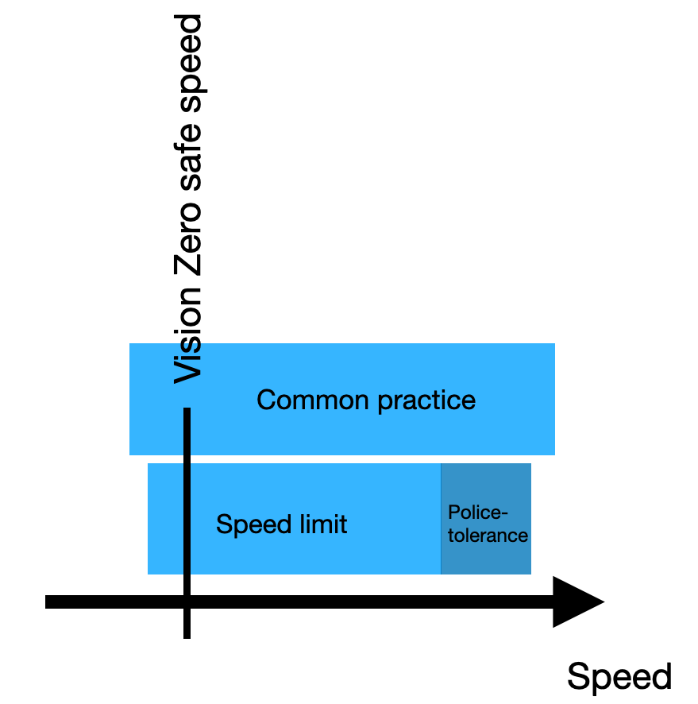
Speed. To ensure that vehicle speeds remain consistent with Vision Zero principles as depicted in Figure 2, organizations need to determine safe speeds, starting with the local speed limits and adjusting downward according to best practice for specific risks associated with their circumstance such as vehicle type and proximity to vulnerable road users. Control of maximum speeds can be direct and positive, using ISA systems that can detect local speed limits, or can be indirect through the use of continual monitoring, reporting of noncompliance to organization leadership, and consequences for unsafe behaviour. Per Vision Zero principles, if indirect speed control is insufficient to change speeding behaviour, the organization should adopt a direct control strategy to ensure that the risk is managed.
-
Impaired driving. Complete sobriety is absolutely essential for work-related driving, so organizations need to take whatever prevention steps necessary to guarantee compliance. In some contexts, the prevalence of alcohol or drug use is extremely low and periodic sampling using chemical testing may be sufficient to ensure that complete compliance is maintained. In other cases where impairment may be more likely due to driver age, or where standards of professionalism are lower, more direct risk management will be needed such as the use of in-vehicle testing before each trip.
-
Fatigue and distraction. Driver fatigue and distraction are known to be serious risks and have been shown to cause and contribute to serious crashes. These behaviours are however more difficult to control than speeding, seat belt use, or alcohol, due to the lack of objective generalizable thresholds of risk. Recent developments in driver monitoring technology are improving detection and have even enabled regulation of fatigue and distraction warning systems for the general driving public. For work-related driving, organizations should ensure that vehicles are equipped with the latest fatigue and distraction warning systems and further manage risk by setting policies regarding maximum hours of driving service without a rest period and banning driver use of handheld electronic devices or video entertainment systems.
-
Seat belt use. For seat belt use, an in-vehicle reminder system may be sufficient to prevent occasional inadvertent non-use by drivers who might forget to fasten their belt, while an interlock system that does not permit vehicle operation without seat belt use may be needed when an organization cannot be certain that drivers and passengers are regular users.
-
Vehicle choice. Confirming that an organization is using the safest vehicles involves comparing their fleet to safety ratings produced by independent consumer information programs such as the New Car Assessment Programs available in about ten national or regional markets.
5. Proposal: formulating the questions that an organization can answer to demonstrate compliance with OHS regulations
In our analysis a case has been made for the validity of using a set of intermediary safety performance factors as an indication that an organization is taking a systematic approach to minimizing their road risk, and thereby complying with related OHS obligations. This case is built on the premise that evidence concerning the effectiveness of prevention strategies addressing the four targeted risk areas is very strong. Further, strong evidence is available to confirm that together these preventions strategies will effectively manage overall organizational road risk. Finally, any error in the relevance of this set of targets to the specific risks of a particular organization is likely to be offset by the potential for error in organizations conducting their own independent road risk analyses. Thus, a valid assessment of an organization's fulfilment of OHS expectations regarding road risk can be efficiently made by monitoring their success in implementing a small set of targeted prevention strategies addressing the four main SPFs as well as the reporting of the organization's involvement in serious and fatal crashes, the safety footprint. In essence, we propose five questions that an organization would in most cases need to answer to show a business partner, customer, or financial stakeholder that it is compliant with fundamental OHS regulations in relation to road safety. While the questions are intended to be a comprehensive set rather than a list of options, they are presented here in order of criticality for determining whether an organization is effectively managing its road safety risks. There might be additional safety factors that could be relevant for some kind of road traffic, but the four proposed here are based on their significant impact and the projections estimated if they were improved (Trafikverket, 2025).
The Academic Expert Group (Trafikverket, 2025) summarized that the choice and improvement of just four safety performance factors would potentially reduce the number of killed in work related crashes with at least 50%, probably more. The effectiveness of the four factors were estimated individually with no compensation for double counting where more than one of the factors would influence the outcome of a single case. The sum of the factors was so high that the effectiveness of them together seemed to be well over 50% reduction of deaths. As an example, speed limit compliance alone could reach almost a 50% reduction. Further, Tingvall et al., (2010) used the same safety performance factors to estimate the potential in improving safety. The study, based on fatal crashes in Sweden, found that ‘100% fulfilment of a set of Safety Performance Indicators could lead to very low mortality’. Vehicle selection, driving under influence of alcohol, seat belt use and the selection of safe roads were used as indicators in the investigation.
5.1 Footprint
The first question to be answered concerns the size of the organization's safety footprint. The safety footprint would be the number of people killed or seriously injured—both employees and third parties—in crashes involving the organization's road operations. This question is essential to assess whether the organization recognizes its responsibility and is collecting and reporting incidence data, and to establish benchmarks for safety performance targets. Both inclusion criteria and definitions of death/serious injury could vary, and it would be up to the organization to describe both inclusion/exclusion criteria as well as validity and reliability of its data on safety footprint. In essence, the quality and possible underreporting would be less of a problem in comparison with national data that could have serious underreporting (Kullgren et al., 2023).
5.2 Speed
The remainder of the questions deal with the primary safety performance factors outlined above. While these factors are sufficiently universal in relevance and scope to provide a valid assessment, an organization could add factors as necessary to cover unique circumstances.
The second question is compliance with speed limits and/or best practices if an organization's operations are such that lower speeds are necessary, for example to manage risks in areas with a high concentration of vulnerable road users. Compliance rates can be derived from monitoring devices and reported as prevalence per trip or distance travelled and by road type.
5.3 Fitness to drive
The third question deals with fitness to drive and incorporates driving under the influence of alcohol and other legal or illegal substances, as well as drowsiness and distraction. Compliance can be detected with driver monitoring devices and reported per trip or distance travelled.
5.4 Vehicles
The fourth question, about vehicle choice, concerns the organization's use of the safest available vehicles for work purposes. This measure should compare the level of safety provided by the organization's current fleet with that which would be possible if vehicles were upgraded or replaced by vehicles with the highest safety ratings. Organizations should define the way vehicles are chosen, including the specification and safety performance of vehicles purchased, and specify a plan for upgrading.
5.5 Personal safety gear
The fifth question is about personal safety equipment. Seat belts, helmets and high visibility clothing are fundamental safety equipment. The use of seat belts for cars and trucks and helmets for motorcyclists are cornerstones in safety, and their use is mandatory in many jurisdictions. Monitoring and reporting can be done through vehicle systems or by roadside observation.
5.6 Introducing Performance Levels
The degree to which an organization recognizes and is in control of road safety risk as required by OHS law can be assessed through their responses to questions concerning the factors described above. Responses could be judged as compliant at a minimum acceptable level or as reaching a higher-level best practice. Table 2 below proposes simplified questions and defines examples of two levels of compliance. The minimum levels for speeding and seat belt use are arbitrary but mirror a high level of compliance. Best practice mirrors a situation where technology is used to limit non-compliance.
| Question | Minimum level | Best practice |
|---|---|---|
| What is the safety footprint of the organization? | Number of fatally injured employees and third parties | Number of fatalities and seriously injured employees and third parties |
| What is the compliance level for speeding? | 97% of trips within speed limits | No vehicle can be driven above speed limits |
| What is the compliance level for fitness to drive? | No drivers with blood alcohol above legal limits | No vehicle can be driven at BAC above zero % blood alcohol. Technologies to prevent from drowsiness/distraction |
| What is the compliance level for safe vehicles? | New or replaced vehicles fulfil GSR.2 EU regulation or similar | New or replaced vehicles are 5-star Euro NCAP or similar |
| What is the compliance level for personal safety equipment? | 97% seat belt and/or helmet use | No vehicle can be driven without seat belt use |
By using the set of five questions and the achieved performance level an organization can communicate about their performance in a clear way. This is important both in general communication to the society but also to the financial sector and in business-to-business relations including procurement.
6. Discussion
Conventional road traffic rules, such as those specified in the 1968 Vienna Convention, focus on the required actions of the driver. In these rules, the driver is most often solely responsible for the actions of their vehicle and for any crash that results. Vision Zero principles and occupational health and safety laws look at risk differently, shifting responsibility focus from the driver to other actors (Hansson, 2023), including vehicle designers and infrastructure owners in the case of Vision Zero, and focusing on organizations or employers in the case of work-related driving. Drivers are not totally absolved of responsibility in these cases, rather they are expected to comply with safety rules, but system owners and employers are expected to anticipate driver errors and provide upstream prevention actions wherever possible.
Even if enforcement of traffic law is important and probably could be increased, we find that preventive action on organizational levels is an important complement. OHS practices can be such a way forward.
This paper explores the complex relationship between road safety and occupational health and safety. Work-related driving is covered by two sets of rules, the rules of the road that all users must follow, and the requirements for employers to protect their employees and third parties from death or injury resulting from their road operations. Because of their relative potential to influence safety through prevention, policy, and practice, employers or organizations are generally held to a higher standard of care than individuals. However, despite this responsibility, bending road rules is now common practice for organizations using the roads and streets (Trafikverket, 2020).
This study shows that OHS frameworks can be better utilized and have a potential to improve traffic safety. OHS legislation and practice stipulate that employers should do anything possible to protect employees and ultimately also third parties from injury risks. In other words, OHS expectations are for maximum safety. The Vision Zero Handbook, Zwetsloot and Kines (2023) elaborates on this. Road rules, on the other hand, typically require a minimum safety level. This difference is evident in the legal limits for blood alcohol concentration in road rules that allow drinking up to a specified blood alcohol level, while OHS rules require complete sobriety for workers operating machinery, including driving a motor vehicle. It is clear that work-related driving has a substantial impact on society and that holding organizations and employers accountable for the higher expectations of OHS rules rather than deferring to road rules would have tremendous societal value.
The relationship between road rules and occupational safety rules is mirrored in the ISO 45001 (ISO, 2018) standard, where employers must do far more than require employees to follow rules. This safety management standard, used by at least 500 000 organizations across the world (ISO, CASCO Survey) requires employers to set up a sequence of activities to monitor and analyse risks and establish corrective actions. ILO as well as the ISO organization have a significant potential to improve traffic safety by explicitly stress that road use is an activity covered by their frameworks and the management system standard ISO 45001. If the preventative actions introduced are not sufficient to fulfil the overall objective of safe working conditions, further actions must be put in place. In this study, the authors explore these responsibilities and suggest measurable evidence-based prevention actions that employers could take to fulfil and demonstrate achievement of their OHS obligations.
The authors propose a simplified assessment mechanism that will have utility in verifying that an organization has control of its road safety risk, that it recognizes the scope of its vulnerability, and is taking systematic steps to minimizing this risk. The utility of this road safety assessment could be compared to that of other familiar assessment methods that are now used to gauge organizational performance, such as ESG (environmental, social and corporate governance) reporting and within the ESG framework, carbon footprint reporting.
The five proposed questions have been elaborated in the Table 2 with added demand levels. The questions are a further simplification of the relevant safety performance factors used by ISO 39001. The performance levels are not set to 100% as some deviations always can be expected. However, they are close to 100% so that systematic and/or planned deviations are excluded. In the same table the EU GSR.2 regulation is used as reference for vehicle safety. We are well aware that this standard is not applicable in regulations around the world. In can anyway be seen as the most demanding standard and hence ‘best practice’ in the field. Depending on the organization's area of operation, other standards can be used.
Putting road traffic safety as an element in trade can be a way to improve safety performance. Public procurement is an area where this to some degree already has happened (ETSC, 2025). In business-to-business relations, the focus on risk may be slightly different than for investors. Business partners are typically looking for quality delivery of a service. An example would be public procurement, where the quality of service of an organization (a public agency) would be of interest to the taxpayers who support the agency. In this case, the primary quality that taxpayers might expect of public procurement would be that the procurement process is entirely consistent with laws, both in the administration of purchases and in the choice of vendors. Taxpayers might not approve of the selection of a vendor for public services that was not compliant with laws, including OHS laws. In public procurement it would therefore be necessary for vendors to show that they fulfil basic legal requirements and are practicing continuous monitoring. The proposed set of questions presented in this paper would provide the public agency, and in turn, the taxpayers, with assurance that the selected vendor is fulfilling OHS laws related to road safety.
While the five proposed questions may be sufficient in the context of road safety performance, it should be noted that OHS covers a broader range of injury and health risks, and the workplace safety authority would need to ask detailed questions or perform careful inspections of controls for other types of risk as well as road safety. In addition, the verification of compliance would likely cover the principles of systematic management of all types of risk, including how safety assurance at the workplace is organized, the chain of responsibilities, and routines for reporting and corrective actions.
The practical implementation of the OHS/five questions approach can vary depending on organizational and/or institutional capacity as well as economic context.
Naevestad et al. (2025) utilized and analysed a ‘safety ladder’ for traffic related workplace safety management, that could support an organization to a stepwise improvement of safety management focussing on the most relevant safety performance factors. In their suggestion, the final step of the organization was to use ISO 39001. The safety ladder could be seen as a tool for the organization to finally be able to set targets for safety performance factors suggested in this study and thereby offer a structured framework for any organization. The safety ladder and our five questions could thereby be seen as supplementary tools. The ‘safety ladder’ is more focused on how to achieve change and our proposal more guided towards safety performance. The stepwise approach in the safety ladder and the support given to users of both ISO 45001 and ISO 39001 by our five questions could also lower the barrier to utilize these management standards.
This paper focuses road safety for workforce at work in the road environment. Employers also have significant and important possibilities to influence the commuting of their workers.
The question about methods and sufficient statistical confidence in measurement and estimates of compliance depends on the nature and structure of the transports and travel that an organization wishes to include. it is also dependent on current and future technologies that can be used for sampling of relevant data.
Workplace safety has a role in most jurisdictions, in particular for larger organizations and corporations. As of 2026, 92 countries have signed the ILO Convention 155 and represent all types of countries, from low income to high income. Some large countries, like the US, Canada Germany and UK have not signed the Convention 155 but still adhere to the principles and have long-standing legislation. In some countries with a weak economy the proposals would probably not have the same impact, but also in such countries there are large corporations active that would be expected to prevent from injuries and deaths at work as they are involved in global supply chains (Trafikverket, 2025). Regarding ISO 45001, there are only 10 out of 191 ISO member countries that have no certified user of the management standard for workplace safety (ISO, CASCO Survey).
7. Conclusions
We conclude that with one-third of global road deaths being work-related and OHS law and practice clearly covering workers whether they are at the facility or on the road, enforcement, business to business demands as well as voluntary use of OHS principles and laws can be an effective means for reducing the social burden of crashes.
Road safety has been thoroughly studied, and effective, evidence-based prevention strategies are available to address the most critical safety risks. These prevention strategies fit well within the systematic approach prescribed by widely adopted workplace safety standards such as the ISO 45001, Occupational Health and Safety Management Systems, where prevention of serious injuries and deaths at work are focussed irrespective of their location and activity, and also third party safety is included.
Road safety research has shown that the most critical crash risks are similar around the world. This predictability allows the well-established PDCA (Plan, Do, Check, Act) process that underlies the safety management system approach required by OHS law to be streamlined in the case of work-related road safety.
Our research group propose a simple 5-question survey that assesses the degree to which an organization recognizes the scope of its road safety risk and measures the extent to which the organization is successful in implementing prevention countermeasures that address the most common serious risks. The Academic Expert Group (Trafikverket, 2025) summarized that the choice and improvement of just four safety performance factors would potentially reduce the number killed in work related crashes by at least 50%, probably more. With this streamlining, the PDCA cycle is shortened by dropping the risk analysis and the choice of prevention options is greatly narrowed. In the systematic and continuous improvement of occupational road traffic crash prevention, this predefined set of safety performance factors is predicted to provide sufficient control of risks, and demonstration of rigorous application of these factors is sufficient proof of compliance as well as effective safety management.
An organization can demonstrate compliance with occupational safety targets, practices and/or standards regarding road safety, by:
-
Assessing and articulating its road safety footprint,
-
Monitoring and reporting the performance of fundamental safety factors including speed, fitness to drive, use of personal safety equipment, as well as the choice of the safest vehicles,
-
Reaching a level that is close to 100% fulfilment of the safety performance factors, and
-
Striving for a level of prevention beyond road rules.
8. Abbreviations
WHO, World Health Organisation
OHS, Occupational Health and Safety
AEG, Academic Expert Group, commissioned by the Swedish Transport Administration in advance of the Global Ministerial Conference on Road Safety
ILO, International Labour Organization
PDCA, Plan Do Check Act
NCAP, New Car Assessment Program
CRediT contribution
Claes Tingvall: Conceptualization, Methodology, Supervision, Writing – original draft, Writing – review & editing. Anders Lie: Conceptualization, Methodology, Writing – original draft, Writing – review & editing. Peter Andersson: Conceptualization, Methodology, Writing – original draft, Writing – review & editing. Jeffrey Michael: Conceptualization, Methodology, Writing – original draft, Writing – review & editing.
Declaration of competing interests
The authors report no competing interests.
Declaration of generative AI use
The authors declare that no generative AI was used in this work.
Prior dissemination declaration
This manuscript presents original work that has not been previously published or disseminated in any form.
Ethics statement
As this study is based on research not related to individuals, human tissue or sensitive personal data, there is no need to apply for ethical review in Sweden.
Funding statement
No external funding was used in this research. Johns Hopkins University, the United States of America, sponsored the publication fee for this paper.
Data availability statement
Data sharing is not applicable to this article, as no datasets were generated or analysed.
Code availability statement
Code sharing is not applicable to this article, as no custom code was produced or used.
Editorial information
Handling editor: Aliaksei Laureshyn, Lund University, Sweden.
Reviewers: Henk Stipdonk, Road safety for all, the Netherlands | Netherlands Institute for Transport Policy Analysis (KiM) (retired), the Netherlands; Tor-Olav Nævestad, Institute of Transport Economics (TØI), Norway.
Submitted: 12 March 2026; Accepted: 15 June 2026; Published: 19 June 2026.