Face the facts: a characterisation of 2013–2025 UK motorcycle collisions, head impact locations and injury outcomes supporting facial impact testing
Abstract
There is limited contemporary evidence on head impact conditions and injuries in motorcyclists, despite substantial recent changes in vehicles, helmet design and test standards. This constrains evidence-driven improvements to helmet protection and impact test protocols, particularly for underrepresented facial impacts. We quantified head impact locations and associated head and facial injury distributions in 12 years of motorcycle collisions from Great Britain’s Road Accident In-Depth Studies (RAIDS) database (1 April 2013–31 March 2025). Injuries were classified using Abbreviated Injury Scale codes augmented with free-text identification of clinically utilised Mayo-classified brain injury, and primary helmet impact location was derived from investiga-tor summaries and helmet photographs. Most of the 353 motorcyclists were injured (93%) and male (90%), and 2% were unhelmeted. One third sustained at least one head injury and 24.9% sustained Mayo-classified traumatic brain injury (19.0% moderate–severe). Facial injuries occurred in 12.2%, including 4.4% with facial fracture. Skull fractures (including basilar) and intracranial haemorrhage were also common. Head and facial injuries were more prevalent in fatally injured motorcyclists than survivors. Primary helmet impact location was determined for 125 motorcyclists with 50.4% of impacts to the facial region. Head injury rates and patterns were similar across different primary impact locations. When primary facial impacts caused head injury, upper face and chinbar impacts dominated visor impacts. Facial impacts are both frequent and associated with clinically important head injuries. Helmet standards and consumer ratings should incorporate facial impact assessments and adopt injury risk criteria reflecting skull fractures (particularly basilar skull fractures), focal brain injury and intracranial haemorrhage.
1. Introduction
Motorcyclists and other powered two-and three-wheeler (PTW) riders are among the most vulnerable road users (VRUs), making over 30% of the 1.19 million annual road traffic deaths globally (WHO, 2023). Additionally, the number of motorcycles and other PTWs nearly tripled in the decade to 2021, with an associated increase in fatality numbers. Helmets can provide protection to the motorcyclist in collisions, reducing serious head injury as well as fatality (Organization, 2023; WHO, 2023; Yasin et al., 2022). For this reason, the World Health Organization (WHO) has identified helmet use as a key legislation area to reduce the global casualty burden (Organization, 2023; WHO, 2023; Yasin et al., 2022).
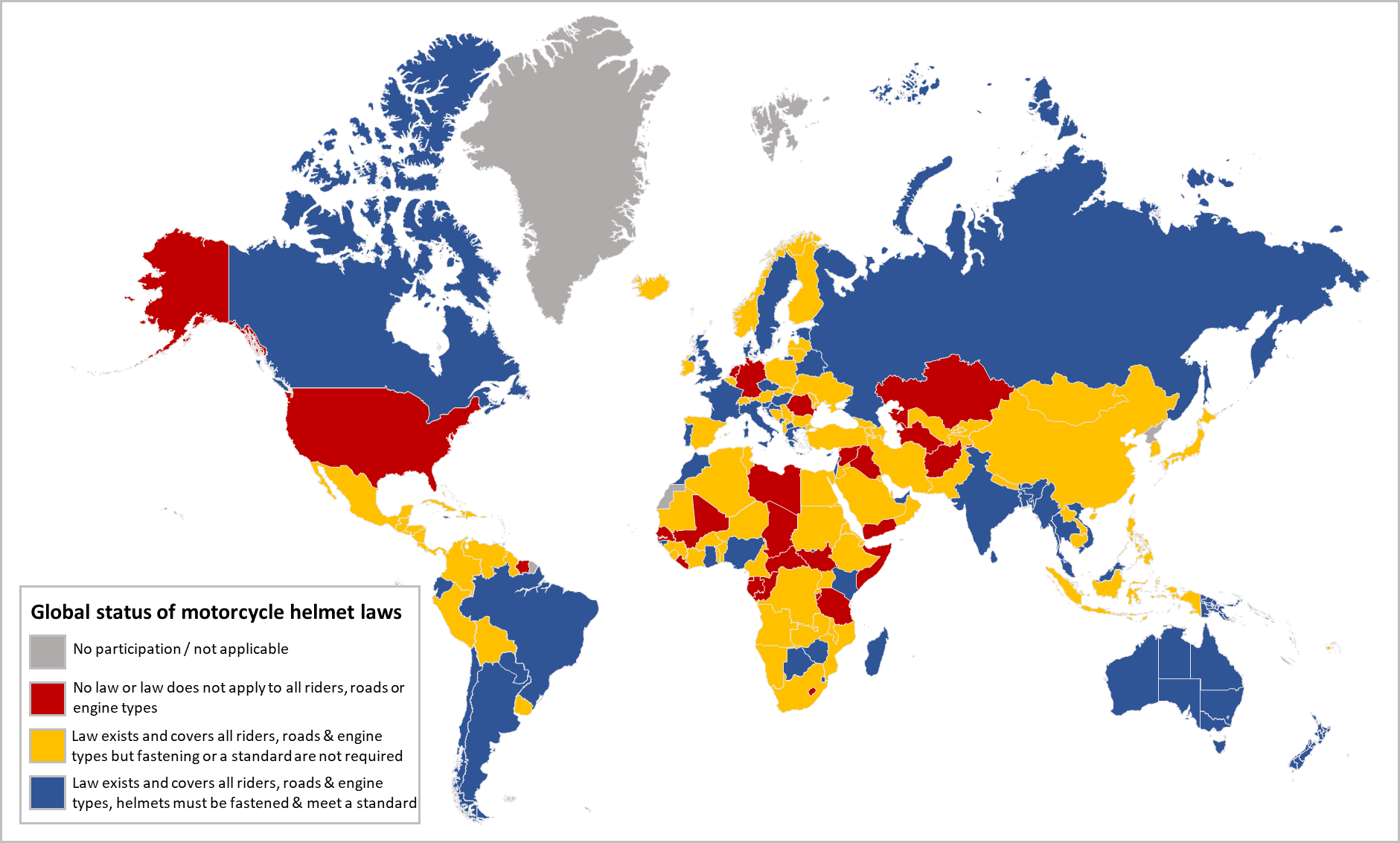
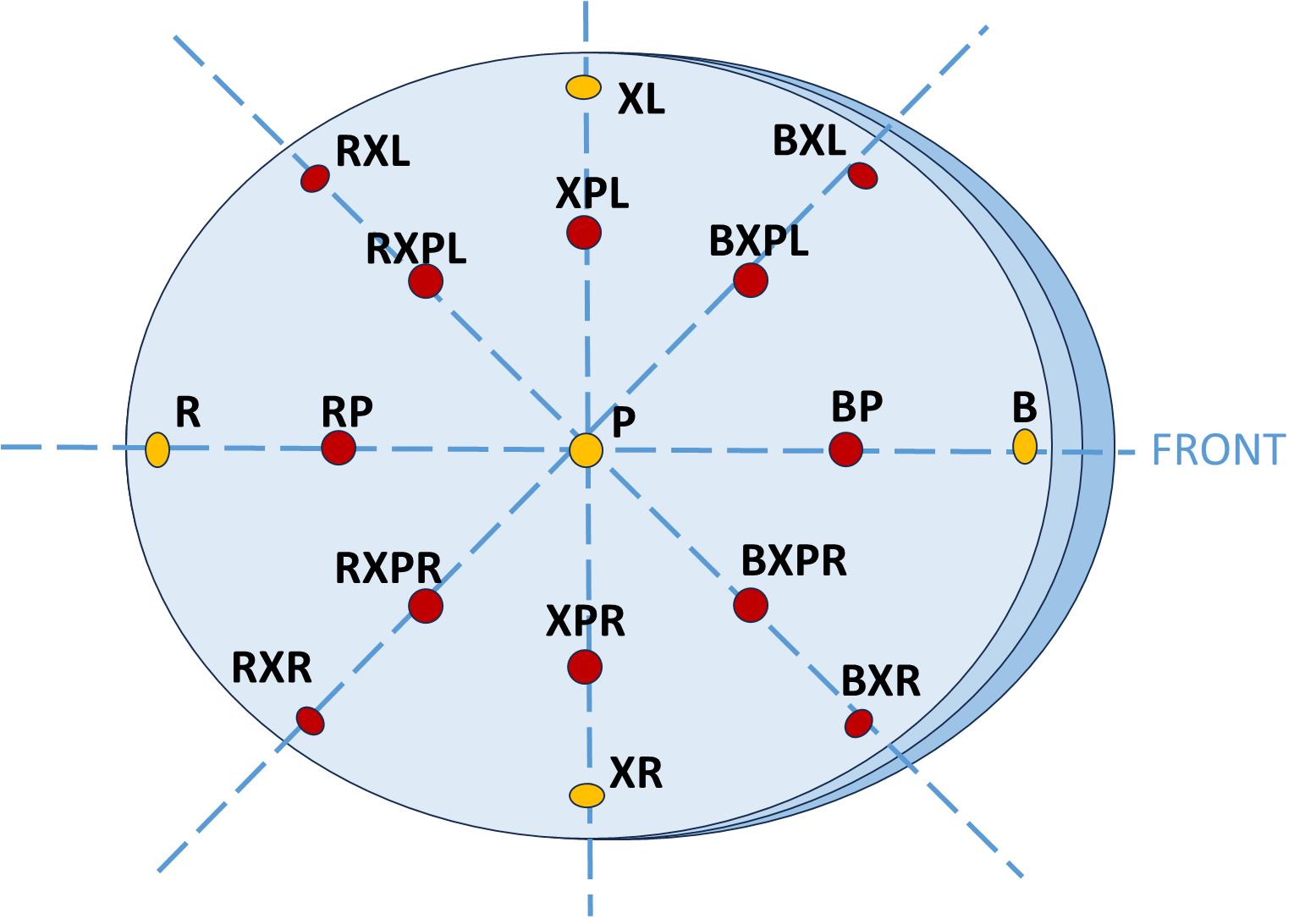
Many global regions require that helmets meet a certain standard (shown in blue in Figure 1). Work to mandate standards in other countries is ongoing, which will improve helmets (WHO, 2023). Helmet safety improvements can be made by an improved understanding of head impact characteristics in real-world crashes (such as impact location and its relationship to specific head injury patterns). The profile of injuries associated with certain impact regions, including the face, is under-characterised in the context of informing standards. As such, the facial region (comprising the upper face, visor and chinbar) undergoes minimal impact testing in current standards, as shown in Table 1. The exceptions are Snell M2025 (and similarly M2020), BSI 6658 and UN ECE R22.05 & R22.06 which include chinbar impacts (Smith, 2025). ECE R22.06 introduced three upper face impact points, but the visor region remains entirely untested across all major standards (Figure 2). The January 2024 implementation of ECE 22.06 saw an increase from one to nine pre-defined impact points on the crown (BP, BXPL, BXPR, P, RP, RXPL, RXPR, XPL, XPR), two to six on the side (non-facial: BXR, BXL, RXL, RXR, XL and XR), one to three on the upper face (BXL, B and BXR) with a single chinbar impact maintained (though at an increased speed of 6m/s in ECE 22.06).
| Standard | Crown | Side (non-facial) | Upper face | Middle face/ visor | Lower face/ chinbar |
|---|---|---|---|---|---|
| ECE R22.05 | ✓ | ✓ | ✓ | ✗ | ✓ |
| ECE R22.06 | ✓ | ✓ | ✓ | ✗ | ✓ |
| Snell M2020/M2025 | ✓ | ✓ | ✗ | ✗ | ✓ |
| BSI 6658 | ✓ | ✓ | ✗ | ✗ | ✓ |
| DOT FMVSS 218 | ✓ | ✓ | ✗ | ✗ | ✗ |
Only a small number of previous studies have reported helmet damage or impact location together with injury outcomes for motorcyclists (Dowdell et al., 1988; Kraus et al., 2003; Meng et al., 2023; Rice et al., 2016; Whyte et al., 2016). One study investigating motorcyclist head injury in 1980s identified that over 50% of severe impacts occurred to the facial region (Dowdell et al., 1988). Notably, impacts to the frontal region, which often was not protected by 1980s helmets, frequently led to frontal skull fractures and basilar skull fracture (BSF). The comprehensive pan-European COST 327 study analysed data between July 1996 and June 1998, included 226 motorcyclists of whom two thirds sustained a head injury (Chinn et al., 2001; Chinn et al., 1999). The most frequent intracranial injuries were subdural hematomas (22.4%, 47/226) and subarachnoid haemorrhage (25.2%, 53/226). Another study, included an analysis of 47 helmeted riders who were fatally injured in the Adelaide metropolitan region between 1983 and 1994. This found 43% (20/47) of the impacts were to the facial region, leading to BSF in 13 cases out of 20 (Whyte et al., 2016). Case studies have also proposed facial impact and the chinbar’s role in transmitting force from impact as a mechanism for basilar skull fracture (Cooter et al., 1988; Huelke et al., 1988).
The studies reviewed above were conducted using data from more than two decades ago. Since then, factors affecting motorcyclist injury, including improvements to opponent vehicle crashworthiness such as front-end vehicle geometry and stiffness, helmet type and helmet technology, have improved motorcyclist and other VRU protection (Baker et al., 2024a; Cini et al., 2014; ECE, 1999; Lee et al., 2014; Perticone et al., 2024; Xiao et al., 2020). These developments motivate a contemporary assessment of motorcyclist head injury. In addition, facial impacts and associated head injuries are minimally reported in these previous studies, with the exception of some references to basilar skull fracture mechanism (Huelke et al., 1988). The most detailed study that reports injuries caused by facial impacts is limited to fatal cases only (Whyte et al., 2016). This limits our ability to understand survivable injuries and protection improvements in the wider population of injured motorcyclists. There is a related body of work assessing whether helmet type has a role to play in facial injury outcome. Motorcyclists wearing full-face helmets have been found to have reduced head injury prevalences, including lower facial fracture rates, and were three times less likely to sustain facial injury compared to those with another type (Aires et al., 2022; Chaichan et al., 2020; Kraus et al., 2003; Wu et al., 2019). These studies however did not assess the interaction between helmet type, injury outcome and impact location, limiting our ability to interpret the findings in the context of informing helmet assessment methods.
To address these gaps, this study characterises helmet impact location and head injury patterns, with a specific focus on facial impacts and their relevance to current test standards. We use contemporary, in‑depth investigation data with detailed clinical coding from the UK Road Accident In-Depth Studies (RAIDS) database between 2013 and 2025 and aim to:
-
Summarise the RAIDS motorcyclist cohort by helmet usage, sex, configuration type and injury sustained, providing the most comprehensive contemporary characterisation of motorcyclist head injury and collision characteristics from a UK in-depth dataset, serving as an archival resource for researchers and policymakers.
-
Quantify the prevalence and distribution of helmet impact locations, with particular emphasis on the facial region, in a contemporary sample of motorcycle collisions.
-
Characterise the associated spectrum of head injuries, including traumatic brain injury, skull fractures and intracranial bleeding by comparing primary facial and non-facial helmet impact locations.
-
Explore how the observed impact locations and injury outcomes relate to current helmet test standards and rating protocols, particularly with respect to facial impacts.
2. Methods
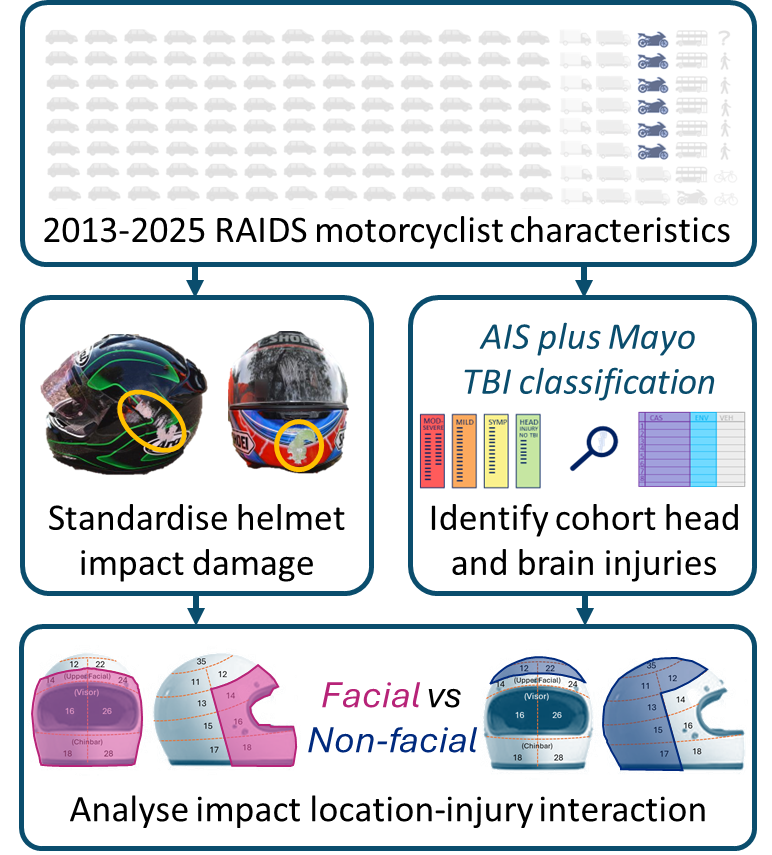
An overview of the methods is provided in Figure 3. We describe motorcycle collisions from the RAIDS database, including demographics, collision type and helmet use. Distinct types of head injury are identified using a combination of Abbreviated Injury Scale (AIS) and free-text search method (Baker et al., 2022; Gennarelli, 1985; Gennarelli & Wodzin, 2006; Medicine, 2016). Concurrently, we identify a subset of the cohort with categorised primary head impact locations as inferred by reported helmet damage. Finally, the impact location and clinical head injury outcomes are combined to analyse their interaction to better understand implications for future motorcycle helmet testing methods.
2.1 In-depth collision data
The Road Accident In-Depth Studies (RAIDS) is the UK’s active in-depth collision dataset. RAIDS collection began in 2013 and is ongoing, with the aim of informing reductions in fatalities and serious injury on the UK’s roads. RAIDS contains a subset of Great Britain's collisions biased towards more severe outcomes. In each phase of RAIDS, a collection quota detailing severity and road user type is targeted by the data collection team. At the time that the study was conducted, RAIDS contained approximately 2,500 collisions involving over 6,800 people. RAIDS data collection is a collaborative effort between the police, hospitals and dedicated on-site investigation units from Loughborough University and the Transport Research Laboratory (TRL). All cases have >2,500 fields detailing the casualty’s injuries, vehicle information, collision causation and environmental factors. Injury information comes from clinical records (including ambulance notes, hospital records and any radiology and/or post-mortem text available). There are two types of RAIDS collision investigations: on-scene and retrospective investigations. All investigations use collision reports and photos received from dedicated police Collision Investigation Units. On-scene investigations are additionally attended by TRL’s dedicated collision investigation team. After all available information has been assessed by the dedicated expert team, each subject is given a final assessment of severity (‘Uninjured’/’Slight’/’Serious’/’Fatal’) based on all available medical information. The coding guidelines specify that any fractures, and all AIS2+ injuries, must be coded overall as being at least ‘Serious’. Additionally, casualties who have been admitted to hospital overnight (as an in-patient) are at least serious regardless of injury sustained. Further information can be found in the Appendix of Baker et al. (2022).
2.2 Data access and ethics
Free access to RAIDS for this research was obtained from the Department for Transport. RAIDS is accessed under the same data portal and via the same DfT approval. RAIDS is fully anonymised. Clinical information is collected under NHS Act 2006 Section 251. The data collection and use require very stringent ethical approvals and data security processes. These include approved applications for both a Confidentiality Advisory Group (CAG) and the Research Ethics Committee (REC) and required the completion of a Data Security Protection Toolkit for ethical approval. Individual research project approval does not require additional CAG/REC approval, with access being approved by Department for Transport (DfT) contact. A project description was provided and approval was obtained from the DfT. A signed user agreement was returned by Imperial to the data curators (TRL, who manage RAIDS on behalf of the DfT). A password access username was provided by the DfT so that individuals can access specific data, including download permission. Imperial College data management policy was followed. All outputs including this study are reviewed by the Department for Transport prior to publication to ensure no identifiable information is available.
The Principal Investigator obtained approval from the Head of Department and favourable opinion from Imperial’s Research Governance and Integrity Team (RGIT).
2.3 Analysis cohort
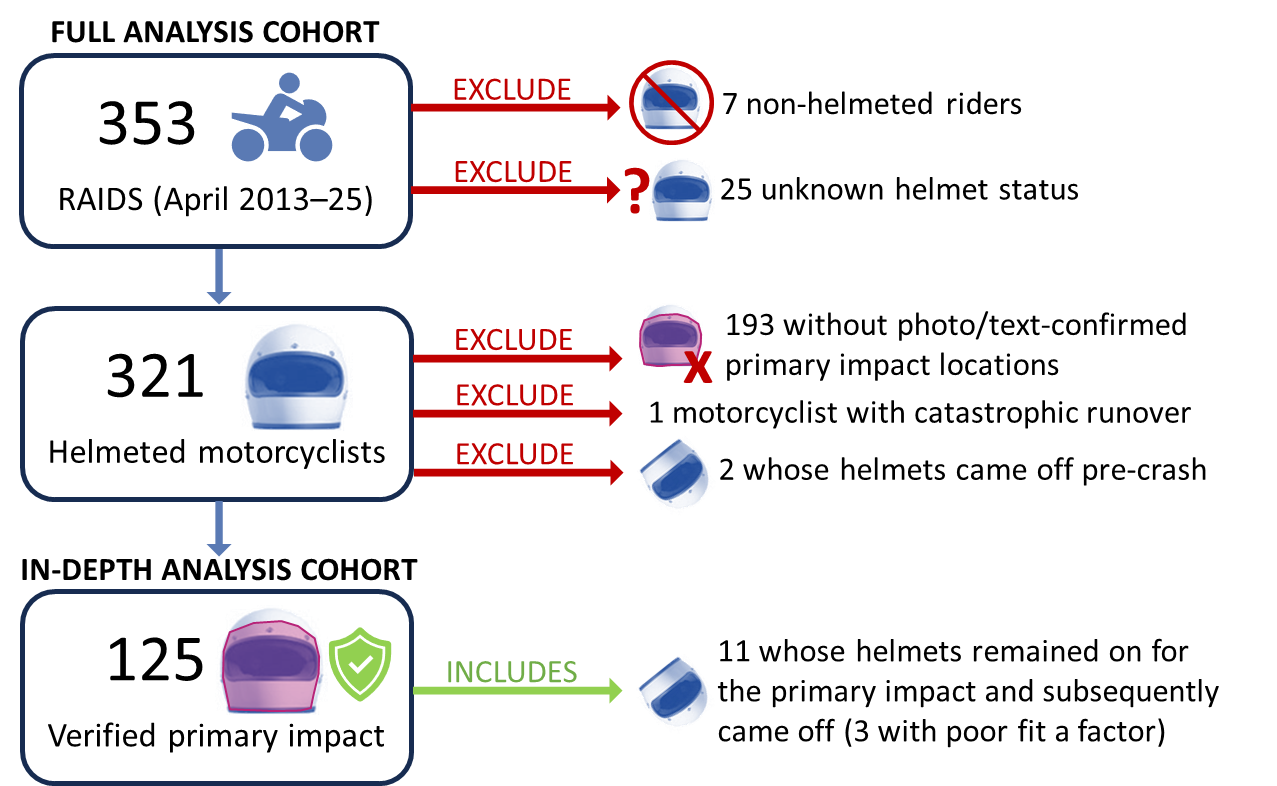
The analysis cohort are all motorcyclists involved in RAIDS collisions from 1st April 2013 (start of RAIDS collection) to 31st March 2025. For the detailed analysis of primary head impacts, a subset of the cohort whose primary head impact locations could be confirmed via helmet damage was analysed. This cohort excluded individuals whose helmets came off prior to the primary impact (e.g. due to not being fastened or poor fit), while motorcyclists with unfastened helmets that were confirmed to remain on for the primary impact were kept in the analysis cohort (Figure 4). Additionally, we excluded one individual whose fatal injuries were caused by a catastrophic runover incident. In the motorcyclist cohort, there were no fatalities attributed to causes other than the trauma sustained in the collision (e.g. due to a medical emergency or a fire/drowning).
2.4 Head injury identification
Injuries were determined using standardised AIS coding augmented by a previously validated free-text coding protocol that maps common clinical terminology to predefined Mayo traumatic brain injury (TBI) categories (Baker et al., 2022; Malec et al., 2007). First, the anatomical nature of AIS coding was used to identify head injury (codes beginning with 1) and facial injury (codes beginning with 2), removing injuries to other body regions from consideration. AIS numerical codes can identify specific injury types (such as skull fracture or subdural haematoma) and classify severity of each injury from 1 (minor) to 6 (maximal injury) to help assessing the threat to life. AIS is however not widely utilised in clinical settings as it does not necessarily capture symptomatic presentation of TBI. The clinically relevant Mayo classification has three levels: symptomatic-possible, mild-probably and moderate-severe, as classified with a combination of injury pathologies present and clinically presenting symptoms, such as loss of consciousness (Malec et al., 2007). We adopt this dual injury determination methodology because AIS codes enable direct comparison to historic studies and capture facial injury effectively, while the free-text approach enables maximum information to be extracted from the rich clinical information sources in RAIDS. Further details on the search terms and validation assessment of the free-text Mayo classification approach, including a hold-out sample of 200 occupants, can be found in Baker et al. (2022). As in previous validation, no AIS-codable injuries incorporated into the free-text tool were misclassified.
In addition to Mayo severity, focal brain injury combines contusion (including haemorrhagic), laceration and certain haemorrhage within the brain matter. AIS-coded classification created several further groups, including facial injury (capturing AIS-coded injuries to the body region face of any severity) and superficial injury (capturing surface-level head injuries which tend to be lower in severity). The full list of AIS codes and how they are categorised can be found in Appendix Table 5.
2.5 Identifying primary helmet impact locations in RAIDS
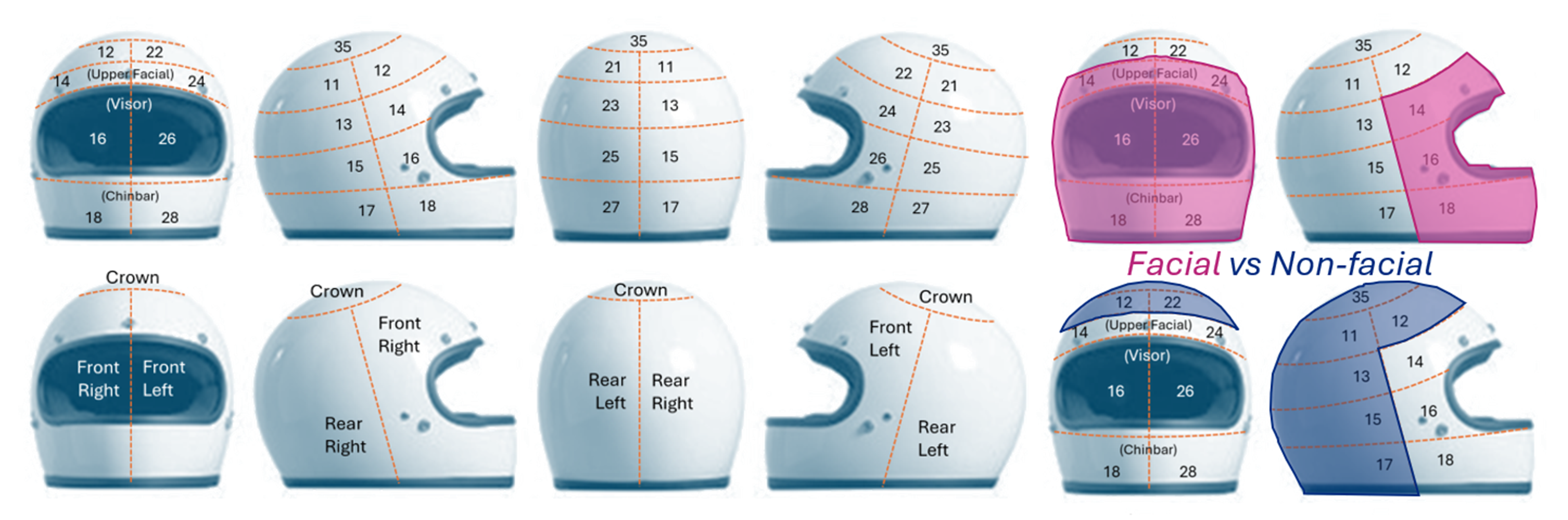
When sufficient evidence was available, helmet damage was used to confirm impact to the head/face during a collision. The primary helmet impact is the initial impact between the rider’s head and the impact partner. The impact partner is often another vehicle, but this can also be the ground if no impact was made with a vehicle or no vehicle was involved. In RAIDS, damaged regions are coded by a combination of free-text descriptions and numerical location identifiers that split the helmet into the left, right, front, rear and crown regions including height-on-helmet differentiators, as used in COST327 (Chinn et al., 2001) (Figure 5). Information such as whether the helmet was specifically designed for motorcycle use, its fastening status and whether the helmet was worn and stayed on for the full collision duration are also recorded, supporting identification of primary helmet impacts.
Motorcyclists often experience multiple impacts to the head region, particularly in collisions involving other vehicles, where there is frequently an impact with the vehicle and subsequently the ground. Due to the incompleteness of helmet damage location information provided in RAIDS and the interchange between numerical and text-based descriptions of damage location across different RAIDS cases, we could not use these fields in isolation to identify in which phase of the collision, e.g. the first impact with a vehicle or the subsequent impact with the ground, the damage occurred, limiting the ability to investigate the links between impact location and injury.
Beneficially, RAIDS additionally captures photographs of the collision scene which often includes documentation of the helmet involved. These photographs of motorcycle helmets, where available, were used to confirm damage locations listed in the pre-defined text fields and determine the primary impact damage. Primary helmet impact location was determined only when sufficient evidence was available, defined as: (i) investigator text clearly identifying a single dominant impact location, and/or (ii) high‑quality photographs showing localised helmet damage. Cases with ambiguous or absent documentation were excluded from the impact‑location analysis.
To perform analysis on this cohort, a manual, case-by-case analysis of the photographs was conducted independently by two researchers to identify area of primary damage, supported by collision descriptions, scene diagrams, collision configurations, and identified injury causations by the collision investigator coding the RAIDS collision. Collisions where the helmet came off at some point during the collision were included if it was possible for the researchers to confirm that the helmet remained on for at least the primary impact (or in some cases the full, secondary ground interaction). As a result, helmet impact location could be reliably classified in 125 of 353 motorcyclists (35%).
2.6 Classification of helmet damage location
We adopted the numerical classification of helmet damage location shown in Figure 5. We used the following categories: crown (35), front right (12, 14, 16, 18), rear right (11, 13, 15, 17), front left (22, 24, 26, 28) and rear left (21, 23, 25, 27). We additionally considered the facial (14, 16, 18, 24, 26, 28) vs non-facial regions and the upper facial region (14, 24), visor (16, 26) and chinbar (18, 28) separately.
2.7 Analysis description and statistical methods
We report population summary statistics including the number of collisions, environmental factors such as speed limit and road type, collision configuration as well as demographic distributions of age and sex of the identified RAIDS motorcyclist cohort. We report the helmet status for motorcyclists during collision and determine the rates of head injuries. We identify motorcyclist head impact by identifying helmet damage to understand what helmets are exposed to in real-world collision, and therefore what they need to be tested for. We determine whether this damage correlates with head injury by comparing prevalence of impact location and injury type. The injury distributions associated with primary impacts (stratified by location) are determined. χ2 tests (including Fisher’s exact test where appropriate) are performed to determine significance (Agresti et al., 2007).
3. Results
3.1 The majority of RAIDS motorcyclists are male
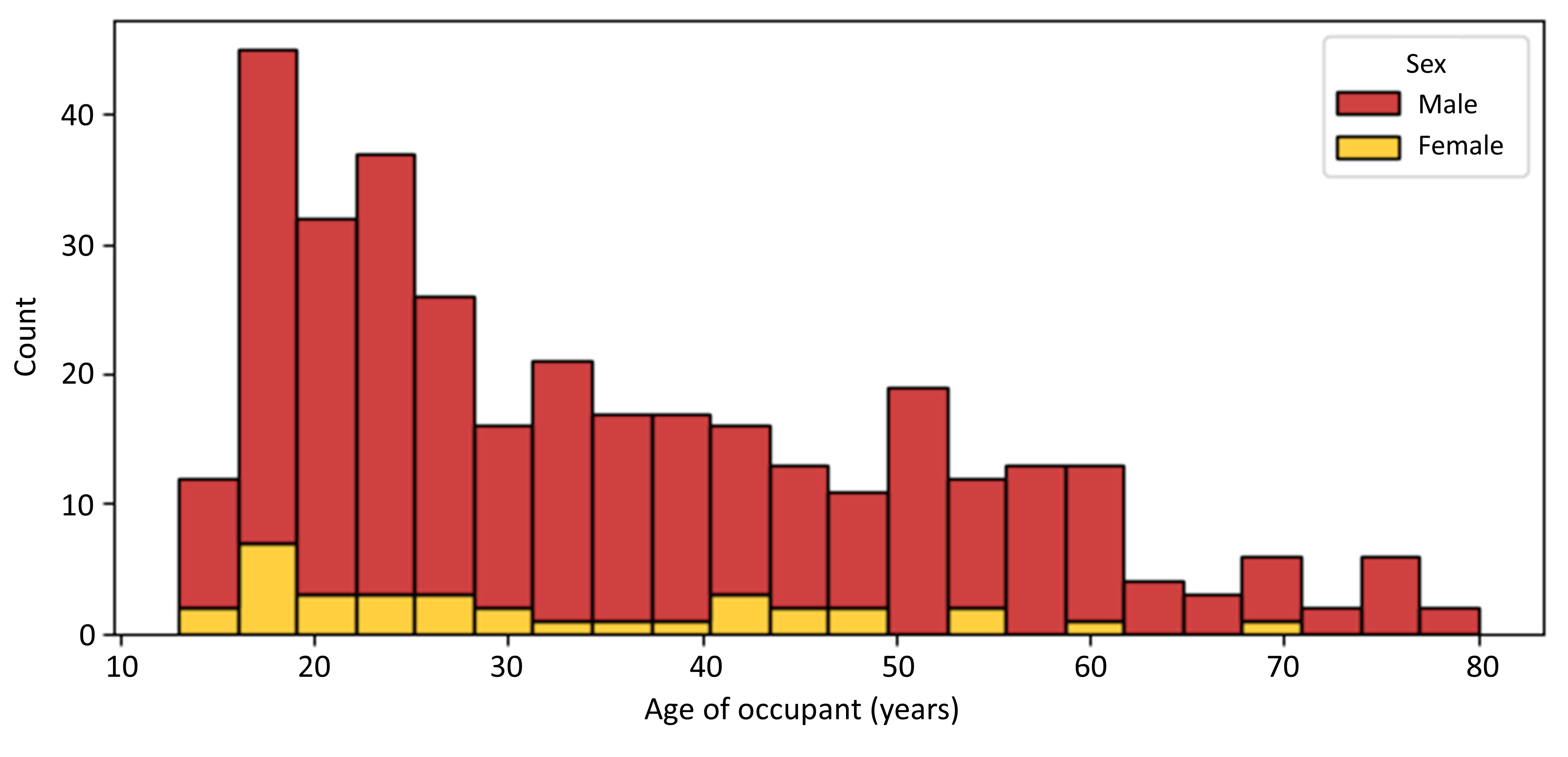
There were 353 motorcyclists across 343 motorcycles involved in 335 collisions. 317 (89.8%) were male and 34 (9.6%) were female. 313 (88.7%) motorcyclists were aged between 16 and 60, 28 (7.9%) aged over 60 and 2 (0.6%) aged less than 16 (Figure 6). 254 (71.9%) motorcyclists were involved in collisions which occurred in daylight and 65 (18.4%) in darkness (47 with street lighting and 17 without, 1 unknown).
3.2 Road and junction type
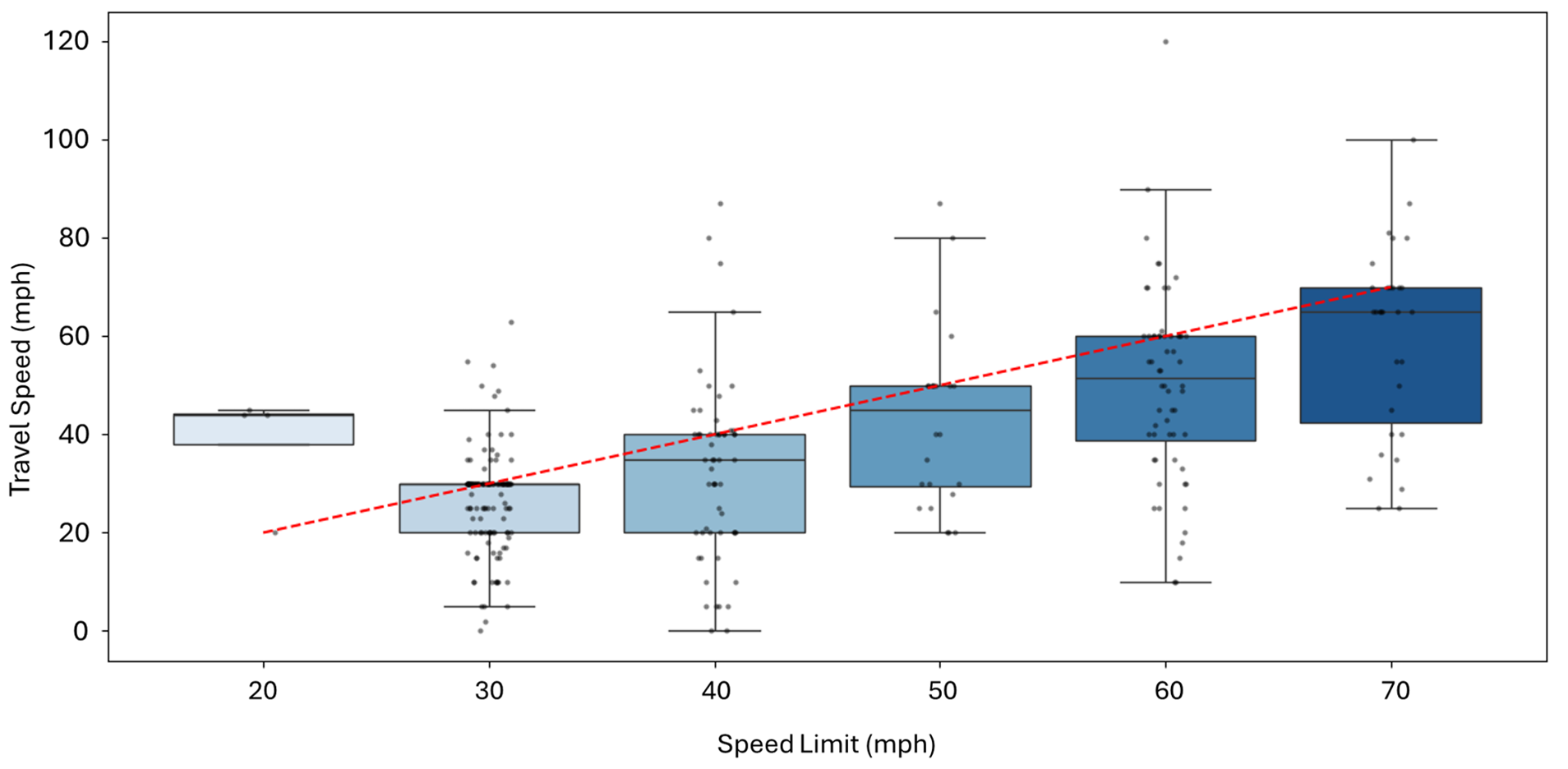
The collisions were distributed across different parts of the UK road network, which has a range of roads and speed limits (Figure 7). 43.3% (153/353) of motorcyclists were involved in collisions on A roads, including 7.1% (25/353) trunk roads (important roads typically used for long distance travel). A roads are defined as major roads intended to provide large-scale transport links within or between areas. 16.7% (59/353) of motorcyclists were involved in collisions on B roads, which are roads intended to connect different areas and to feed traffic between A roads and smaller roads on the network. Approximately a third (35.4%, 125/353) of motorcyclists were involved in collisions on C roads, which are smaller roads intended to connect together unclassified roads with A and B roads, and often linking a housing estate or a village to the rest of the network. Only 4.2% (15/353) of motorcyclists were involved in collisions on motorways.
The most prevalent collision location was at “T” or staggered junctions, where 37.1% (131/353) of the RAIDS motorcyclist cohort were involved in a collision, followed by no junction (30.9%, 109/353). The remaining locations comprise 1-7% each, including roundabouts (7.6%, 27/353), private drives/entrances (6.2%, 22/353), crossroads (5.4%, 19/339) and sliproads (2.8%, 10/353).
3.3 Speed
The road speed limit distribution of collisions mirrors the carriageway classification: 42.5% (150/353) of motorcyclists were involved in collisions in 30 mph areas, 18.1% (64/353) in 60 mph areas, 16.1% (57/353) in 40 mph areas, 9.3% (33/353) in 70 mph areas and 7.4% (26/353) in 50 mph areas (Figure 7). A fifth (19%, 57/299) of the motorcyclists with known travel speeds were travelling above the speed limit of the road where the collision occurred (Figure 7). Travel speeds recorded in RAIDS are estimated by trained collision investigators from the scene and available Police reports using all available information including physical evidence such as skid marks and vehicle deformation, data recorder outputs or CCTV footage.
3.4 Turning is often involved in motorcyclist collisions
Most collisions involved another road user at some point during the collision (97.5%, 344/353), most commonly a car (80%, 275/344) followed by vans (11%, 39/344). Just 2% of incidents involved a heavy goods vehicle. Hatchbacks were the most common impact partner type (71%, 147/207) followed by saloons (19.3%, 40/207) and 4x4s (15.0%, 31/207).
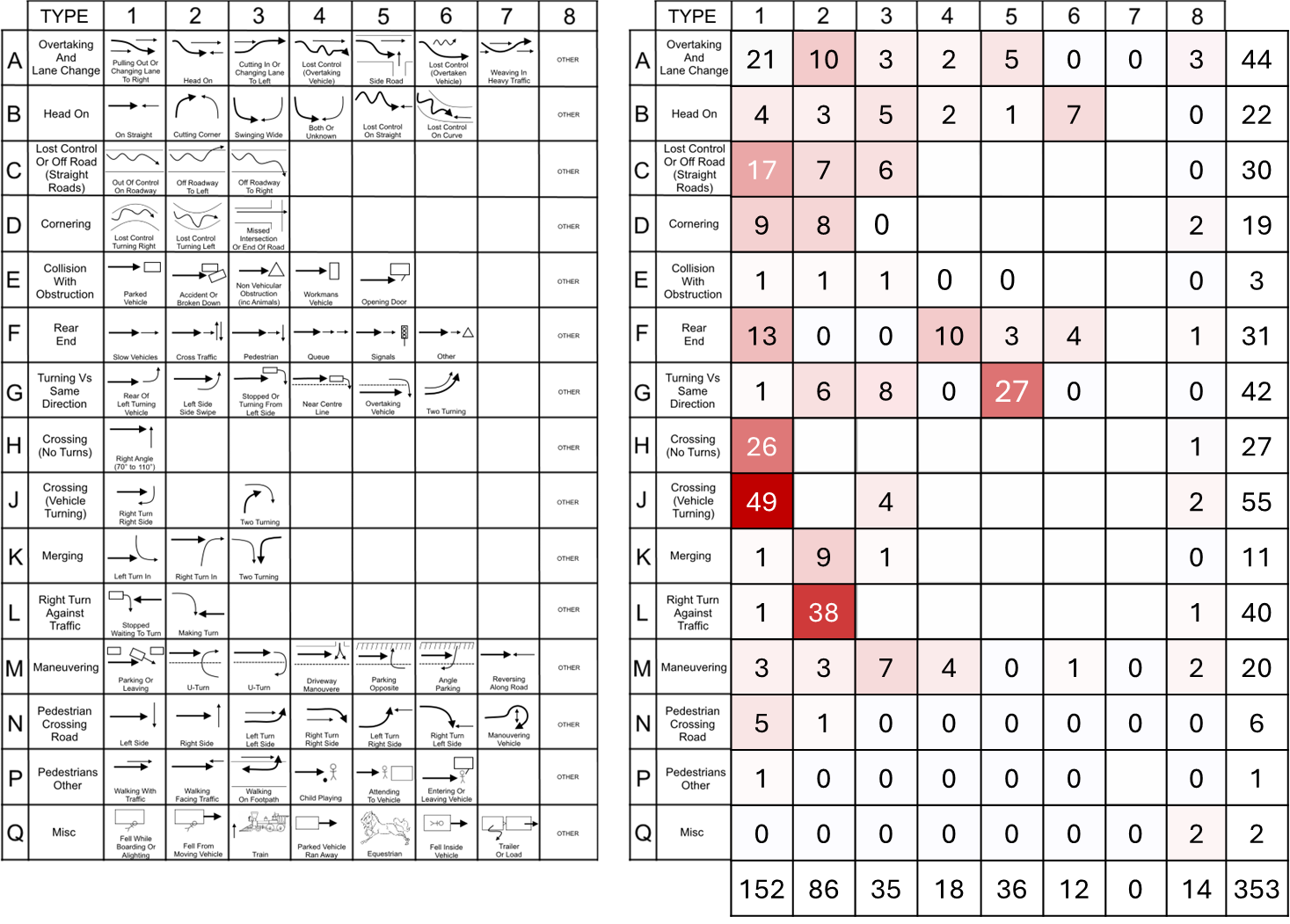
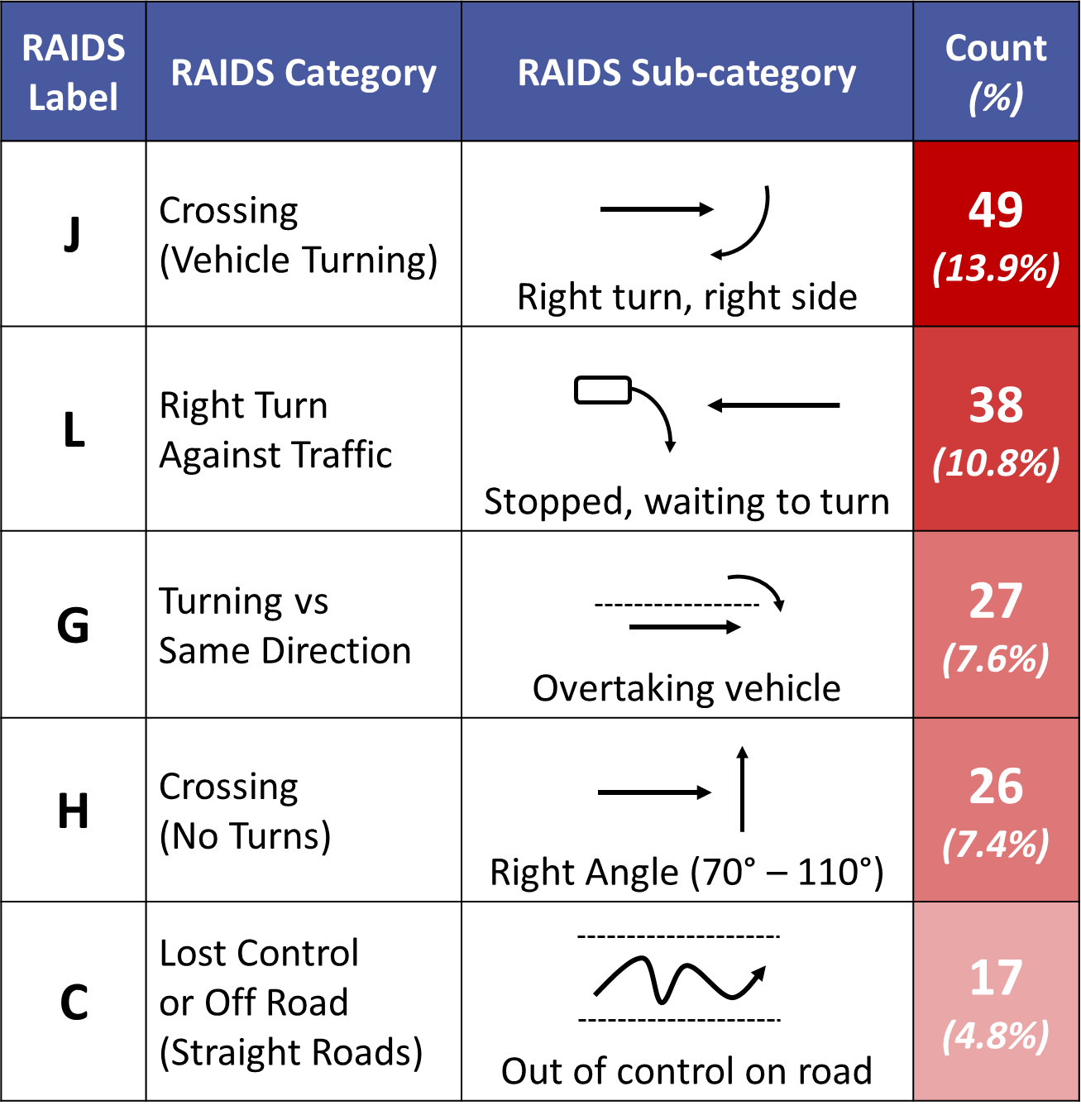
More detailed collision configurations are classified in RAIDS (Figure 8). The most prevalent configuration for all motorcyclists was collision with a crossing vehicle making a right turn to its right side, which comprised 13.9% (49/353) of involved motorcyclists, followed by collision with a vehicle making a right turn against traffic (10.8%, 38/353), collision with a vehicle travelling in the same direction which then turned right (7.6%, 27/353), collision with a vehicle crossing without turns where the two paths are 90°±20° (7.4%, 26/353) and collision due to overtaking and lane changing (5.9%, 21/353). Collapsing loss of control to discount direction would place it as the third most common configuration experienced by 8.5% (30/353) of RAIDS motorcyclists.
3.5 Helmet status
Of 353 motorcyclists, 321 (90.9%) wore a helmet, 7 (2.0%) did not wear a helmet and 25 (7.1%) were unconfirmed/unknown. Across the 321 helmeted motorcyclists, 25 (7.1%) helmets came off, 173 (53.9%) helmets were confirmed to remain on, and 118 (36.8%) helmet statuses were unconfirmed or unknown. Poor fit was identified as a factor in 4 cases (16.0%) of those whose helmets came off.
80.3% (159) of helmets with reported type were full face, 10.6% (21) were modular or flip-up (full face with hinged front) and 9.1% (18) were open face. The remaining 134 were of unknown type.
3.6 Left-sided and frontal impacts were dominant, with minimal rear-right and crown involvement
When considering all impacts, i.e. primary and secondary, the most damaged regions were rear left (25.9%), front left (24.7%) and front right (21.0%) (Table 2). The prevalence of crown damage was substantially lower (6.6%). Notably, 58.7% of all helmet damage was to the facial region.
Primary impact locations were identified in 125 helmets and were generally associated with the motorcyclist’s first interaction with an impact partner vehicle during the collision. Most primary impacts were to the front left (25.2%) followed by the front right (24.4%) and then rear left (22.8%). The prevalence of rear right (14.2%) and crown primary impacts (5.5%) were substantially lower. Almost the same proportion of primary impacts were facial (49.6% of 127) and non-facial (48.8%). Of the 125 confirmed facial/non-facial impact locations, 50.4% (63/125) of impacts were to the face.
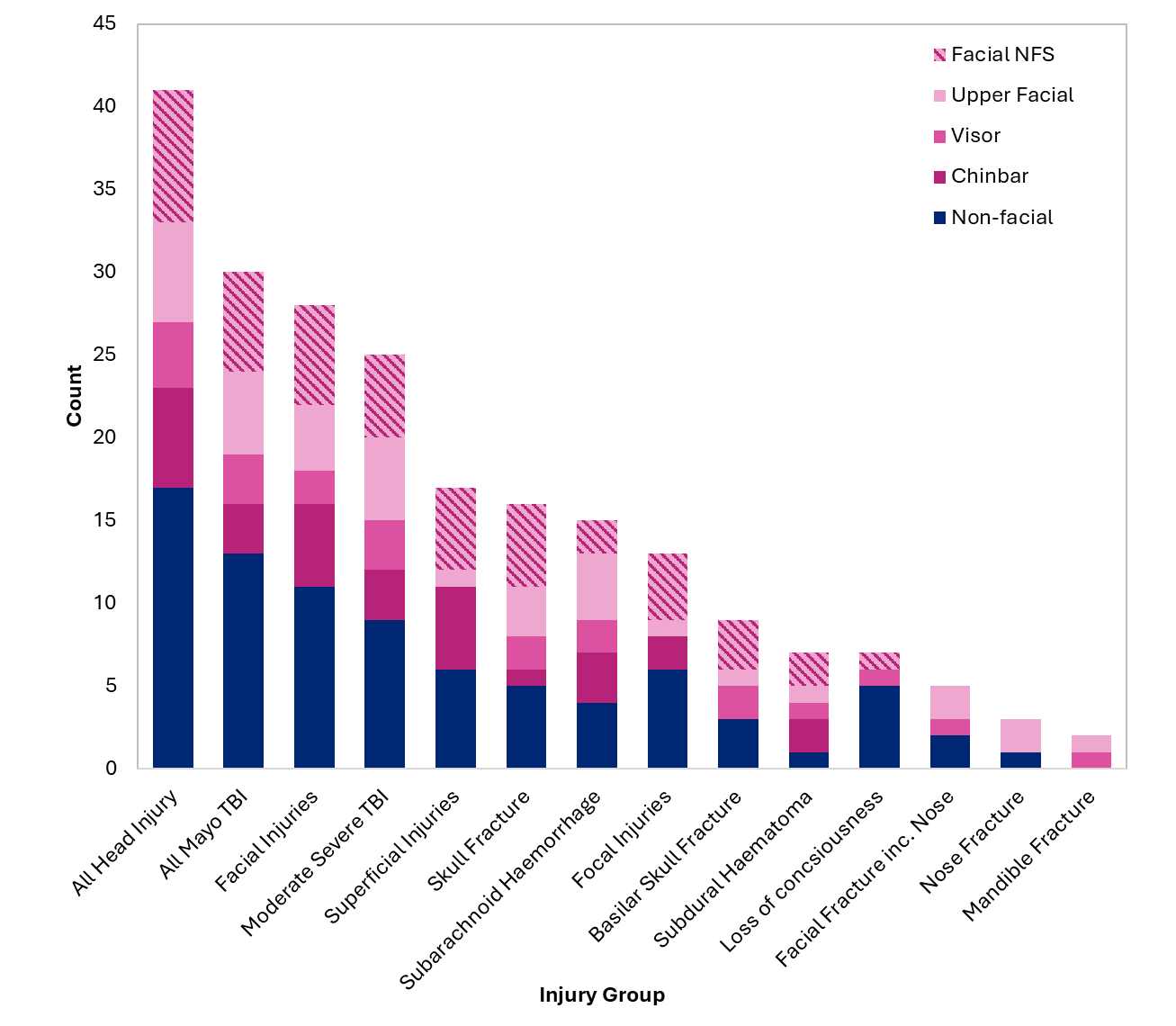
Motorcyclists with confirmed primary facial (50.4%) and non-facial (49.6%) impacts sustained similar injury severities and patterns (Table 3 and Figure 9). Considering only the facial impacts, the visor was impacted most (36.5%, 23/63), followed by the upper facial and chinbar regions (both 23.8%, 15/63).
| Region | Sub-region | Count (All) | Percentage (All) | Count (Primary) | Percentage (Primary) |
|---|---|---|---|---|---|
| Helmet separated into quarters plus the crown | Front Left | 60 | 24.7% | 32 | 25.2% |
| Rear Left | 63 | 25.9% | 29 | 22.8% | |
| Front Right | 51 | 21.0% | 31 | 24.4% | |
| Rear Right | 48 | 19.8% | 18 | 14.2% | |
| Crown | 16 | 6.6% | 7 | 5.5% | |
| Front NFS* | 5 | 2.1% | 5 | 3.9% | |
| Rear NFS* | 0 | 0.0% | 3 | 2.4% | |
| Unknown | 0 | 0.0% | 2 | 1.6% | |
| All | 243 | 100% | 127 | 100% | |
| Helmet separated into facial and non-facial regions | Non-facial | 92 | 41.3% | 62 | 48.8% |
| Visor | 50 | 22.4% | 23 | 18.1% | |
| Upper Facial | 40 | 17.9% | 15 | 11.8% | |
| Chinbar | 36 | 16.1% | 15 | 11.8% | |
| Facial NFS* | 5 | 2.2% | 10 | 7.9% | |
| Unknown | 0 | 0.0% | 2 | 1.6% | |
| All | 223 | 100.0% | 127 | 100% |
3.7 Injury summary in all motorcyclists
Among 353 motorcyclists, 17.0% were fatally injured, 51.0% were seriously injured, 24.4% were slightly injured and 6.5% were uninjured (Table 3). Overall, one third (33.1%) of riders sustained at least one head injury, and almost one quarter (24.9%) had a Mayo‑classified TBI, of which 19.0% were moderate-severe. More than half (56.5%, 65/115) of those with injuries to the head, brain or face had facial injury involvement (facial injuries comprise 18.4% of the overall cohort). Less than one in five (14.8%, 17/115) sustained a facial fracture. Clinically important intracranial bleeding pathologies and skull fracture were less frequent (Table 3).
Head injury [83.3% (50/60), χ2 = 80.9, p<0.0001] and facial injury [53.3% (32/60), χ2 = 67.3, p<0.0001] were more common among the 60 fatally injured motorcyclists than for those who survived. Similarly, Mayo-classified moderate-severe TBI [75.0% (45/60), χ2 = 148.6, p<0.0001], focal injury [50.0% (30/60), χ2 = 120.3, p<0.0001], subarachnoid haemorrhage [45.0% (27/60), χ2 = 91.8, p<0.0001], skull fracture [41.7% (25/60), χ2 = 102.3, p<0.0001], BSF [25.0% (15/60), χ2 = 54.6, p<0.0001] and subdural haematoma [20.0% (12/60), χ2 = 48.8, p<0.0001] were also all significantly more common in fatally injured motorcyclists than those who survived.
3.8 Injury summary in motorcyclists with confirmed head impacts
Among 127 motorcyclists with confirmed head impact, 33.1% (42/127) sustained a head injury, of which 59.5% (25/42) sustained moderate-severe TBI. The majority (69.0%, 29/42) of those with a head injury also sustained a facial injury, of which 11.9% (5/42) were facial fractures (Table 3). Other key injury types were subarachnoid haemorrhage (35.7%, 15/42), focal injury (31.0%, 13/42) and skull fracture (38.1%, 16/42) of which 56.3% (9/16) sustained basilar skull fracture.
| Cohort | All riders | % | Fatally injured riders | % | Riders with confirmed head impacts | % | Primary impact Facial | % | Primary impact Non-facial | % |
|---|---|---|---|---|---|---|---|---|---|---|
| All | 353 | - | 60 | - | 127 | - | 63 | - | 62 | - |
| Uninjured | 23 | 6.5% | - | - | 4 | 3.1% | 2 | 3.2% | 0 | 0.0% |
| Slight | 86 | 24.4% | - | - | 38 | 29.9% | 15 | 23.8% | 11 | 17.7% |
| Serious | 180 | 51.0% | - | - | 57 | 44.9% | 18 | 28.6% | 29 | 46.8% |
| Fatal | 60 | 17.0% | 60 | 100.0% | 24 | 18.9% | 7 | 11.1% | 9 | 14.5% |
| No head injuries | 238 | 67.4% | 10 | 16.7% | 85 | 66.9% | 39 | 61.9% | 45 | 72.6% |
| Head injuries | 115 | 32.6% | 50 | 83.3% | 42 | 33.1% | 24 | 38.1% | 17 | 27.4% |
| Superficial Injury | 43 | 12.2% | 17 | 28.3% | 18 | 14.2% | 11 | 17.5% | 6 | 9.7% |
| Facial Injuries | 65 | 18.4% | 32 | 53.3% | 29 | 22.8% | 17 | 27.0% | 11 | 17.7% |
| Facial Fracture (inc. Nose) | 17 | 4.8% | 10 | 16.7% | 5 | 3.9% | 3 | 4.8% | 2 | 3.2% |
| Facial Fracture (excl. Nose) | 15 | 4.2% | 12 | 20.0% | 4 | 3.1% | 2 | 3.2% | 2 | 3.2% |
| Mandible Fracture | 5 | 1.4% | 4 | 6.7% | 2 | 1.6% | 2 | 3.2% | 0 | 0.0% |
| Maxilla Fracture | 6 | 1.7% | 3 | 5.0% | 1 | 0.8% | 0 | 0.0% | 1 | 1.6% |
| Nose Fracture | 7 | 2.0% | 5 | 8.3% | 3 | 2.4% | 2 | 3.2% | 1 | 1.6% |
| Orbit Fracture | 4 | 1.1% | 3 | 5.0% | 0 | 0.0% | 0 | 0.0% | 0 | 0.0% |
| Zygotoma Fracture | 2 | 0.6% | 2 | 3.3% | 0 | 0.0% | 0 | 0.0% | 0 | 0.0% |
| All Mayo-classified TBI | 88 | 24.9% | 46 | 76.7% | 30 | 23.6% | 17 | 27.0% | 13 | 21.0% |
| Mayo Symptomatic Possible | 5 | 1.4% | 0 | 0.0% | 0 | 0.0% | 0 | 0.0% | 0 | 0.0% |
| Mayo Mild Probable | 16 | 4.5% | 1 | 1.7% | 5 | 3.9% | 1 | 1.6% | 4 | 6.5% |
| Mayo Moderate Severe | 67 | 19.0% | 45 | 75.0% | 25 | 19.7% | 16 | 25.4% | 9 | 14.5% |
| Skull Fracture | 30 | 8.5% | 25 | 41.7% | 16 | 12.6% | 11 | 17.5% | 5 | 8.1% |
| Basilar Skull Fracture | 19 | 5.4% | 15 | 25.0% | 9 | 7.1% | 6 | 9.5% | 3 | 4.8% |
| Vault Fracture | 16 | 4.5% | 15 | 25.0% | 9 | 7.1% | 5 | 7.9% | 4 | 6.5% |
| Epidural Haematoma | 15 | 4.2% | 13 | 21.7% | 8 | 6.3% | 6 | 9.6% | 1 | 1.6% |
| Extradural Haematoma | 2 | 0.6% | 2 | 3.3% | 1 | 0.8% | 0 | 0.0% | 1 | 1.6% |
| Subdural Haematoma | 14 | 4.0% | 12 | 20.0% | 7 | 5.5% | 6 | 9.5% | 1 | 1.6% |
| Subarachnoid Haemorrhage | 37 | 10.5% | 27 | 45.0% | 15 | 11.8% | 11 | 17.5% | 4 | 6.5% |
| Axonal Injury | 6 | 1.7% | 5 | 8.3% | 1 | 0.8% | 0 | 0.0% | 1 | 1.6% |
| Focal Injury | 37 | 10.5% | 30 | 50.0% | 13 | 10.2% | 7 | 11.1% | 6 | 9.7% |
| Loss of Consciousness | 27 | 7.6% | 10 | 16.7% | 7 | 5.5% | 2 | 3.2% | 5 | 8.1% |
3.9 Injury associated with facial and non-facial primary impacts
Motorcyclists with confirmed primary facial and non-facial impacts sustained similar injury severities and patterns (Table 3 and Figure 9). Although a higher proportion of motorcyclists with confirmed primary facial impacts sustained head injury than those with non-facial primary impacts (38.1% vs 27.4%), this was not statistically significant [χ2=1.62, p=0.204]. Similarly, a larger portion of those with facial impacts sustained moderate-severe TBI (25.4% vs 14.5%), but the difference was not significant [χ2 =2.31, p=0.128]. The facial injury rate (27% vs 18%) similarly did not differ significantly [χ2 =1.79, p=0.181], however it is notable that facial injuries were also recorded in motorcyclists with non-facial primary impacts (17.7%, 11/62), likely demonstrating some riders having multiple head impact locations. In the primary facial impact cohort, there were a higher proportion of skull fractures (17.5% vs 8.1%), basilar skull fractures (9.5% vs 4.8%), subdural haemorrhage (SDH, 9.5% vs 1.6%), but again the differences were not statistically significant. The only pathology that was borderline significantly higher in facial impacts cohort was subarachnoid haemorrhage (SAH, 17.5% vs 6.5%, χ2 = 3.59, p=0.058).
It was not possible to specify the impact region for a large portion of these impacts (33%, 8/24). This reflects the limitations of RAIDS documentation in more severe cases: when a rider required immediate medical attention, investigators frequently recorded only a general description of facial damage without sub-region detail, and helmet photographs were often unavailable. This group also had the highest average injury burden (5.90 injury categories per rider, Appendix Table 7), consistent with the hypothesis that helmet damage documentation quality inversely related to collision severity. Where the impact region, i.e. chinbar, visor or upper face was specified, most head injuries were sustained after primary impacts to the upper facial region and chinbar (both 25%, 6/24) then the visor (17%, 4/24). Similarly, more TBIs, facial injuries and subarachnoid haemorrhages were recorded for primary impacts to the upper face and chinbar than the visor.
3.10 Basilar skull fracture in RAIDS motorcyclists
There were 19 basilar skull fracture cases in RAIDS (Table 4). The majority (79%, 15/19) were fatal, with the remaining 4 given overall injury severity of “serious” by RAIDS investigators. Approximately a third (6/19, 32%) of the cases had AIS codes beyond not further specified providing detail of cerebrospinal fluid (CSF) leak presence and the fracture complexity (e.g. whether a hinge or comminuted type fracture was present). A small proportion (15%, 3/19) of the cases had no other AIS3+ head injuries present. The majority (79%, 15/19) of cases presented with haemorrhage of some type (SAH, SDH and cerebrum/cerebellar haemorrhages). Approximately a third (6/19, 32%) of the cases had an AIS2+ facial injury present (5 fractures, 1 ear canal injury). Just over a quarter (26.3%, 5/19) of the BSF motorcyclists also presented with skull vault fracture. Appendix Table 8 provides additional information about the BSF location and type for all cases, even where the AIS code is not further specified (NFS).
Of the 19 basilar skull fracture cases in RAIDS, 9 had known primary impact locations (6 facial, 3 non-facial). Among the other 10 basilar skull fracture cases with unknown primary impact locations, 5 had AIS2+ facial injuries present, suggesting facial impacts to the facial region. One of the confirmed facial impacts was associated with an AIS2+ facial injury. One of the facial fracture cases (number 4) was confirmed to have the helmet remain on and sustained an orbit fracture, suggesting facial impact to the facial region at some stage of the collision.
| BSF Case Number | Outcome | AIS-coded type of BSF (see Appendix Table 8 for more details on BSF for all cases) |
Was BSF a/the cause of death? | No other AIS3+ head | Skull vault fracture? | Other serious brain injury | AIS2+ Facial injury present | Primary facial impact | Primary impact location (within facial) | Helmet status |
|---|---|---|---|---|---|---|---|---|---|---|
| 1 | Fatal | BSF - complex; open with torn, exposed or loss of brain tissue; comminuted; ring; hinge | Yes | No | Yes - significant vault | None | Yes - mandible fracture | Unconfirmed | Unconfirmed | Unconfirmed |
| 2 | Serious | BSF NFS | Not Applicable | No | No | Yes - cerebrum haematoma, pneumocephalus, brain oedema | No | Unconfirmed | Unconfirmed | Unconfirmed |
| 3 | Serious | BSF NFS | Not Applicable | Yes - no other | No | No - SAH AIS 2 | None reported | Facial | Visor | Came off |
| 4 | Fatal | BSF - complex; open with torn, exposed or loss of brain tissue; comminuted; ring; hinge | Yes | No | Yes - significant vault | Yes - Brainstem, cerebellum, cerebrum haemorrhages | Yes - orbit fracture | Unknown | Unknown | Remained on |
| 5 | Fatal | BSF with CSF leak | Yes | No | No | Yes - Cerebellum haematoma | No | Unconfirmed | Unconfirmed | Unconfirmed |
| 6 | Fatal | BSF NFS | No | No | Yes | None | No | Non-facial | Non-facial | Came off |
| 7 | Fatal | BSF NFS | Yes | No | Yes - significant vault | Yes - Brainstem haemorrhage, DAI | No | Unknown | Unknown | Unknown |
| 8 | Fatal | BSF NFS | Yes | No | No | Yes - Massive SDH | None reported | Facial | Visor | Remained on |
| 9 | Serious | BSF NFS | Not Applicable | No | No | Yes - Contusion & intracerebral haematoma | No | Non-facial | Non-facial | Unknown |
| 10 | Fatal | BSF NFS | Undeclared | No | No | Yes - SDH, SAH (AIS2), brain swelling | None reported | Facial | Upper facial | Unknown |
| 11 | Serious | BSF NFS | Not Applicable | No | No | None | Yes - maxilla fracture, orbital floor fracture | Unconfirmed | Unconfirmed | Unconfirmed |
| 12 | Fatal | BSF - with CSF leak AND BSF - complex; open with torn, exposed or loss of brain tissue; comminuted; ring; hinge | Yes | Yes - no other | No | No - SAH AIS 2 | No | Facial | NFS | Remained on |
| 13 | Fatal | BSF NFS | Yes | No | No | Yes - Brain oedema, brainstem swelling, intracerebellar haematoma | No | Unconfirmed | Unconfirmed | Unconfirmed |
| 14 | Fatal | BSF - complex; open with torn, exposed or loss of brain tissue; comminuted; ring; hinge | Yes | No | No | Yes - Brainstem concussion, cerebellum SAH, contusion | Yes - Le Fort II (maxilla) | Unconfirmed | Unconfirmed | Unconfirmed |
| 15 | Fatal | BSF - complex; open with torn, exposed or loss of brain tissue; comminuted; ring; hinge | Undeclared | No | Yes | Yes - Cerebrum haematoma, cerebrum laceration | No | Non-facial | Non-facial | Came off |
| 16 | Fatal | BSF NFS | Yes | No | No | Yes - Cerebrum SDH, cerebrum laceration | Yes - ear canal injury, fractures around the mouth area | Facial | Facial NFS | Unknown |
| 17 | Fatal | BSF NFS | Undeclared | Yes - no other | No | None | No | Unconfirmed | Unconfirmed | Unconfirmed |
| 18 | Fatal | BSF - complex; open with torn, exposed or loss of brain tissue; comminuted; ring; hinge | Undeclared | No | No | Yes - massive SDH, cerebrum haematoma, pneumocephalus, SAH | Yes - maxilla fracture, orbit fracture | Unconfirmed | Unconfirmed | Unconfirmed |
| 19 | Fatal | BSF NFS | Undeclared | No | No | Yes - Brainstem laceration, brain swelling, SAH | No | Facial | Facial NFS | Remained on |
4. Discussion
This study provides the first analysis of post-2010 motorcyclist helmet damage data, providing researchers and policy makers with motorcyclist head impact locations and their implications for injury prevention, potentially informing the development of more effective helmet test methods. Our analysis of 353 motorcycle collisions which occurred from 2013-2025 showed that a third of motorcyclists with confirmed head impacts sustained a head injury, nearly 20% sustained a moderate-severe TBI and 12% sustained a skull fracture. These results indicate areas for helmet improvement. Importantly, almost half of the primary impacts to the helmet were in the facial region among cases with determinable primary helmet impact location. Primary facial impacts led to statistically similar injury patterns and severities as non-facial impacts.
The most striking finding of this study is that 58.7% of all helmet damage, and 49.6% of primary impacts, occurred to the facial region. This is particularly notable given that the facial region is the least tested area in current helmet standards: no mandated standard includes visor impact testing, and chinbar testing is limited to a single central impact point in ECE R22.05/06, BSI 6658 and Snell (Table 1). ECE R22.06 introduced three upper face test points, representing a step forward, but the visor region and lateral facial impacts remain entirely unaddressed. Our findings therefore provide direct epidemiological justification for expanding facial impact coverage in future standards and ratings testing.
Half of all primary impacts were to the facial region, even though this region comprises less than half of the helmet’s coverage (Figure 5). Our collision configuration analysis showed that motorcyclists often collide head-on with another vehicle that is turning or crossing. This results in impacts between the rider’s front and the vehicle’s side, providing an explanation for the high prevalence of facial and left-sided impacts. Direct comparison with previous work is limited, as COST327 reports all damage (as opposed to primary and secondary damage) and does not separate front and rear left or right, grouping all damage together (Chinn et al., 2001). Existing standards minimally test the facial region of helmets, despite the high exposure of this region in our cohort of confirmed head impact locations.
Severe head and brain injury occurs in both primary facial and non-facial impacts. There was not a statistically significant difference between the head injury rates in primary facial vs non-facial impact locations, despite facial injuries having higher overall percentages, reflecting the limited size of the subset with determinable impact locations. Our interpretation of the results therefore focuses primarily on the high absolute burden of head injury in facial impact cases and the qualitative pattern of impacts (e.g. predominance of upper face and chinbar). Although our findings are derived from a subsample of collisions with sufficiently documented helmet damage, the high proportion of facial impacts in this group suggests that facial regions are frequently involved in real‑world crashes and merit consideration in helmet test protocols.
The only standards that include facial impacts are ECE R22 and Snell, which prescribe a linear impact to the centre of the chinbar (ECE, 2020; ECE, 1999; Snell, 2020). From ECE 22.05 to ECE 22.06, 12 additional impact points were included to select from, introducing variation in the impact conditions that are considered to be realistic in the context of real-world crash variability. However, most of the 12 impact points are on the non-facial region, excluding three upper face points: one left, one right, one central (Figure 2). ECE R22.06 also introduced oblique impact testing to assess helmet performance under rotational loading conditions, representing an important advance over the purely linear assessments of ECE R22.05. Oblique impact testing is also included in testing off-road and circuit racing motorcycle helmets from 2026 onwards, with peak rotational acceleration and the brain injury criterion (BrIC) used in its rotational assessment (Federation Internationale de Motocyclisme, 2024). Rotational attenuation technologies, such as MIPS, are now present in motorcycle helmets as a commercially available approach to reducing rotational energy transfer to the head. Notably, however, oblique impact and rotational assessment have not yet been extended to middle and lower facial impact regions in any current standard, meaning that even where rotational loading is assessed, it is assessed only for the non-facial helmet regions that are already the most comprehensively tested. This study clearly identifies a gap in ECE 22.06 test regions across both impact location and loading condition. Hence, our results support the development of facial impact test methods to enable the assessment of helmet protection under these most prevalent impacts.
Although there was no statistically significant difference in the proportion of pathologies between the facial and non-facial impacts, we observed a trend toward a higher incidence in the facial impact cohort with numerically higher rates in the facial impact cohort. Overall, injury patterns and severity were similar for facial and non-facial impacts, both including severe outcomes. Notable injury patterns included skull fractures (particularly basilar skull fractures), subarachnoid haemorrhage, focal brain injuries and subdural haematomas. These injury patterns are consistent with previous work. One study reported that impacts to the front region frequently led to skull and basilar skull fractures, noting that these impacts were often located outside of the coverage area of helmets from the 1980s when the study was conducted (Dowdell et al., 1988). Another study of 47 fatal motorcycle collisions from 1983-1994 found that 43% of impacts were to the facial region, leading to basilar skull fractures in 66% of cases (Whyte et al., 2016). The high prevalence of basilar skull fracture was expected as BSF is associated with high fatality rates (Fujiwara et al., 2021). In contrast to these studies, our data is representative of current motorcycle collisions with a range of outcomes from no injury to fatality. Of those with known primary impact locations, we found that approximately 85% (6/7) of motorcyclists sustaining subdural haematoma experienced primarily facial impacts, along with approximately three quarters (11/15) of motorcyclists sustaining subarachnoid haemorrhage. Approximately two thirds of motorcyclists who sustained both skull fracture (11/16) and basilar skull fracture (6/9) suffered primary facial impacts. These results indicate most prevalent pathologies that should be protected against by improving helmets, and this can be driven by adopting suitable injury criteria in helmet test methods. Current helmet standards for chin bar impacts pass or fail a helmet only based on peak resultant linear acceleration and HIC (Head Injury Criterion), hence they may not address all relevant pathologies identified in this study.
Among the three structurally distinct facial helmet regions, i.e. chinbar (lower structural element of the helmet), visor (the transparent protective screen) and upper face (the helmet shell overlying the forehead and orbital area), the visor was the facial sub-region with the most primary impacts (36.5% of primary facial impacts, Table 2) but associated with the lowest average injury burden (1.35 injury categories per rider, falling to 0.87 for MAIS3+ injuries). This suggests that visor impacts, while common, may be less mechanically severe on average, possibly because the visor is a relatively large, deformable structure that distributes impact energy and survival bias may occur. Additionally, a 2023 study found that the visor redirects mid-face impact force to the forehead and lower face via the helmet’s upper rim and chinbar, resulting in less head rotation (Meng et al., 2023). This mechanism may explain the lower average injury burden. In contrast, chinbar and upper facial impacts, were associated with substantially higher injury burdens (2.67 and 3.27 injury categories per rider respectively, 1.73 and 2.47 for MAIS3+ as shown in Appendix Table 7) and had a relatively higher prevalence in the head injured cohort (Figure 9). The chinbar and upper facial region were noted by COST327 as frequently damaged locations (both around 15% of cases for all damage, compared to 16-18% in our study) (Chinn et al., 2001). In the more severe cases, it is possible that visor damage is underrepresented if the visor came off and is missed during on-scene data collection. Notably, primary facial impacts that were not specified by region had the highest injury burden, and were associated with 5.90 average injuries per rider. It is possible investigators were not able to examine the helmets as closely when the rider required greater medical attention, often resulting in text-based descriptions with no photographs which did not allow us to specify the facial damage region. Although we have a limited number of cases with identified facial impact regions, our results suggest that the upper facial region and chinbar are likely to be associated with higher numbers of head injuries, and as such they should have increased priority for future helmet design and assessment.
The rate of head injuries increased from 33% in all motorcyclists to 83% among the fatal cases, supporting previous findings that increased head injury prevalence is associated with an increase in overall severity. When comparing the RAIDS cohort of 60 fatal motorcycle collisions with the historic study of 47 fatal motorcycle collisions in Australia between 1983-1994, we found similar prevalences of subdural haemorrhage (SDH, 23%, vs our 20%, 12/60) and skull vault or facial fracture (40% vs our 37%, 22/60). However, BSF was significantly lower in our fatal cohort (our 25%, 15/60, vs 66%; χ2=18.0, p<0.0001). Taking fatal cases with confirmed facial impact, Whyte et al. (2016) found that 20% of riders sustained SDH compared to 43% of our cohort (not statistically significant, Yates corrected χ2=1.12, p=0.290), similar rates of skull vault fracture (35% vs our 43%), but higher BSF prevalence of 65% vs our 36% (not statistically significant, χ2=1.12, p=0.290). COST327 (1996–1998) reported 46 basilar skull fractures among 409 head injuries across 226 motorcyclists. As rider-level BSF prevalence was not reported, we could not directly compare our results with this more representative population. The lower rate of BSF in our RAIDS fatal injury cohort may be related to lower rates of open face helmets (8% vs 17%, χ2=1.86, p=0.172), developments in helmet and vehicle technology between the 1990s and 2010s or geographical differences in collisions and their severity between Australia and the UK. Twenty five years on from the data analysed by Whyte et al. (2016), we continue to see serious pathologies, including in riders wearing full-faced helmets that remained on for the full duration of the collision. This demonstrates the continued need for innovation in helmet design and testing.
The rate of head injury among motorcyclists with confirmed head impacts has fallen from approximately two thirds (COST327, 1996-1998) to one third in our cohort, consistent with improvements in helmet design, testing standards and vehicle front-end geometry over the same period (Chinn et al., 2001). This improvement may in part be explained by differences in collision severity in the cohorts; COST327 is a multicentre study with different sampling and inclusion criteria. However, as helmets were worn in both cohorts, it is likely that motorcyclist safety has improved since the 1990s, through helmet design, testing and other influential interventions such as speed limit and vehicle front end design (Perticone et al., 2024; Vigilante Jr, 2005; Xiao et al., 2020). As severe outcomes still remain in helmeted riders whose helmets remain on, this emphasises the continued need for improvement, especially to minimally tested regions of the helmet, such as the facial region. Having a clear understanding of both impact location and the types of injuries sustained has profound implications for designing representative helmet testing procedures and identifying how injury risk curves should be generated and implemented, as is demonstrated in previous literature (Baker et al., 2023; Baker et al., 2024b). Here, we extend what is available in literature beyond fatal-only cohorts from 25+ years ago (1980-90s data) by providing additional evidence from 2013-2025 data for all outcomes.
5. Limitations and future work
Despite the high quality and detail of RAIDS data, there are several challenges which resulted in the following choices being made. The travel speed values are determined by expert investigators based on all available information, and an assessment of confidence is included. To maximise the data sample size, the included speeds have all confidence assessment levels (low, medium and high), where low confidence is more likely to be estimated from the speed limit value itself. For the impact locations, after analysing both primary and all helmet damage, we chose to focus only on the subset of primary impacts in an effort to exclude non-major impacts that have a low likelihood of being causal of head injuries and inform helmet design and assessment. To mitigate the risk of bias in the assessment of primary impact locations, two researchers separately assessed the full cohort to create the confirmed head impact sub-cohort. This sub-cohort may represent better documentation and therefore be more severe (non-representative within RAIDS). Validation performed assessed this risk as low because the prevalence of head injuries was the same (33%) across both the full and confirmed head impact cohorts. It was possible for us to include 11 riders whose helmets came off (8.8% of the confirmed impact cohort), as investigators were able to confirm that the helmet remained on for the primary impact (and in some cases also the secondary impact). Generally, we found that RAIDS listed the collision with the impact vehicle as the cause for the most severe head injuries, however the confidence for this was not always reported to be “high” and ground impact can additionally cause injury.
Injury coding in RAIDS used AIS 2005 Update 2008 or AIS 2015 depending on the coding period, with one version applied consistently per case. While AIS updates can introduce new injury codes reflecting advances in diagnostic capability, a comparison of AIS versions by Loftis et al. (2018) found that the majority of head and brain injury codes relevant to this study, including skull fracture, intracranial haemorrhage and diffuse axonal injury, are consistent across these versions, and that version differences are unlikely to materially affect the injury distributions presented here (Loftis et al., 2018). Nevertheless, readers should be aware that a small number of cases may have been coded under different versions, and that AIS updates may have introduced additional specificity in some injury categories over the study period.
RAIDS is a severe subset of British collisions, hence there is a greater prevalence of more severe outcomes (Table 3) compared to a fully representative sample of motorcycle collisions across Great Britain or compared to other in-depth datasets adopting different sampling approaches. In addition, despite 353 motorcycle riders captured by RAIDS, it was only possible to confirm primary head impacts in approximately a third of the cases due to unavailability of helmet damage descriptions or helmet photographs. This limited our ability to fully utilise the RAIDS data to investigate the relationship between helmet impact location and head injury beyond descriptive analysis. In future, in line with the 2026 Road Safety Strategy for the UK, better collision-healthcare data connectivity and improved awareness among forensic collision investigators, both within the police and in hospitals, about the importance of helmet documentation could vastly improve the future availability and quality of impact location data. These efforts should underpin prospectively designed datasets will be required to more definitively quantify any excess risk associated with facial impacts.
Our analysis focused on head and facial injuries, meaning that cervical spine injuries and their relationship to helmet mass and impact kinematics were not assessed in this study. Helmet mass (which is not directly recorded within RAIDS) has been proposed as a contributory factor in ring-type basilar skull fractures via traction mechanisms, and in cervical spine loading during impact (Gibson, 2007; Konrad et al., 1996). These represent important areas for future investigation, particularly as helmet designs evolve to incorporate additional protective technologies that may affect helmet mass.
This epidemiological study does not include direct assessment of impact direction or resulting head and brain kinematics, which is a recognised limitation of retrospective in-depth collision data without computational or physical impact reconstruction. Future studies, particularly through accident reconstruction, should seek to capture impact angle and directionality to enable more complete biomechanical characterisation of facial impacts, and to inform the most appropriate facial impact testing methods to be incorporated into future standards revisions and testing protocols, informed by the underlying epidemiology presented in this study.
6. Conclusion
In summary, this study provides the first contemporary insight of 21st century motorcycle head impact and injury outcomes at a larger scale than was previously available. Despite the good protection of helmets and a reduction in head injury rates compared to earlier reported cohorts, severe head injuries remain present. More importantly, nearly half of all primary head impacts were to the facial region, resulting in a range of injury patterns and severities similar to non-facial impact, despite facial impacts currently being minimally assessed by standards. New test methods should be developed to evaluate helmets under impacts to the facial region and assess their protection against skull fracture (vault and basilar), focal injury (which includes brain contusion, laceration and haemorrhagic contusion within the brain tissue) and bleeding pathologies (subarachnoid and subdural haemorrhages).
CRediT contribution
Claire Baker: Conceptualization, Data curation, Formal analysis, Funding acquisition, Investigation, Methodology, Project administration, Software, Supervision, Validation, Visualization, Writing – original draft, Writing – review & editing. Zhuoxiaoyue Wang: Data curation, Formal analysis, Investigation, Validation, Writing – review & editing. Lucas Low: Investigation, Validation, Writing – review & editing. Emily Ashworth: Investigation, Validation, Writing – review & editing. Mark H. Wilson: Methodology, Writing – review & editing. David J. Sharp: Funding acquisition, Resources, Supervision, Writing – review & editing. Nils Lubbe: Conceptualization, Funding acquisition, Resources, Writing – review & editing. Shiyang Meng: Conceptualization, Funding acquisition, Project administration, Resources, Writing – review & editing. Mazdak Ghajari: Conceptualization, Funding acquisition, Project administration, Resources, Supervision, Writing – review & editing.
Acknowledgements
We would like to thank the UK Department for Transport for providing free of charge access to this database.
Declaration of competing interests
Shiyang Meng and Nils Lubbe work at Autoliv (www.autoliv.com). Autoliv designs, develops and manufactures world-leading passive safety systems for the automotive industry, as well as mobility safety solutions. Results from this study may impact how Autoliv chooses to develop its products.
Declaration of generative AI use
During the preparation of this study the author(s) used ChatGPT 5.1 and Claude 4.6 to edit and improve readability of this study. After using this tool/service, the author(s) reviewed and edited the content as needed and take(s) full responsibility for the content of the publication.
Prior dissemination declaration
No dissemination of this manuscript has occurred. Preliminary results from this work were presented as a short communication at the International Research Council on the Biomechanics of Injury (IRCOBI) conference in Vilnius, 2025.
Ethics statement
RAIDS collection and use require very stringent ethical approvals and data security processes. These include approved applications for both a Confidentiality Advisory Group and the Research Ethics Committee and required the completion of a Data Security Protection Toolkit for ethical approval. To collect anonymized injury data, RAIDS has an agreement under Section 251. Section 251 of the NHS Act 2006 and the Regulations enable the common law of duty of confidentiality to be temporarily lifted so that confidential patient information can be transferred to an applicant without the discloser being in breach of the common law duty of confidentiality. Therefore, RAIDS does not seek permission from those who are injured. If a person would like their information removed, they are able to request this in writing. Approval to use the database for specific projects is granted by the Department for Transport. The approval includes all tasks that have been conducted for this study and all outputs, including this submitted manuscript, are checked thoroughly for anonymity and to ensure all protocols have been correctly followed prior to dissemination. Additionally, institutional approval from Imperial’s Research Governance and Integrity Team was granted for this study.
Funding statement
We would like to acknowledge funding from Autoliv and TBI-REPORTER which enabled this research to be conducted. Mazdak Ghajari acknowledges the support of the Royal Academy of Engineering under the Senior Research Fellowship scheme.
Data availability statement
RAIDS data is available for free with access requests approved by the UK Department for Transport (RAIDS@dft.gov.uk).
Code availability statement
Analysis code will be made available on request, and is expected to be shared via the TBI-REPORTER platform under RAIDS research tools.
Editorial information
Handling editor: Aliaksei Laureshyn, Lund University, Sweden.
Reviewers: Ciaran Simms, Trinity College Dublin, Ireland; Ulf Björnstig, Umeå University, Sweden.
Submitted: 10 March 2026; Accepted: 17 June 2026; Published: 12 August 2026.